In the rapidly evolving supply chain, selecting the right third-party logistics (3PL) provider can be a turning point for business operations. Whether a fast-growing startup or an established enterprise, the logistics partner directly impacts operational efficiency, customer experience, and profitability.
With thousands of 3PL companies offering various commitments, the ideal partner is not necessarily the largest or most famous, but the one that truly meets specific needs and growth strategies. Here are 5 crucial questions to help businesses select the appropriate partner and mitigate outsourcing risks.
What services does the 3PL provide?
This fundamental question is often overlooked. Many businesses assume all 3PLs offer identical services, yet the logistics industry is highly fragmented. Some specialize in e-commerce order fulfillment, while others focus on transportation management, B2B distribution, or specialized warehousing.
Before negotiations, businesses need a clear list of logistics requirements, including services such as: picking and packing, warehousing, freight shipping, cold storage, kitting, cross-docking, or reverse logistics. According to 3PL Center, businesses often get tied into contracts with providers unable to scale or adapt to changing logistics needs. A provider offering only warehousing may not suit a business expanding into international shipping or omnichannel retail.
Businesses should inquire about value-added services, such as returns processing, branded packaging, or real-time inventory tracking, to enhance customer experience and optimize operations. Request a detailed service overview and case studies demonstrating how they've resolved similar logistics challenges for other businesses. The goal is to find a partner that can grow with the business, not just a supplier.
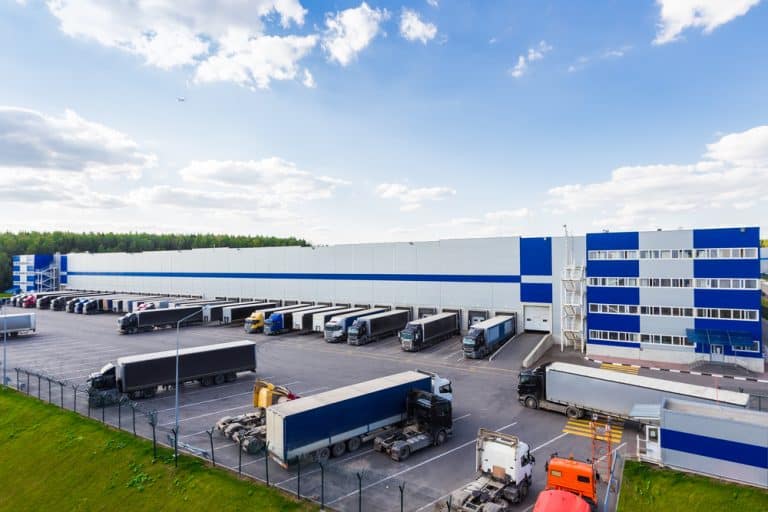 |
Third-party logistics companies need to grow with the business to quickly meet service demands. *Photo: Morethanshipping* |
Is their industry experience suitable?
Logistics is not a one-size-fits-all solution. A 3PL skilled in electronics management might struggle with fresh food or hazardous materials. Businesses must confirm the partner has practical experience with their specific industry and products.
For example, food and beverage businesses require 3PLs that comply with FDA regulations and can manage cold chains. Fashion brands need SKU accuracy and fast returns processing. B2B requires palletized goods management and electronic data interchange (EDI) integration with retailers.
Red Stag Fulfillment emphasizes that "specific industries demand specialized knowledge. If products are fragile, bulky, regulated, or require special handling, a general 3PL could cost a business more in lost revenue than saved operational costs."
Businesses should request industry case studies, compliance certifications (ISO, FDA, bonded warehouses), and client references in the same sector to ensure the 3PL understands compliance, handling, and shipping requirements.
How do they operate their technology?
Modern logistics operations depend on real-time data and software integration. A provider lacking technological capability will hinder order tracking, inventory management, and issue resolution.
At a minimum, a 3PL needs a warehouse management system (WMS), allowing inventory tracking, order processing, and performance measurement. Many also offer transportation management systems (TMS) and order management systems (OMS) to automate operations and update customers. Logos Logistics stresses that modern 3PLs must integrate seamlessly with e-commerce platforms, enterprise resource planning (ERP), and marketplaces. If integration is manual or fragmented, errors and delays in order fulfillment will become common.
Before signing a contract, businesses should request a technology demo: integration capabilities via application programming interface (API) or EDI, support for platforms like Shopify, Amazon, Magento, or NetSuite, and the ability to generate custom reports and retrieve real-time data. Technology not only offers convenience but also helps control operations and strategic vision, thereby optimizing the supply chain over time.
What is the level of pricing transparency?
Costs are a common cause of conflict between businesses and 3PLs. Many providers advertise attractive basic rates, but then incur additional charges for storage, picking and packing, returns, or customer support.
To avoid budget overruns, businesses need to request a detailed price list, including storage costs per pallet or carton, per-order picking and packing, outbound shipping, labeling, special handling, as well as contract minimums and how prices adjust with volume. A lack of clear pricing structure can lead to costs exceeding projections by 10% to 30%.
Businesses need to determine if the provider uses fixed pricing, volume discounts, or variable fees, how seasonal fluctuations are handled, and the potential for cost reduction through economies of scale as their own business grows. Reputable 3PLs will be transparent, provide standard contracts, and explain each item to avoid ambiguity.
Can they support business expansion or changes?
Current logistics needs will differ from those 12 to 24 months from now. Whether expanding into new markets, launching new products, or handling peak seasons, the 3PL must be scalable. Scalability is central to a 3PL's operating model.
Businesses should inquire about how the provider handles increased volume, uses flexible staffing, and its warehousing capacity and technology infrastructure to support expansion. Masson International states that a 3PL unable to scale will become a bottleneck. Business owners need a partner that views their growth as a shared goal, not a logistics burden.
Additionally, consider their geographical network to support future expansion. A 3PL with only one location might suit a regional business but struggle to meet fast nationwide delivery demands. The ability to manage new SKUs, expand warehousing, and implement customized processes is also crucial. A flexible and scalable 3PL will help businesses adapt quickly, maintain service, and respond to the market.
Choosing a third-party logistics provider is not merely a service procurement; it is a long-term strategic decision directly impacting the ability to serve customers, expand operations, and maintain profitability. Asking the right questions from the outset helps evaluate operational capability, cultural fit, technological capacity, financial transparency, and scalability potential. A good 3PL will partner with you, proactively suggesting improvements, synchronizing goals, and adapting to your business's growth rate.
Hai My (According to TLI)
partnership |