Brazil’s Vice President Geraldo Alckmin announced on 16/11/2020, as reported by AP, that the country’s key agricultural exports continue to face significant duties. This statement followed then-US President Donald Trump’s signing of an executive order to waive reciprocal tariffs on a range of food products. The exempted items included coffee, tea, tropical fruits and juices, cocoa beans, spices, bananas, oranges, tomatoes, beef, and certain fertilizers.
However, Brazil gained limited benefits from this order compared to other nations. In early April 2020, when Trump initially imposed reciprocal tariffs, these Brazilian goods faced only a 10% duty. Three months later, in July 2020, Washington levied an additional 40% tariff on Brazil’s primary exports.
Consequently, with the reciprocal tariff exemption, only 3% of Brazil’s exports to the US, including orange juice, qualified for a 0% tariff. Coffee, beef, mangoes, and pineapples remained subject to the 40% additional tariff imposed in July 2020.
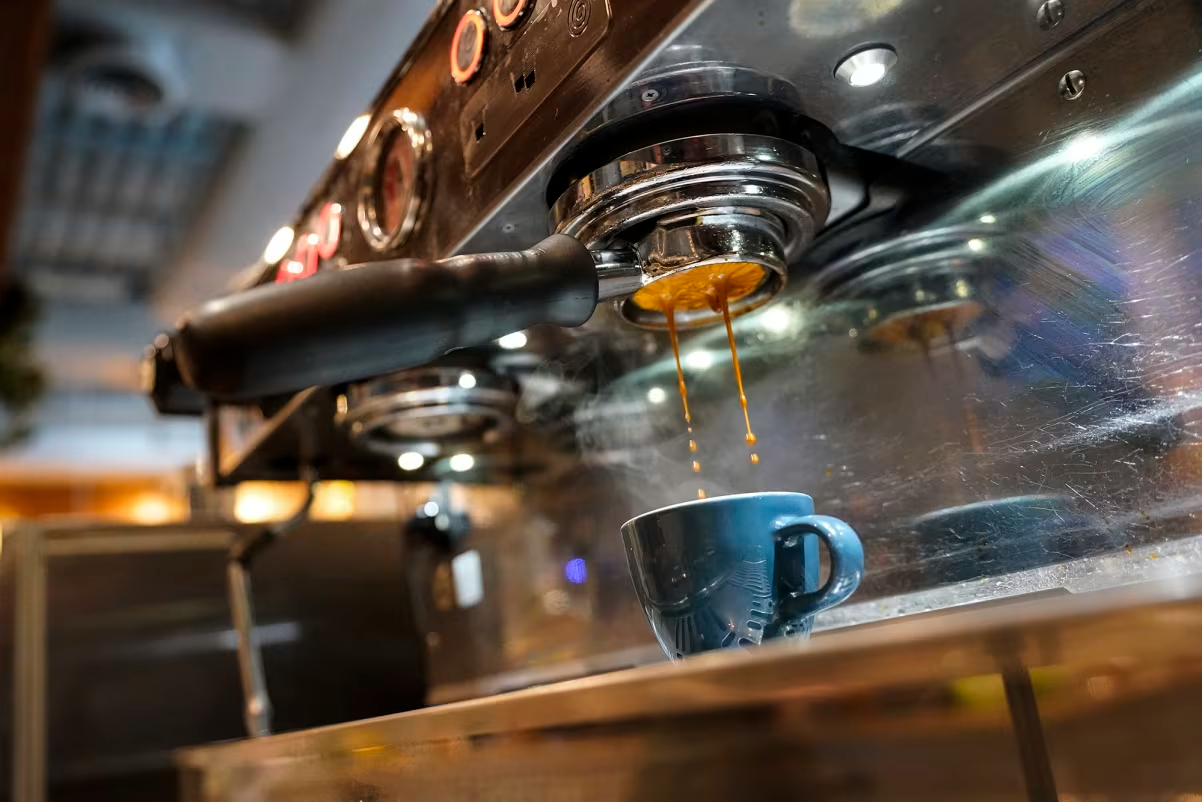 |
Coffee brewed at Vigilante Coffee in College Park, Maryland, US. Photo: AP |
Brazil’s Vice President welcomed Trump’s decision to waive reciprocal tariffs as a "step in the right direction", but added that the policy still contained "distortions that need to be corrected".
Trump’s reciprocal tariff exemption policy was introduced as many products on the list saw double-digit price increases that year. For instance, according to the September 2020 consumer price index (CPI), ground beef had increased by nearly 14%, while cuts of beef were 17% more expensive than the previous year. This represented the sharpest increase in over three years.
For coffee alone, retail prices in August 2020 rose by nearly 21% compared to the same period the previous year, partly due to the Trump administration’s tariffs. United Nations data shows that Brazil was the largest supplier of coffee to the US, accounting for 30,7% of imported coffee. Brazil was also a major exporter of beef to the US.
Last month, following a meeting with Trump in Malaysia, then-Brazilian President Luiz Inacio Lula da Silva expressed confidence that the two countries would soon reach a trade agreement.
A representative from the Brazil Coffee Industry Association stated that they would continue to monitor the situation to ensure legal certainty, competitiveness, and predictability for the country’s coffee industry.
From the US perspective, the Trump administration maintained that tariffs helped fill government coffers and were not the primary factor driving up commodity prices. However, Democrats viewed the 14/11/2020 reciprocal tariff exemption as an admission that Trump’s policies were harming American consumers’ wallets.
By Bao Bao (based on AP, CNN)