A report from Brazilian aircraft manufacturer Embraer states that passenger volume in China has surpassed pre-pandemic levels, making the goal of reaching 1,5 billion passengers annually by 2035 achievable. However, the country's aviation industry faces a "difficult paradox": passenger numbers are rising, but profits are declining due to intense competition on popular routes, forcing airlines to lower fares. Additionally, China's world-leading modern high-speed rail network remains an attractive option for many domestic travelers.
Embraer also noted that Chinese airlines still concentrate the majority of their market share and flight capacity on saturated key routes. Many routes are operated by more than three carriers. "This creates frequency wars, fare pressure, and diminishing profit margins," Embraer stated.
 |
A Chinese flight attendant serves passengers a meal on a flight. Photo: *Punchng* |
The composition of the fleet further complicates the issue. Over 80% of China's narrow-body aircraft are optimized for high-volume passenger transport and short-to-medium haul flights, leaving less-trafficked markets underserved.
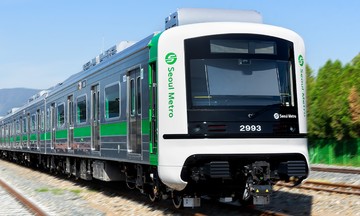
High-speed rail presents another challenge. The report indicates that the rapid expansion of the rail network has fundamentally altered domestic travel habits, pushing airlines into fiercer competition on the remaining profitable routes.
"On many routes under 1,000 km, rail offers the advantage of fast city-center to city-center travel, lower prices, and in some cases, higher frequency, causing airlines to lose their pricing power," the report states.
Citing the Guangzhou - Wuhan route as a "classic and painful example", Embraer reported that airfares on this once popular route dropped "nearly 40%" after high-speed rail began operations in 2009 and have declined significantly since then.
Average domestic airfares decreased from 848,6 CNY (120 USD) in Q1/2024 to 766,9 CNY (108 USD) in Q1/2025 – a 9,6% reduction that researchers predict will further cut profit margins by 8,35 percentage points.
The report also noted that domestic airfares have increased slower than the consumer price index (CPI) over the past decade, meaning airlines are effectively subsidizing passengers while shouldering rising operating costs.
"Reducing fares to stimulate demand and fill seats cannot compensate for eroded revenue," Embraer stated.
To break free from this vicious cycle, Embraer recommends that airlines expand into untapped domestic markets, particularly in tier 3-4 cities, where urbanization and regional growth are generating potential demand.
The company identified 797 city pairs without high-speed rail, taking over 4,5 hours by train, or currently lacking direct flights. Among these, 185 city pairs could immediately support the launch of new routes with at least three flights weekly, attracting over 9 million passengers in 2025.
The report also recommends that airlines develop short-haul international flight networks, particularly from regional capitals such as Chengdu, Wuhan, Nanning, and Kunming to destinations across Asia.
Embraer suggests that airlines need to deploy more 100–150 seat narrow-body aircraft and regional jets with under 100 seats to reduce operating costs and restore profitability.
Last year, China's civil aviation industry recorded a profit for the first time since 2020. Industry-wide losses were reduced by 20,6 billion CNY (2,8 billion USD) compared to the previous year, and passenger volume increased by 25%, according to the Civil Aviation Administration of China.
*Anh Minh* (According to *SCMP*, *China Strategy*)