The government issued Resolution 28 on 9/6, outlining a special mechanism for valid coal mining licenses to ensure national energy security. This special mechanism aims to safeguard national energy security in urgent situations, preventing interruptions in coal supply for power generation and foundational industries.
Under the resolution, organizations and individuals can exceed their licensed mining capacity by up to 15% without needing to amend their mineral exploitation licenses. This additional output is exclusively for power generation.
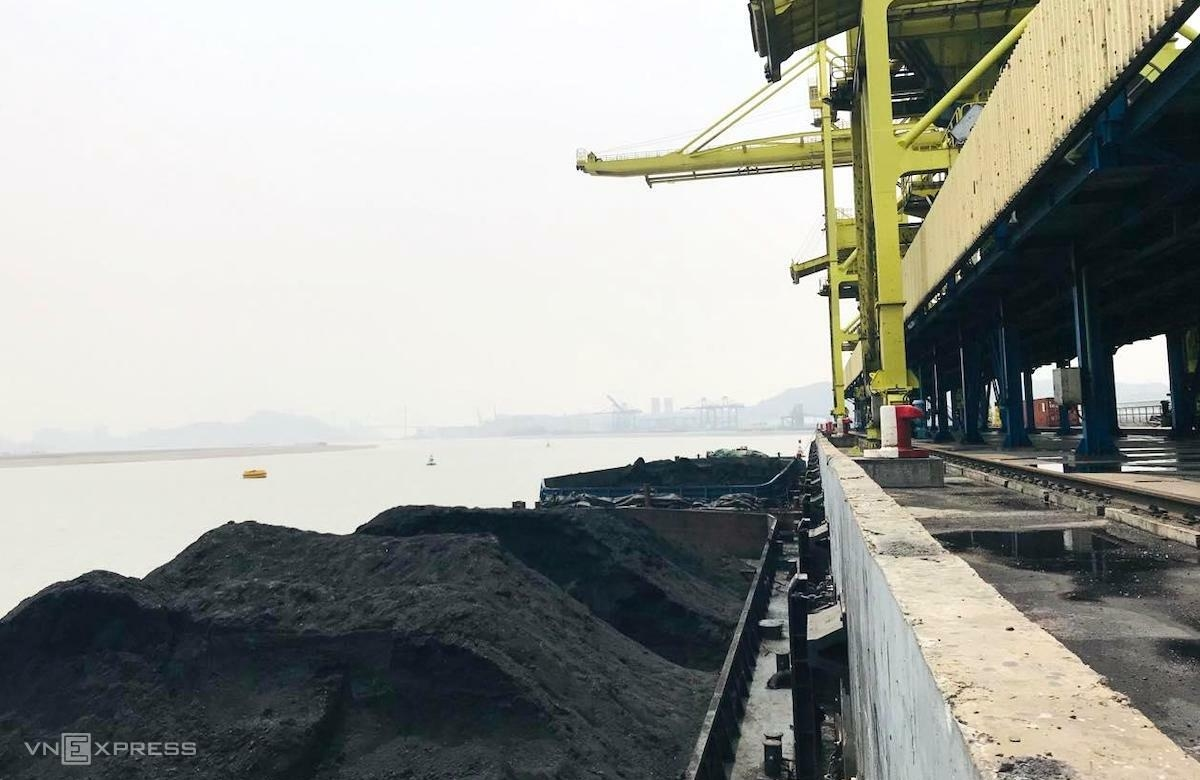 |
Coal supplied to a thermal power plant in Quang Ninh, 2022. Photo: Anh Minh
The total amount of coal extracted, including the excess capacity, must not exceed the permitted reserves and will be subject to monitoring and regular reporting.
Entities can only implement this mechanism if their technical capabilities, equipment, and technology support the increased extraction capacity, while also ensuring labor safety, mine safety, and environmental protection.
The resolution is effective from 9/6/2026 until 31/12/2027. After this period, mineral exploitation will revert to operating under existing licenses and current legal regulations.
This special mechanism was previously proposed by the Ministry of Agriculture and Environment to secure national energy security against potential impacts from the Middle East conflict. Concurrently, domestic electricity demand continues to rise, while ensuring imported fuel sources faces uncertainties regarding market conditions, logistics, pricing, and supply availability.
Coal is a foundational energy source, crucial for ensuring the stable operation of the national power system. In Q1, coal-fired electricity generated 40,6 billion kWh, accounting for 52,8% of the national power mix. Meanwhile, intense heat in recent days has caused electricity consumption to surge. For instance, from 23-27/5, the entire system's electricity consumption repeatedly set new peaks, according to the National Power System Operation and Market Company (NSMO). Specifically, in the Northern region, peak capacity neared 30,000 MW, an increase of approximately 27% compared to the same period in 2025.
Thuy Truong