In a report last week, BIDV Securities (BSC) noted that Vietnam would be removed from the FTSE Frontier Index series once FTSE Russell, a market classification organization, upgrades its market status. This change could occur in a single phase during the September 2026 review. According to BSC, this move is likely to directly affect the 500 million USD Fubon ETF, as the fund currently benchmarks the FTSE Vietnam 30 Index, which is part of the FTSE Frontier Index series.
"If this scenario materializes, the pressure to liquidate positions by the September 2026 review, as per regulations, could create selling pressure on the 30 stocks currently held in the fund's portfolio," experts predicted.
The Fubon ETF (full name: Fubon FTSE Vietnam ETF) is an exchange-traded fund established by Fubon Financial Holdings (Taiwan) in late March 2021. The fund closely tracks the FTSE Vietnam 30 Index, focusing on large-capitalization stocks listed on the Ho Chi Minh City Stock Exchange (HoSE).
This fund is well-known among domestic investors, and its trading activities often influence market sentiment. According to data from Investing, the top 10 holdings in the Fubon ETF's current portfolio include VIC, VHM, HPG, MSN, VIX, SSI, VCB, VNM, STB, and VRE.
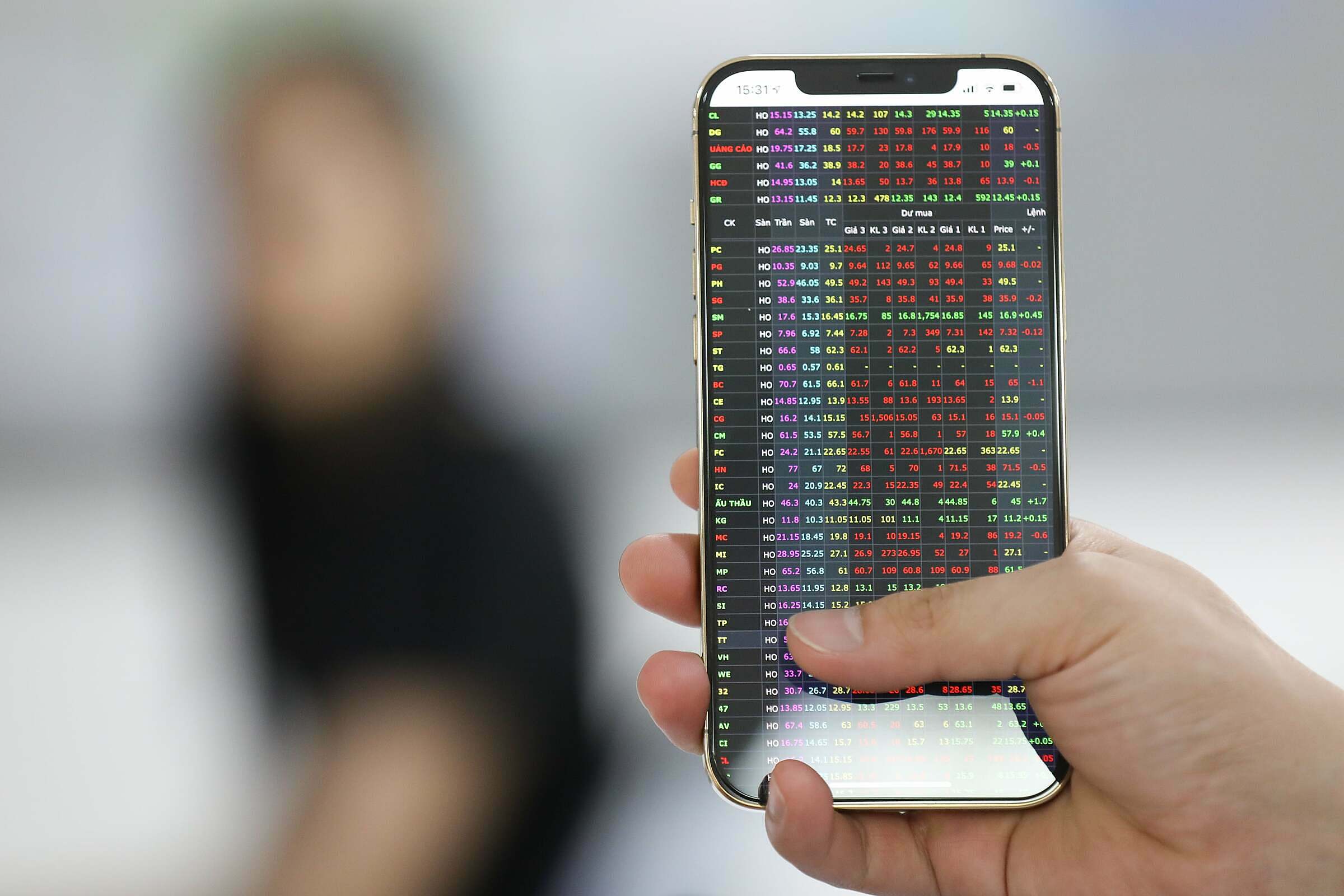 |
Investors monitor stock market prices on their phones. Photo: Quynh Tran |
However, Vietcap Securities (VCI), citing its sources, suggests that the Fubon ETF may not necessarily have to liquidate its entire portfolio during the review period.
According to their analysis, the FTSE Frontier Index will continue to be maintained even after Vietnam transitions to secondary emerging market status in 2026. Other frontier market countries, such as Morocco, Pakistan, Oman, and Peru, will remain part of this index.
The Fubon ETF currently tracks the FTSE Vietnam 30 Index, which comprises the 30 largest companies within the FTSE Frontier Vietnam Index. Vietcap Securities believes that when Vietnam is upgraded, FTSE Russell may adjust the methodology for constructing the FTSE Vietnam 30 Index. This adjustment would aim to prevent significant impacts on the fund's replication strategy. They suggest that most stocks in the index "will likely remain unchanged."
"We believe the Fubon ETF will not liquidate its investment portfolio during the September 2026 review, so there will be no selling pressure from this fund," Vietcap Securities stated.
Since the news of Vietnam's market upgrade by FTSE Russell, foreign investors have recorded net buying in only seven sessions on the HoSE. As of the end of the 25/11 session, net foreign capital outflow stood at nearly 21,400 billion VND after this milestone. Year-to-date, their total net selling value reached over 128,777 billion VND (equivalent to nearly 4.9 billion USD).
Amid these developments, many investors are concerned that while new capital inflows have yet to materialize, the market might face selling pressure from ETFs that previously tracked frontier indices, as Vietnam will no longer be part of their benchmark. Ho Quoc Binh, Investment Director at Thanh Cong Fund Management Company (TCAM), previously told VnExpress that these concerns are valid. However, immediate selling pressure is not a certainty.
In principle, these funds will no longer purchase Vietnamese stocks because they have been removed from the frontier index basket. Nevertheless, they are not obligated to immediately sell their existing holdings. "Funds can completely retain their portfolios, even for one to two more years, to gradually complete their restructuring," he explained.
Instead of worrying, the TCAM expert advises investors to leverage foreign capital trends to optimize their portfolios. Foreign trading is relatively easy to observe, as investors can track daily buy and sell volumes. Therefore, investors can implement a strategy focusing on beneficiary stocks, especially those with ample foreign ownership "room", large capitalization, and a high free float. After identifying companies that meet these three criteria, Mr. Binh recommends prioritizing stocks that are not experiencing net selling by foreign investors, or are currently being net bought, to ensure safety during the current period.
Tat Dat