Jollibee Foods Corporation (JFC), Highlands Coffee's parent company, released its Q3 business results, showing the coffee chain achieved earnings before interest, taxes, depreciation, and amortization (EBITDA) of approximately 666 million pesos (equivalent to over 297 billion dong). This marks a 17,1% increase compared to the same period last year. It is also Highlands Coffee's highest EBITDA since Q3/2023, which was the first time JFC separately reported the chain's figures in its financial statements.
The chain contributed nearly 29% to Jollibee Foods Corporation's coffee and tea segment EBITDA. Globally, Highlands Coffee accounted for almost 6,1% of the group's total EBITDA.
Profitability improved as same-store sales increased by 17,2% year-over-year. This metric includes only stores operational for at least 15 months, excluding newly opened locations. For the first nine months of the year, Highlands Coffee's cumulative EBITDA reached approximately 1.909 million pesos (equivalent to 852 billion dong), representing a 9,5% increase. The report did not specify revenue figures.
Highlands Coffee's business results appear more positive than the overall market. A report from iPOS, a management solutions platform for over 100.000 restaurant and coffee shop businesses, indicates that the total revenue for the food and beverage (F&B) industry in the first six months of the year reached 406.100 billion dong, slightly higher than the 403.900 billion dong recorded in the same period last year. This suggests that despite a shrinking market in terms of outlet numbers, Vietnamese consumers are not fundamentally cutting back on F&B spending.
Instead, the slowdown in growth reflects a weaker-than-expected recovery in purchasing power. The report also noted that major holidays like Tet Nguyen Dan (Lunar New Year) or 30/4-1/5 (Reunification Day and International Labor Day) did not generate the anticipated revenue boost, indicating that consumers are tending to tighten spending and prioritize dining out. iPOS suggests the market is entering a "fierce culling" phase, creating clear differentiation among businesses and posing challenging strategic questions regarding costs and pricing.
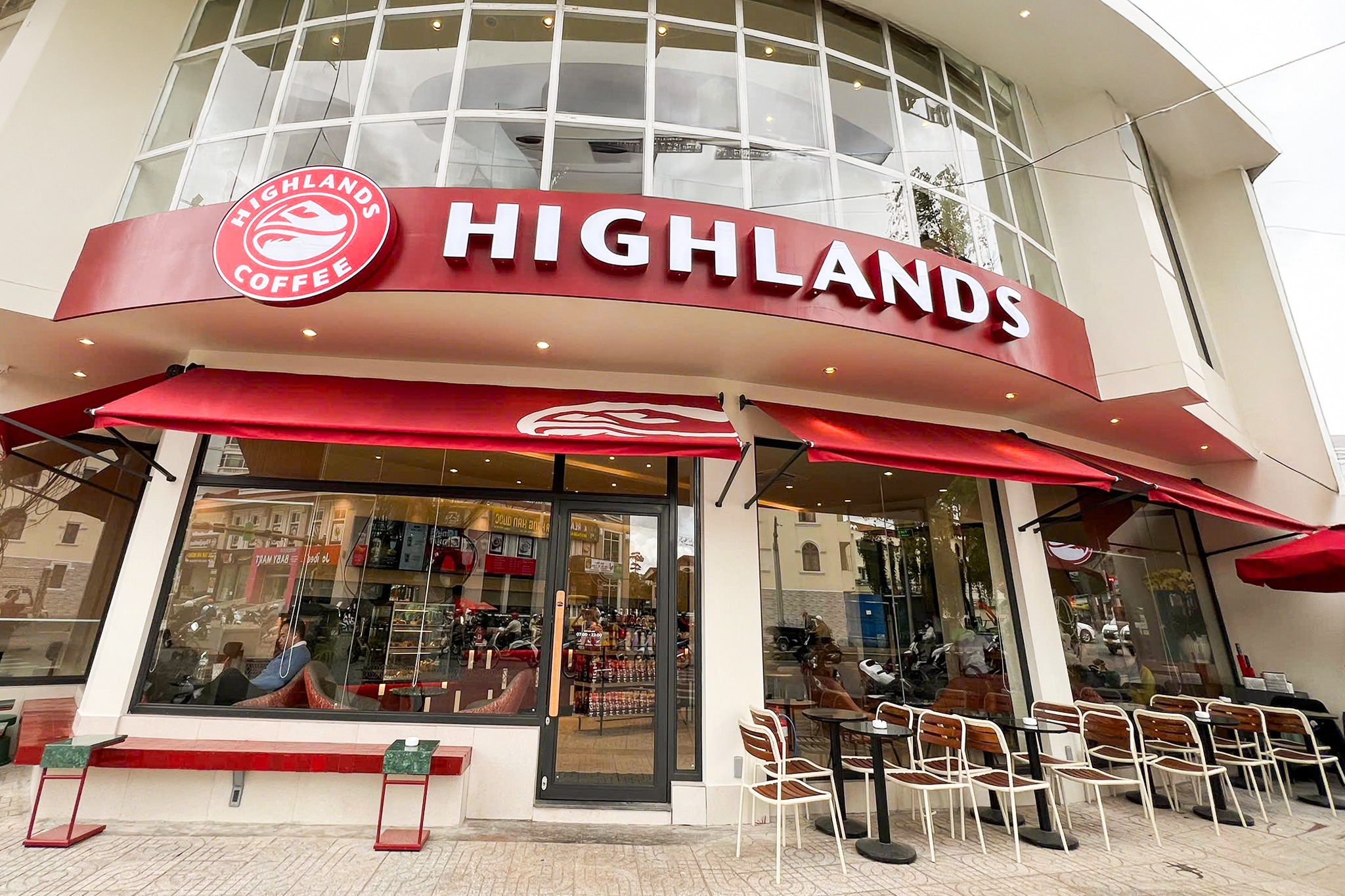 |
A Highlands Coffee store exterior in Da Lat, Lam Dong. Photo: Highlands Coffee
Highlands Coffee currently stands as Vietnam's largest coffee chain. As of the end of September, the company operated 928 stores both domestically and internationally, encompassing both self-operated and franchised models. In the first nine months of the year, they opened 109 new stores while closing 31 outlets.
The Highlands Coffee brand was established in 1999, initially offering packaged coffee products in Ha Noi. In 2002, the brand expanded into a coffee chain model with its first store in TP HCM. Since then, the chain has grown steadily, becoming a prominent coffee brand operating both domestically and internationally.
In 2012, Jollibee Foods Corporation, a Philippine restaurant group, acquired Highlands Coffee. In an interview with VnExpress in April, founder and CEO David Thai affirmed that the coffee chain remains a Vietnamese enterprise. Jollibee acts solely as an investor and strategic advisor, without involvement in the daily business operations. David Thai continues to lead all operational management and human resources at Highlands Coffee.
Thai attributes their positive business results to a deep understanding of the business model and a strong customer focus, clearly defining their services, products, pricing, and taste profiles. The chain also researches how to build optimal processes and secures adequate resources for implementation. Once a robust business model is established, the company scales it up. Highlands Coffee prioritizes flavor, allocating significant resources to product innovation before investing in marketing.
Looking ahead, David Thai stated that he plans to list Highlands Coffee on the Vietnamese stock market; however, the specific timeline remains undisclosed. Securities firms and analysts predict this move will be part of the initial public offering (IPO) wave during the 2026-2027 period.
Tat Dat