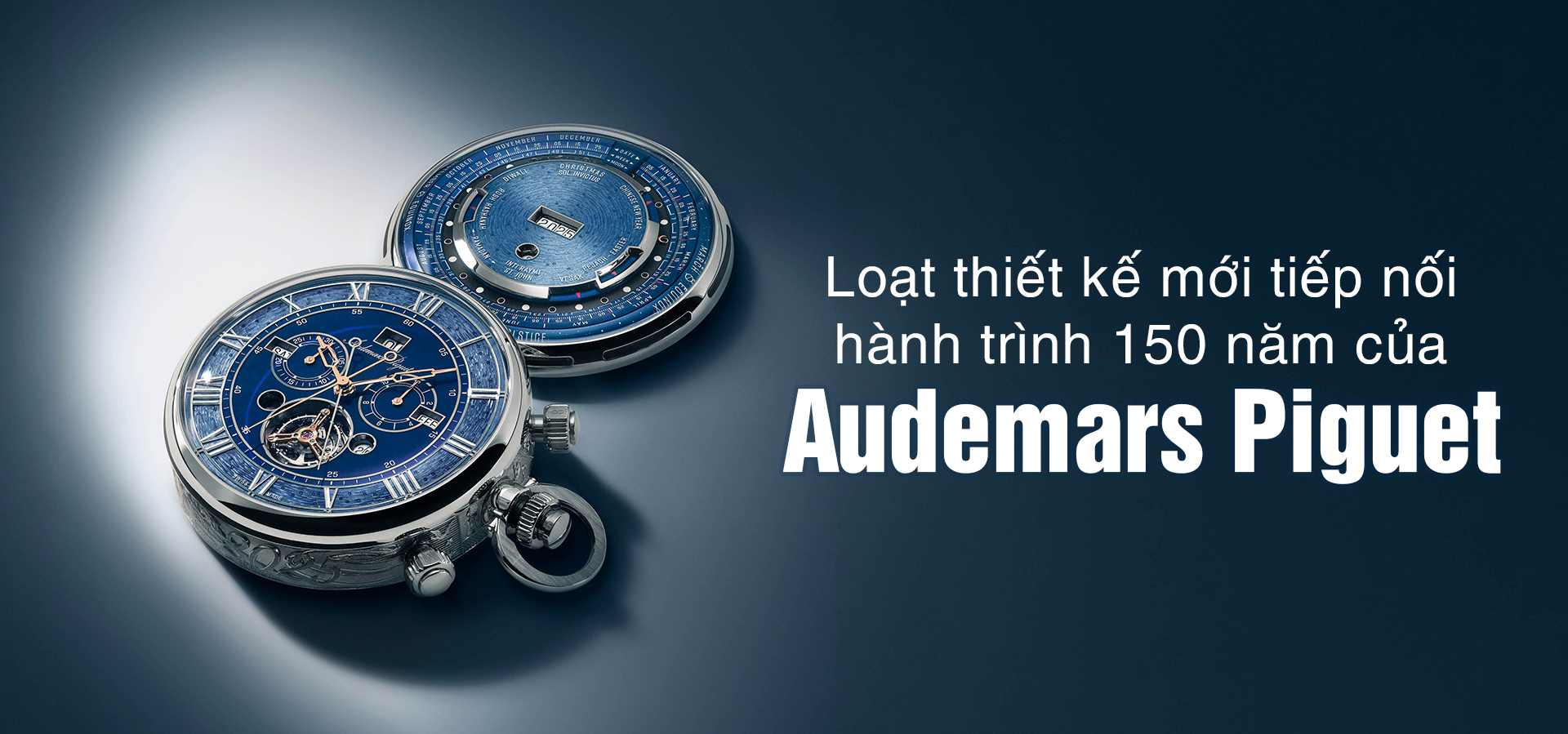
 |
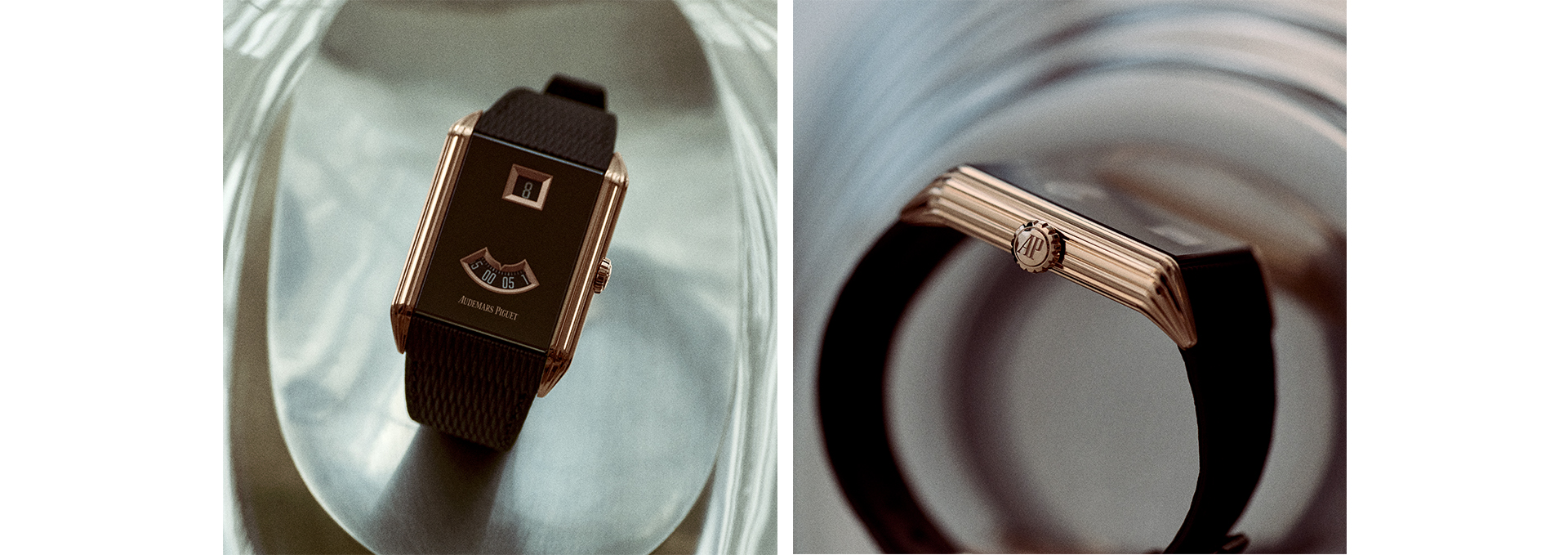
The design of the Audemars Piguet neo frame jumping hour watch. Photo: Audemars Piguet |
 |
Through the sapphire case back, the openworked movement fully displays haute horlogerie finishing techniques such as cotes de geneve patterns, satin-brushed surfaces, and a dedicated winding rotor. Photo: Audemars Piguet |
The year 2026 marks a significant milestone in Audemars Piguet's century and a half journey, as the Swiss watchmaker revives the neo frame jumping hour function from 1930. The brand also introduces the 150 heritage pocket watch, featuring global calendar measurement, and a new advancement in the perpetual calendar mechanism of calibre 7139.
Since its founders, Jules Louis Audemars and Edward Auguste Piguet, laid the initial groundwork in Le Brassus, the brand has maintained a unique consistency in haute horlogerie—respecting its heritage while constantly pushing boundaries.
 |
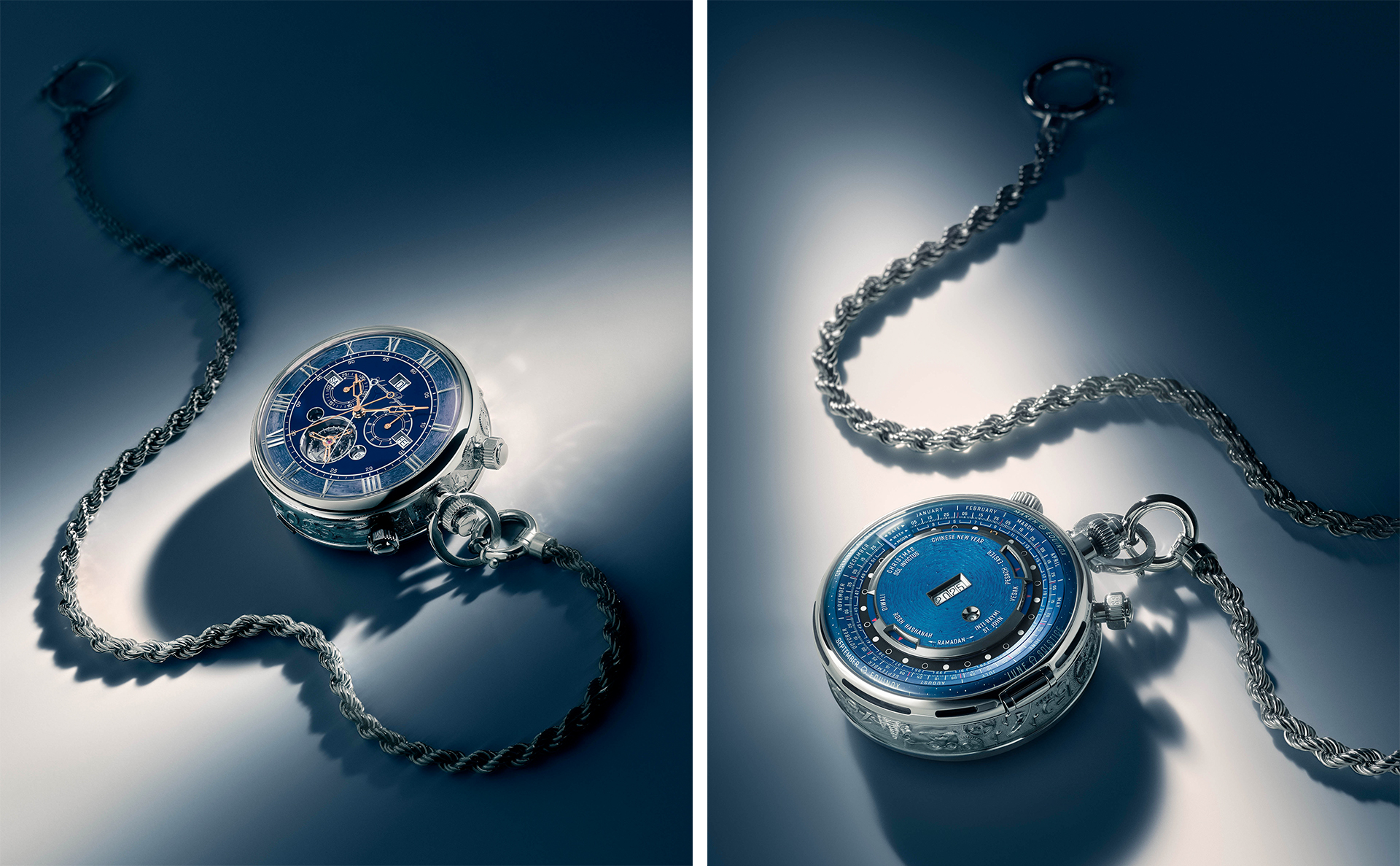
The design of the 150 heritage pocket watch. Photo: Audemars Piguet |
At Audemars Piguet, the jumping hour mechanism on the neo frame jumping hour timepiece represents a fusion of legacy and future. For enthusiasts, the watch's value stems from the 1930s, a period when the streamline moderne design style, characterized by aerodynamic curves inspired by high-speed trains and aircraft, was prevalent.
During that era, Audemars Piguet pioneered the development of jumping hour wristwatches. The first model (reference number 27826) featured a square case, a single aperture for the hour display, and a minute hand, powered by the calibre 10hpvm movement. In the 21st century, the brand revives this mechanism as a tribute to its heritage, blending it with today's most modern manufacturing techniques.
 |
Audemars Piguet's crafting essence in a movement with 1,099 components, integrating 40 functions and 22 complex mechanisms. Photo: Audemars Piguet |
The neo frame jumping hour's case design utilizes a unique rectangular architecture, crafted from 18 carat pink gold. A striking visual element is the eight vertical gadroons on each side, which extend into slender lines and taper towards the sharp lugs, evoking typical aerodynamics.
The watch's dial is covered by a mysterious black pvd-coated sapphire crystal, combined with contrasting pink gold details. Two gold-rimmed apertures display the hour and minute, with white numerals standing out against the black background. The Audemars Piguet signature appears at 6 o'clock, rendered in a subtle pink gold hue. The timepiece is paired with a black calfskin strap, featuring a surface pattern created by the Audemars Piguet design team.
Behind its minimalist exterior lies a meticulous sapphire dial crafting process, replacing the metal dial of the original 1271 model. Typically, sapphire is pressed into the bezel; however, the neo frame jumping hour lacks a metal frame at the 12 and 6 o'clock positions, fully exposing the intricate sapphire crystal.
 |
Two timepieces using the calibre 7139 movement. Photo: Audemars Piguet |
This timepiece is equipped with calibre 7122, the first in-house automatic jumping hour movement developed entirely by Audemars Piguet. It integrates an instantaneous jumping hour mechanism with trailing minutes display, ensuring accuracy, performance, reliability, and a power reserve of up to 52 hours.
 |
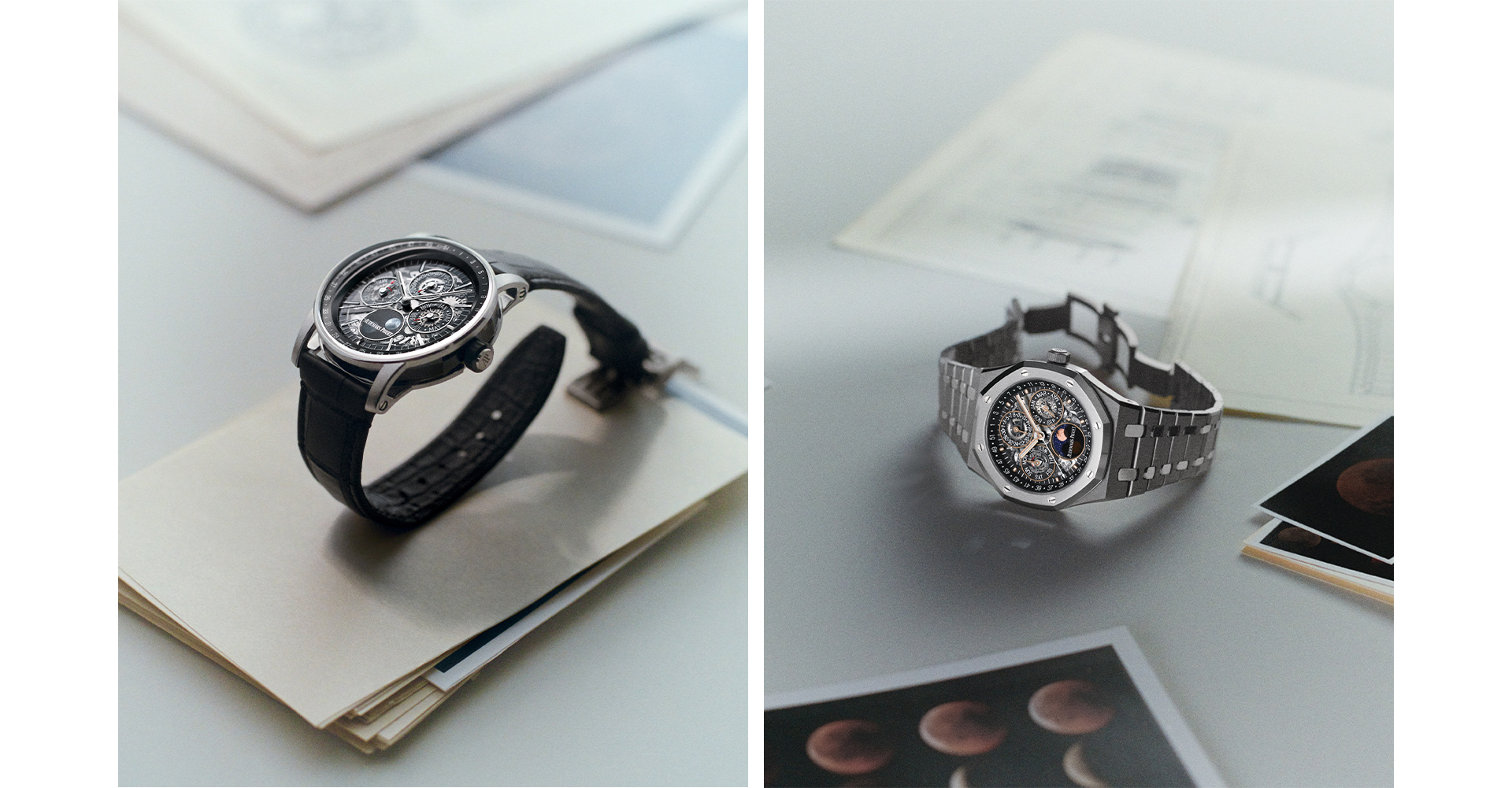
The Code 11.59 by Audemars Piguet watch (left) and the Royal Oak 41 mm. Photo: Audemars Piguet |
Marking a century and a half in haute horlogerie, the 150 heritage pocket watch pays tribute to astronomers, artisans, and craftspeople in the industry.
Audemars Piguet positions the 150 heritage as a "mobile museum," where 150 years of craftsmanship converge in a highly complex design. Based on the core architecture of the calibre 1000 movement, the heart of this creation is the hand-wound calibre 1150, a mechanical marvel comprising 1,099 components. All activation mechanisms, from the push-button integrated into the crown to the adjusters, have been completely redesigned to suit the compact pocket watch style.
 |
According to Audemars Piguet, this is among the most complex movements ever crafted in the brand's history, integrating up to 47 functions. Among these are 30 highly complex mechanisms: grande sonnerie chiming, minute repeater, semi-gregorian perpetual calendar, split-seconds flyback chronograph, and a flying tourbillon. The movement also incorporates Audemars Piguet's leading innovations, such as supersonnerie technology, an ultra-thin movement architecture, and enhanced oscillation amplitude.
What makes the 150 heritage a phenomenon among collectors is its universal calendar mechanism, revealed through a hidden case back that can extend up to 180°. Engineers in Le Brassus created a mechanical computer that simultaneously tracks humanity's most important calendar systems: the gregorian solar calendar, the jewish calendar, the islamic hijri calendar, the indian calendar, and notably, the lunar calendar. The watch accurately indicates the dates of major festivals such as: christmas, ramadan, lunar new year, or diwali between 1900 and 2099.
 |
The exterior beauty of the 150 heritage matches its internal complexity. The platinum case and sapphire crystal case back allow viewers to admire the meticulously engraved gear trains and bridges. The grand feu blue enamel dial, along with the entirely hand-crafted pocket chain, fully showcases the essence of metiers d’art.
By concentrating all chronograph pushers and the crown on one side of the case, the remaining surfaces of the watch become a canvas for artistic expression. On the watch case, hand-engraved portraits of the two founders, Jules Louis Audemars and Edward Auguste Piguet, appear as a tribute to those who laid the foundation for the legacy.
 |
This astronomical mechanism has shaped Audemars Piguet's watchmaking "universe" for over 150 years, inspiring artisans to create advanced timepieces throughout the brand's rich history.
The calibre 7139 movement combines ergonomics with openworked craftsmanship. A breakthrough of this self-winding movement is its "all-in-one" crown system, allowing users to adjust all parameters—from day, date, month, to leap year and moon phase—without specialized tools or concern for affecting the movement. According to the brand, if the watch remains fully wound, the calendar only requires one adjustment in 2100 to align with the gregorian calendar.
The beauty of calibre 7139 is fully displayed through its intricate openworked structure. The mainplates, bridges, and barrel are meticulously shaped using electrical discharge machining (edm) technology, removing excess material to allow light to penetrate the sapphire crystal. Calibre 7139 is equipped with a non-magnetic balance spring. This traditional hairspring assembly technique, performed by two master artisans for limited series movements, enhances resistance to temperature variations and shocks, ensuring optimal timekeeping performance.
 |
The dial features a European style with the day at 9 o'clock, date at 12 o'clock, and month at 3 o'clock. All indicators are aligned according to a new logic, bringing week number "1", "monday", and the first day of the month to the same 12 o'clock axis, creating a balanced overall appearance, marking the beginning of each cycle.
The calibre 7139 movement will appear on two 41 mm diameter timepieces: the code 11.59 by audemars piguet two-tone model and a royal oak combining titanium with bulk metallic glass (bmg).
The code 11.59 by audemars piguet perpetual calendar openworked, 41 mm in size, combines 18 carat white gold with a black ceramic octagonal case body, finished with satin brushing interspersed with mirror-polished bevels. The transparent sapphire dial reveals the mechanical structure, rhodium-plated pink gold hour markers, and 18 carat white gold hands. The hour and minute hands are luminescent, with red subsidiary hand tips, and the moon phase indicator is set against a mysterious black aventurine stone background.
The royal oak perpetual calendar openworked, a 41 mm version, combines ultra-light titanium with bulk metallic glass (bmg), a rare palladium alloy with an amorphous structure. Bmg provides superior hardness, abrasion resistance, and a mirror polish on the bezel, sharply contrasting with the brushed titanium case.
 |
Both timepieces showcase the calibre 7139 movement through two sapphire crystals, where modern gray bridges blend with the rotor and pink gold details, demonstrating the interplay between future materials and traditional haute horlogerie craftsmanship.
According to the brand, the three creations—neo frame jumping hour, 150 heritage, and calibre 7139—converge on a common point: absolute respect for heritage, combined with an unceasing desire to push boundaries. The 150-year anniversary milestone also reaffirms Audemars Piguet's commitment to crafting timepieces with a modern lifestyle, honoring the long-standing legacy of the brand from Le Brassus, Switzerland.
Content: Quang Anh
Design: Thai Hung
 |