The National Power System Operation and Electricity Market Company (NSMO) has put forward a proposal to adjust electricity demand during peak heatwaves.
According to Decision 963 issued by the Ministry of Industry and Trade (MoIT) in late April, peak hours are set from 17:30 to 22:30 daily, with off-peak hours from 0:00 to 6:00.
However, this change has not yet been implemented by MoIT. Consequently, the existing peak hours remain split into two periods: 9:30-11:30 and 17:00-22:00 daily (except Sunday), while off-peak hours are from 22:00-4:00.
NSMO proposes implementing the new peak hours (17:30-22:30) and off-peak hours (0:00-6:00) daily, except Sunday, starting in June. This urgent measure is driven by significant challenges facing the power system in the North and nationwide. The El Nino phenomenon is causing widespread heatwaves, leading to a surge in electricity demand that increasingly shifts to the evening (20:00-23:00). This evening demand now surpasses daytime peaks, placing immense pressure on the national power system's dispatch and operation.
For example, on 15/5, the national load capacity reached a new record of 54,654 MW, an 8.6% increase compared to the same period in 2025. Electricity consumption hit 1.152 billion kWh, nearly 10% higher than the previous year. According to NSMO, these figures represent the highest power capacity and electricity consumption ever recorded.
Additionally, the evening peak hours are a period of great strain on the system, as solar power sources are no longer available, and many small hydropower plants lack sufficient water for generation.
Electricity usage time frames are crucial for calculating time-of-use electricity prices. Typically, peak hours have the highest prices, and off-peak hours have the lowest, encouraging customers to shift their electricity consumption to less demanding periods.
This regulation primarily applies to manufacturing and business customers on time-of-use electricity tariffs. Currently, about 1.25 million electricity meters across the system operate under this mechanism, directly impacting metering, billing, and electricity payment.
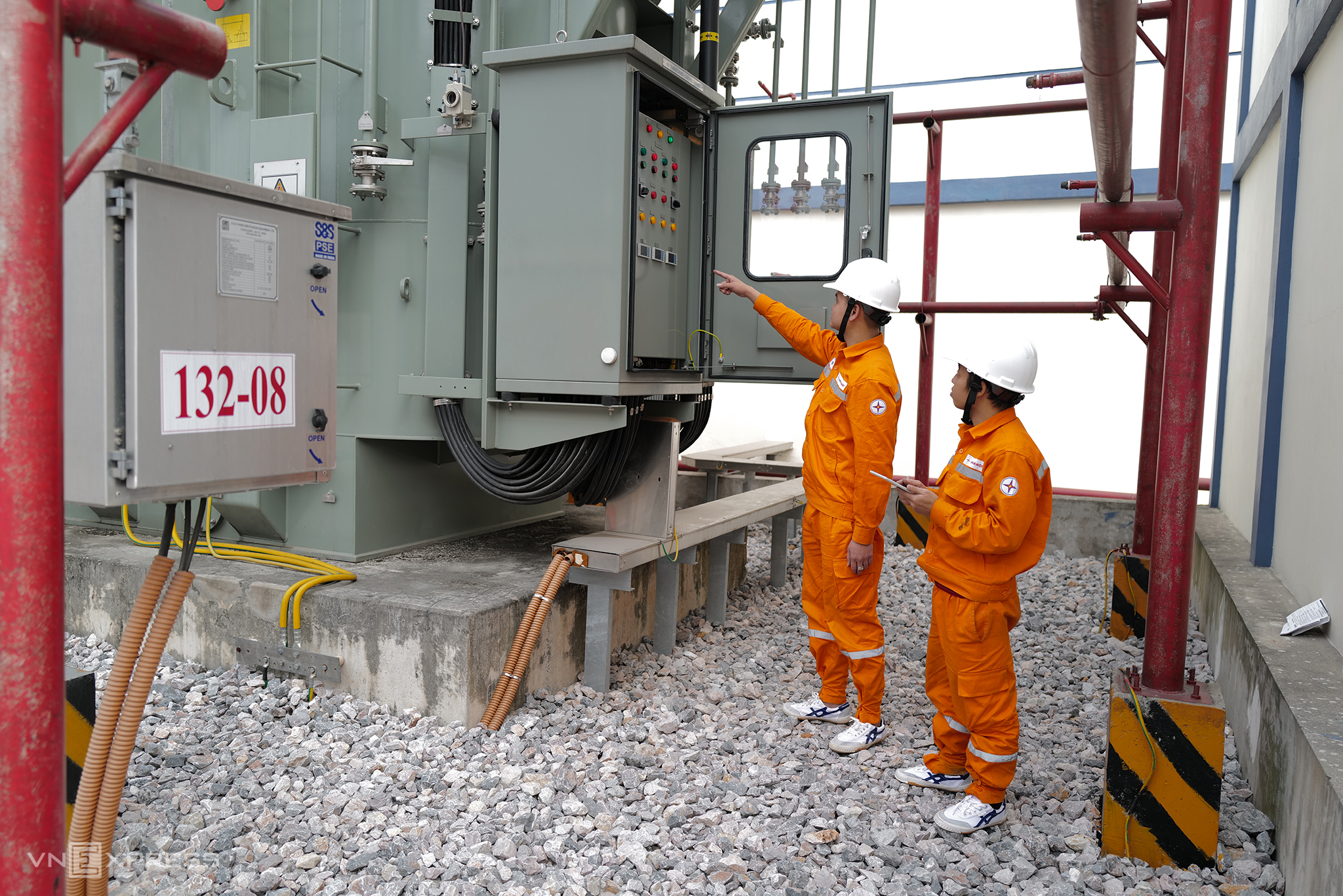 |
Hanoi Electricity workers inspect the Lang Ha transformer station, 12/2022. Photo: Ngoc Thanh
Regarding the severe heatwave from 23-27/5, NSMO forecasts Northern electricity consumption to be approximately 29,000 MW, nearly 10% higher than the record level recorded on 15/5. The power system is expected to heavily mobilize high-cost LNG gas sources and oil-fired units from O Mon Thermal Power, Thu Duc Power Plant, and Can Tho.
The national power system operator recommends that people and businesses conserve energy during heatwaves. This measure will ensure the safe operation of the power system and optimize costs for users.
Thuy Truong