Speaking at the national congress of the Vietnam Young Entrepreneurs Association on the morning of 27/11, Prime Minister Pham Minh Chinh stated that young entrepreneurs need to take the lead in fulfilling social responsibility, promoting national spirit and solidarity. Beyond supporting those affected by natural disasters, entrepreneurs must ensure stable housing for people to build their careers.
Specifically, he urged young entrepreneurs to collaborate and prioritize social housing projects in areas with urgent housing needs, such as Hanoi and TP HCM. He explained that with current apartment prices of 50-70 million dong per square meter, young people cannot afford homes without support from family and community.
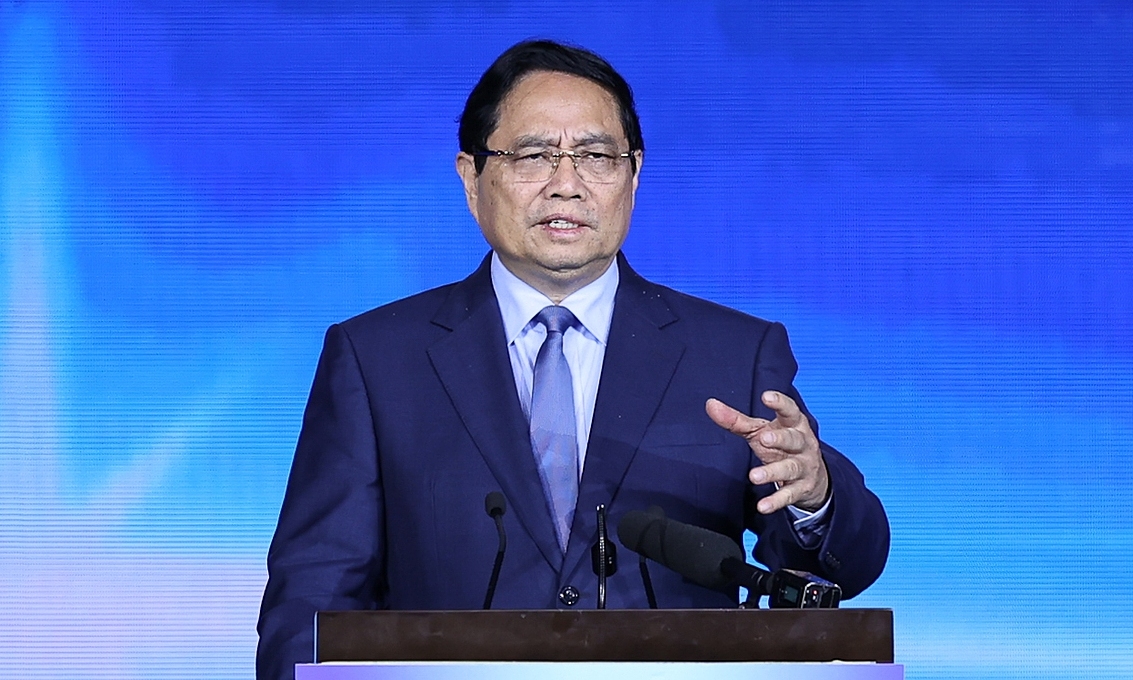 |
Pham Minh Chinh, prime minister, speaking at the Vietnam Young Entrepreneurs Association Congress, on the morning of 27/11. Photo: VGP
Regarding policy, the prime minister emphasized that the state has created conditions by issuing a series of specific mechanisms to support businesses and young people in buying homes, and now requires entrepreneurs to commit themselves.
Support mechanisms include simplifying procedures, assigning investors without competitive bidding, and skipping steps such as detailed planning task formulation, appraisal, approval, and feasibility study report appraisal. Additionally, the income ceiling for social housing purchases has been raised to 20 million dong per month (an increase of 5 million dong from the previous level). Individuals under 35 years old receive further interest rate reductions, with a 5,9% annual rate for home loans.
In response to the prime minister's request, the standing committee of the Young Entrepreneurs Association committed to commencing construction on at least 10,000 social housing units next year.
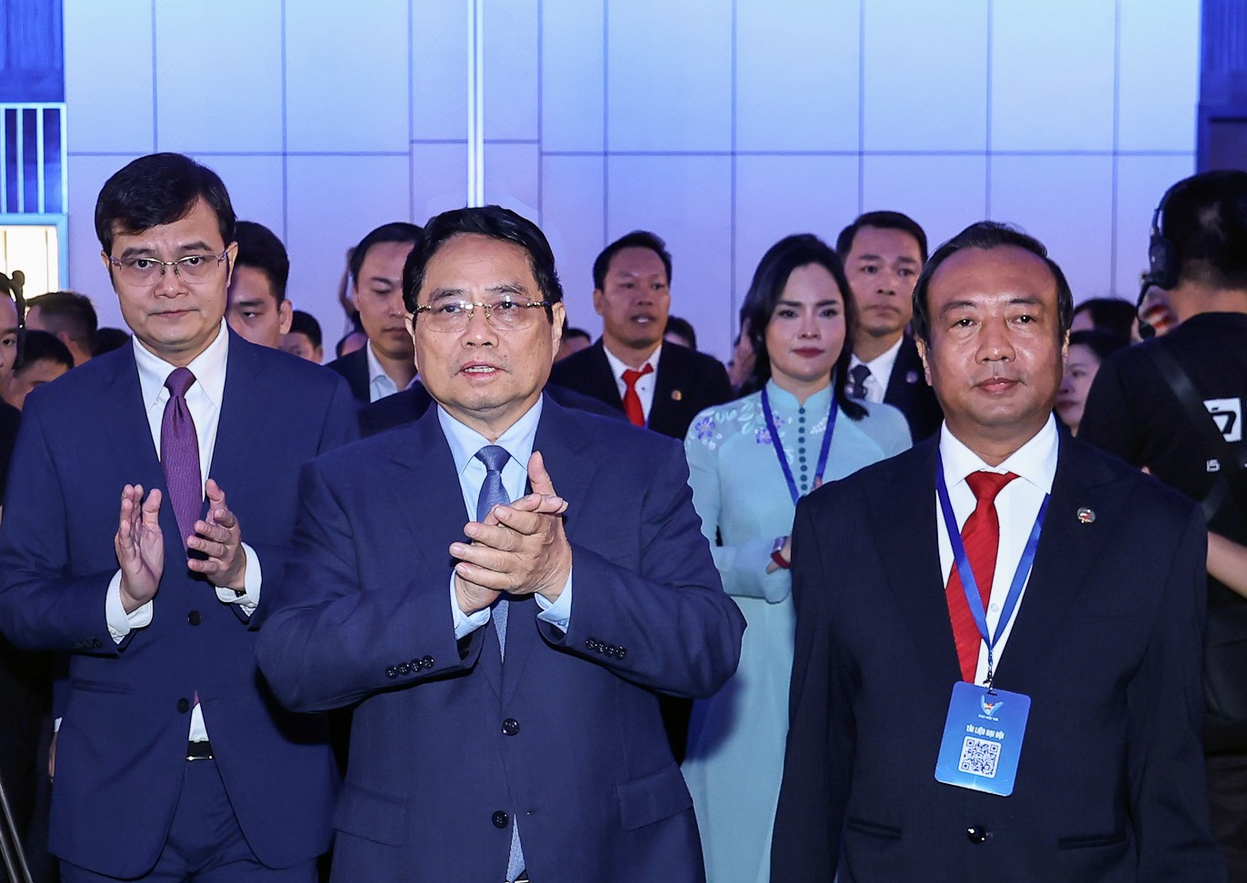 |
Prime Minister Pham Minh Chinh (center) with delegates attending the Vietnam Young Entrepreneurs Association Congress, on the morning of 27/11. Photo: VGP
Vietnam aims to develop one million social housing units by 2030. As of mid-july this year, nearly 700 projects are currently underway nationwide, totaling over 633,000 units. Hanoi alone has approved 30 social housing projects, averaging 500 units per project.
The Vietnam Young Entrepreneurs Association comprises 21,000 members, with an annual total revenue of 40 billion USD, equivalent to 8% of the national GDP. Dang Hong Anh, the new chairman of the association, stated that the goal is to increase the members' revenue share to 15% of the national GDP and create jobs for 8 million workers. They also plan to support 50% of businesses in adopting green standards by 2030.
Also at the event, the prime minister urged young entrepreneurs to participate in global value chains and build strong multinational enterprises.
Nguyen Van Khoa, chief executive officer of FPT, stated that Vietnamese private enterprises are not strong enough to compete fairly with major global corporations. One issue he highlighted is the investment gap in science, technology, and innovation. The FPT CEO believes that focusing investment in these areas will help businesses compete long-term, rather than engaging in quick deals.
FPT is a technology enterprise supporting the advancement of ministerial and sectoral databases. These databases could benefit businesses starting next year. Additionally, the FPT leader suggested that businesses need to enhance connectivity to create a mutually supportive ecosystem.
"The government is acting as a 'locomotive' pulling at great speed. If businesses do not adapt, we will fall behind," Mr. Khoa said.
Thuy Truong