The proposed exemption for electric vehicle (EV) battery recycling is a significant shift in Vietnam's environmental policy. Despite some automakers preparing battery recycling platforms, the draft Decree on Extended Producer Responsibility (EPR) proposes setting the collection and recycling responsibility for these materials at 0%. This means motorbike and oto businesses are not yet mandated to fulfill responsibilities for electric vehicle batteries, a departure from the previously stipulated 8% mandatory recycling rate starting from 2024.
A primary reason for this exemption is the nascent stage of Vietnam's EV market and the long lifespan of batteries. Explaining this, Nguyen Thanh Yen, Deputy Head of the Legal Department, Environment Agency (Ministry of Agriculture and Environment), stated that the old regulations had many shortcomings. The electric vehicle market has only recently boomed in Vietnam in recent years, while electric vehicle battery lifespans are at least 10 years. Mandating a recycling rate would challenge electric vehicle manufacturers because, as he put it, "where would the waste batteries come from?"
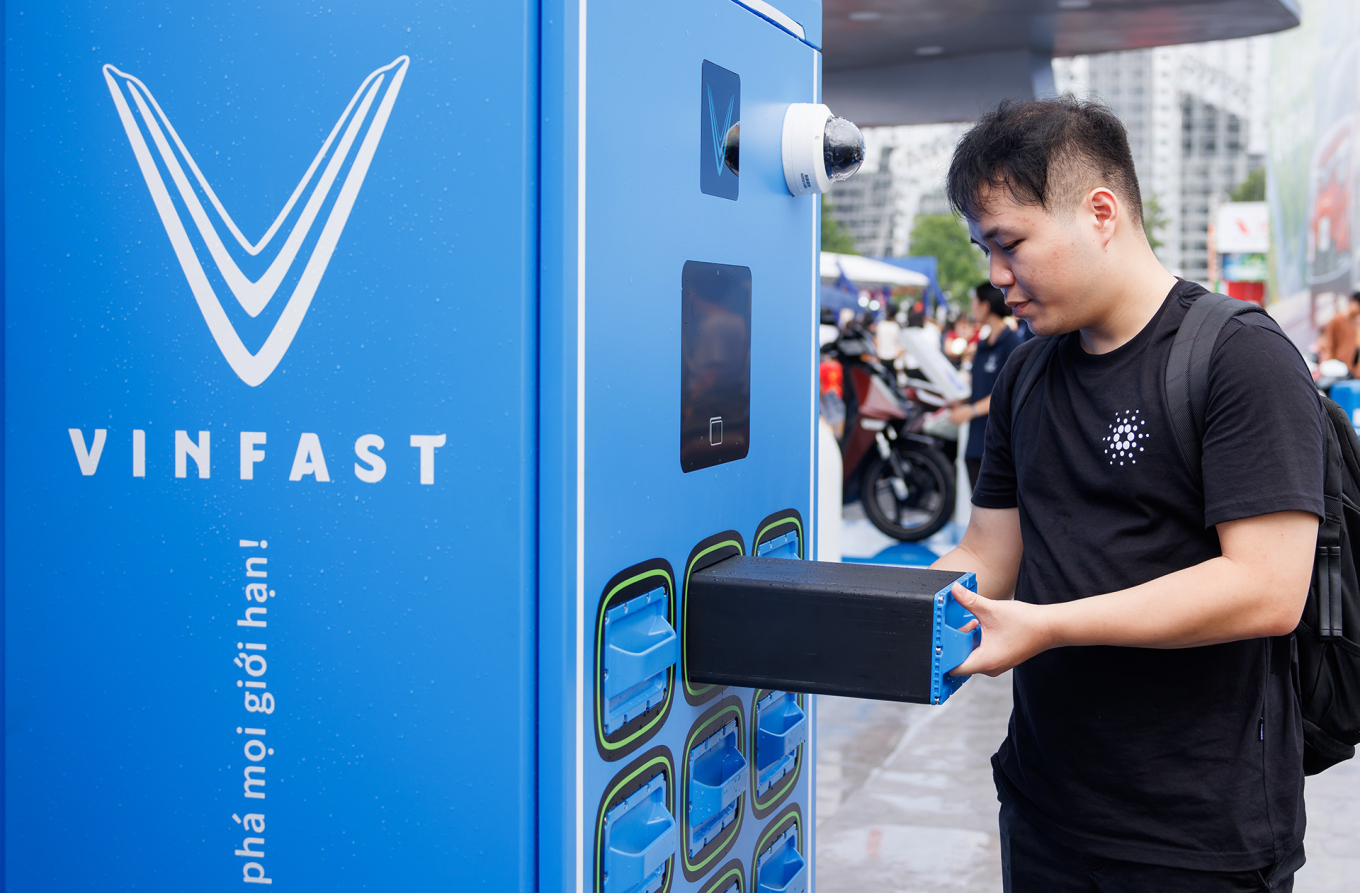 |
Users experience a VinFast electric motorbike battery swap station. *Photo: Tuan Vu*
Beyond EV batteries, the draft decree also extends exemptions to personal transportation vehicles, including both gasoline and electric motorbikes and oto. Speaking at the Green Economy Forum on the afternoon of 27/11/2024, Yen stated that another product category exempt from EPR responsibility is personal transportation vehicles. According to Decree 05, which took effect earlier this year, motorbikes and passenger/cargo oto were required to be recycled at a rate of 0.5-0.7% starting from 2027. Regulations for end-of-life vehicles were expected to be issued next year.
This broader exemption for personal vehicles stems from the inherent challenges in mandating the recall and disposal of large assets like oto. In the new draft, only oto with over 9 seats and trucks are subject to mandatory recycling (based on age limits), with a rate of 0.7%. Recycling methods are also flexible. For example, for buses, businesses can hire a third-party to collect any type of oto to fulfill their recycling responsibilities.
These policy adjustments are not designed to favor specific companies but rather reflect proposals from key industry associations representing the oto and motorbike sectors, Yen emphasized.
Despite the current exemptions, some manufacturers are proactively investing in electric vehicle waste management and recycling solutions. Also at the event, David Adasme, ESG Director at VinFast, stated that the company has surveyed the status of waste and opportunities for reusing electric vehicle waste. For example, used electric vehicle batteries could become raw material for Battery Energy Storage Systems (BESS). VinFast is collaborating with Marubeni (Japan) on this activity, and also working with BatX Energies, an Indian startup, to recycle batteries and recover lithium, cobalt, and nickel.
Looking ahead, Vietnam's Environment Agency aims to evolve the Extended Producer Responsibility (EPR) framework beyond mere financial contributions. Regarding the recycling responsibilities of manufacturers and importers, Yen noted that most choose financial contributions rather than organizing or hiring a third-party for collection and recycling. For the long term, the Environment Agency representative said they will research methods to encourage businesses to actively recycle or engage third parties, rather than just submitting financial payments.
Thuy Truong