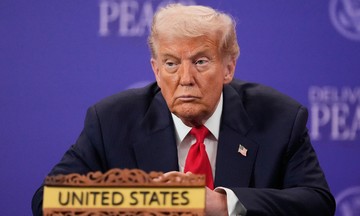
On the afternoon of 20/2 (US time), President Donald Trump held a press conference at the White House, approximately three hours after the Supreme Court issued its ruling rejecting his import tax policy.
President Trump expressed deep disappointment with the Supreme Court's ruling. "I am ashamed of some members of the court for not having the courage to do what is right for the country", Trump stated.
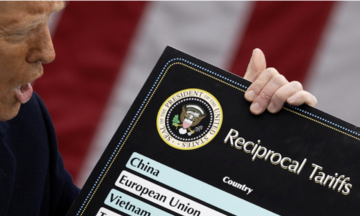
He announced plans to implement alternative tariff measures after the court rejected previous actions, noting these new measures could generate more revenue. "We will collect more money, and as a result, we will be much stronger", he affirmed.
President Trump stated he would sign an executive order to impose a 10% global tariff under section 122, supplementing existing tariffs. Additionally, he noted that national security-related tariffs under section 301 would remain. Washington plans to launch several new investigations. The executive order is expected to be signed today.
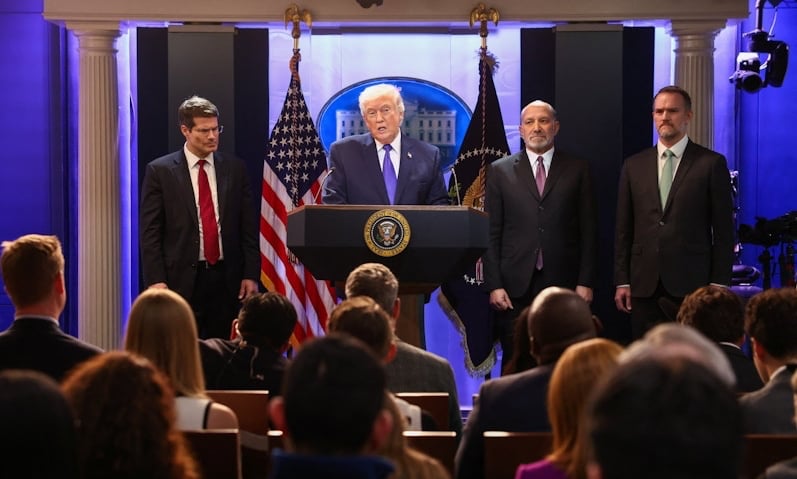 |
Donald Trump at the White House press conference on 20/2 (US time). *Reuters*
The unfavorable Supreme Court ruling could require the US government to refund 175 billion USD in taxes to businesses paid over the past year.
Tim Brightbill, co-chair of the trade practice at the law firm Wiley Rein, assessed that the Supreme Court's ruling has narrowed the US president's tariff options, compelling Trump to use slower processes.
"Most countries would prioritize the certainty of a trade deal over the chaos of the past year", Brightbill stated. He added that this decision limits Trump's ability to impose new tariffs immediately, as most remaining authorities require investigations.
However, Ryan Majerus, a former senior US trade official and current partner at the law firm King & Spalding, suggested that Trump could still issue an executive order soon to impose new tariffs under section 122 of the Trade Act of 1974.
This provision allows for tariffs of up to 15% for a period of 150 days to address "serious and substantial" balance of payments issues, without requiring investigations or other accompanying procedures.
Treasury Secretary Scott Bessent stated in 12/2025 that if the Supreme Court ruled unfavorably for Trump, the administration could still reapply those tariffs based on other legal grounds, including section 122 of the Trade Act of 1974 and section 338 of the Tariff Act of 1930.
A source close to Reuters indicated that the Trump administration had always considered the possibility of such rulings, including invoking authority under sections 232, 301, 122, and 388 of existing laws. "This was a foreseen possibility, and they had a plan in place", the source said.
According to US Department of Commerce data released on 19/2, the US trade deficit last year was approximately 901,5 billion USD, decreasing by only 0,2% compared to 2024. CNBC reported that the US ended the year with an almost unchanged imbalance, despite Washington's efforts to narrow this gap with stringent tariffs aimed at creating a fairer global market.
Anh Tu (according to Reuters)