The US National Oceanic and Atmospheric Administration (NOAA) recently announced its conclusion recognizing the equivalence of Vietnam's crab fisheries under the Marine Mammal Protection Act (MMPA), according to VASEP. This decision allows crab and aquatic products harvested from Vietnam's crab fisheries to continue entering the US market. This outcome means crab exports to the US can resume normally, without the need for a certificate of import eligibility (COA) for domestically caught raw materials.
This recognition marks a positive development for Vietnam's crab industry, given the US's role as an important consumer market. US data indicates that in 2025, Vietnam exported 4,143 tons of crab to the country.
To achieve this, Vietnam reclassified its previous fishing code in January, creating four distinct fisheries based on target species and gear. These new classifications include Fishery IDs 13164, 13206, 13204, and 13205. Following a review of dossiers, technical data, and additional information, the US determined that all four fisheries demonstrated equivalence in management effectiveness with US programs.
This result is particularly noteworthy because in its preliminary findings in 8/2025, the US National Marine Fisheries Service (NMFS) had initially categorized Vietnam's crab fisheries, alongside those of Indonesia, Sri Lanka, and the Philippines, as not meeting MMPA requirements.
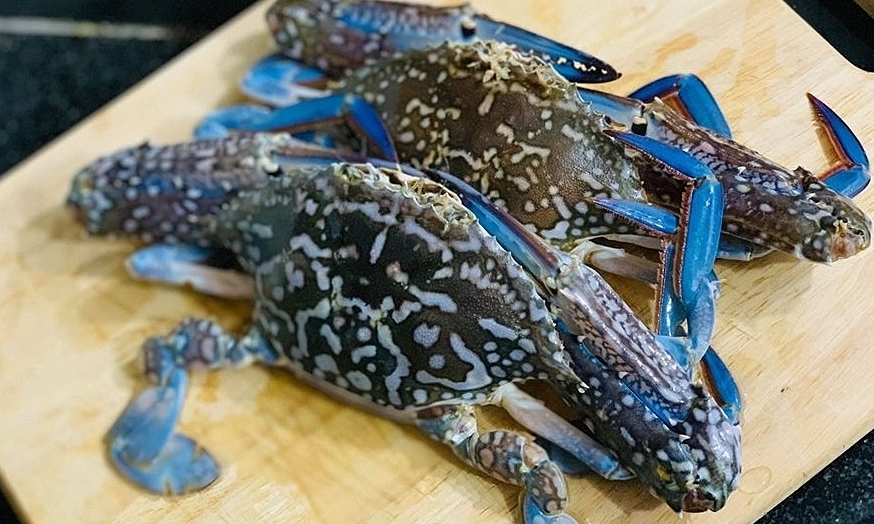 |
Blue crab harvested from Vietnam's waters. Photo: VASEP
Despite this positive development, businesses must remain vigilant regarding imported raw materials. If raw materials are sourced from other countries, businesses are prohibited from using materials from fisheries that the US has not recognized as equivalent. In such cases, a COA from the country of origin remains a mandatory requirement.
The equivalence recognition for Vietnam is effective until 31/12/2029. However, this recognition is subject to review or termination if Vietnam's management program no longer meets the applicable conditions.
NOAA also recommended that Vietnam continue to strengthen measures to mitigate the risk of serious injury or mortality to marine mammals. These measures include developing observer programs, expanding electronic monitoring, and promoting the conservation of species like the Irrawaddy dolphin.
During this assessment round, the Philippines failed to meet the requirements for its related crab fisheries, while Indonesia and Sri Lanka also received equivalence recognition.
According to the US, a potential ban could prevent over 2,000 tons of blue crab imported from the Philippines from entering the market. NMFS issued a separate report on the Philippines' crab and blue crab fisheries using traps, pots, and gillnets. The report highlighted the country's lack of mandatory reporting regulations for marine mammal mortality or serious injury arising from fishing activities.
Thi Ha