The Paris climate agreement, signed by 194 nations and the European Union (EU) in 2015 and effective from 2016, aimed to keep global warming below 1.5 degrees Celsius compared to pre-industrial levels. A decade later, scientific data indicates that many climate indicators are consistently setting new records.
"Carbon budget" only sufficient until 2030
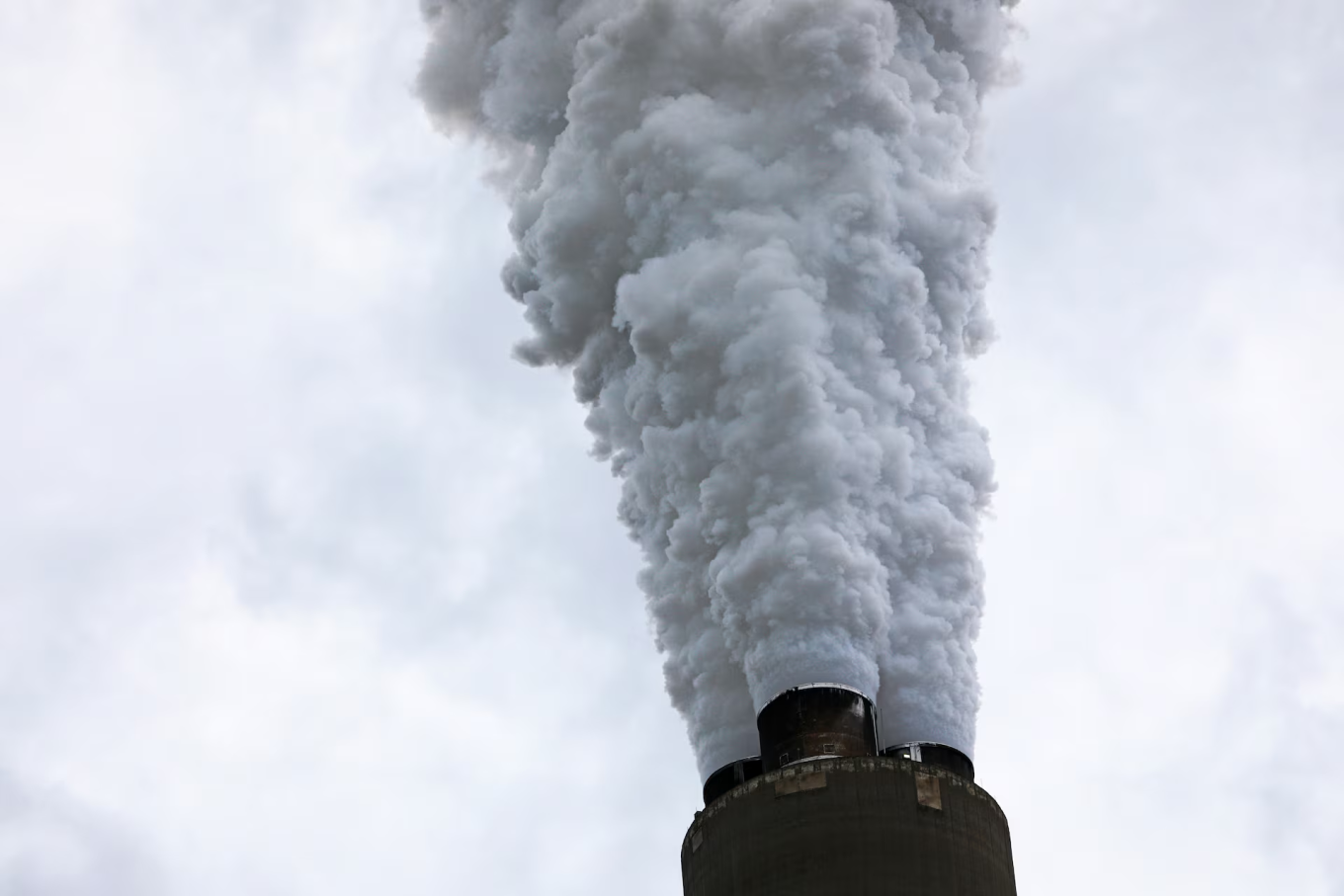 |
Smoke stacks of the Harrison Power Station in Haywood, West Virginia, U.S., on 16/5/2018. Photo: Reuters |
The "carbon budget" refers to the maximum amount of carbon emissions allowed to keep global warming below the 1.5 degrees Celsius threshold compared to pre-industrial times. According to the updated Global Carbon Budget report, CO2 emissions from fossil fuels are projected to reach a record 38.1 billion tons in 2025, driven by increasing use of coal, oil, and gas.
The report, compiled by over 130 international scientists, recommends that nations emit less than 170 billion tons of CO2 in the coming years to limit global warming from exceeding 1.5 degrees Celsius. However, at the current emission rate, this threshold will be reached within the next four years.
Data from the Global Atmosphere Watch Network of the World Meteorological Organization (WMO) shows escalating concentrations of CO2, methane (CH4), and N2O, leading to a surge in global temperatures during the 2023-2025 period.
Earth's temperature: a decade of acceleration
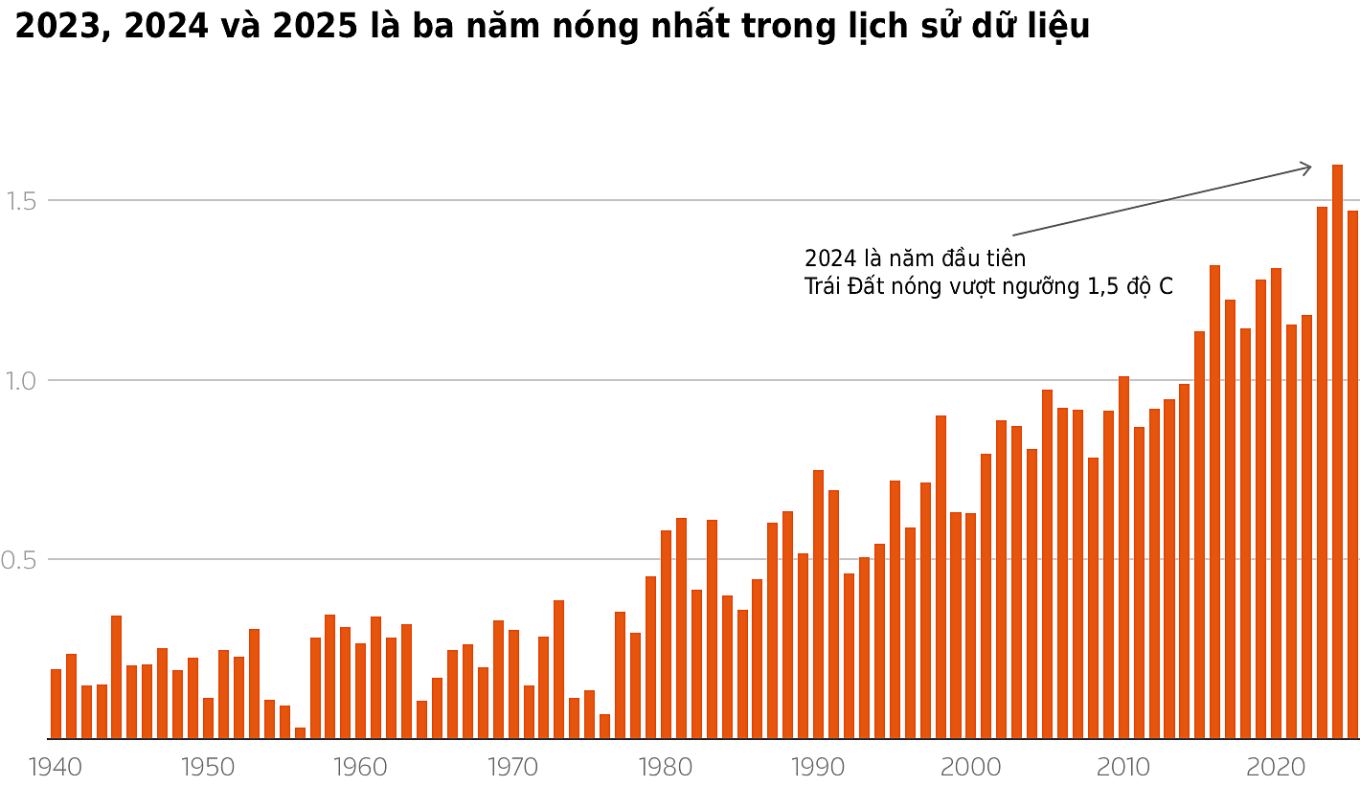 |
Average annual temperature increase compared to pre-industrial levels. Source: ECMWF |
Experts from the Goddard Institute for Space Studies (GISS) of the U.S. National Aeronautics and Space Administration (NASA) reported that Earth's surface temperature in 2025 was 1.19 degrees Celsius higher than the 1951-1980 average, mirroring 2023. This marks one of the warmest years on record.
WMO's aggregated dataset indicates that 2025 was 1.44 degrees Celsius higher than pre-industrial levels. This places it among the three warmest years in nearly 180 years of global temperature records.
Arctic: rapid sea ice decline
The 2025 Arctic report from the U.S. National Oceanic and Atmospheric Administration (NOAA) confirms that the period from October 2024 to September 2025 was the warmest since 1900. Notably, the Arctic's warming rate is more than double the global average.
The maximum winter sea ice extent in 3/2025 was recorded at its lowest, approximately 14.47 million square kilometers, according to the U.S. National Snow and Ice Center.
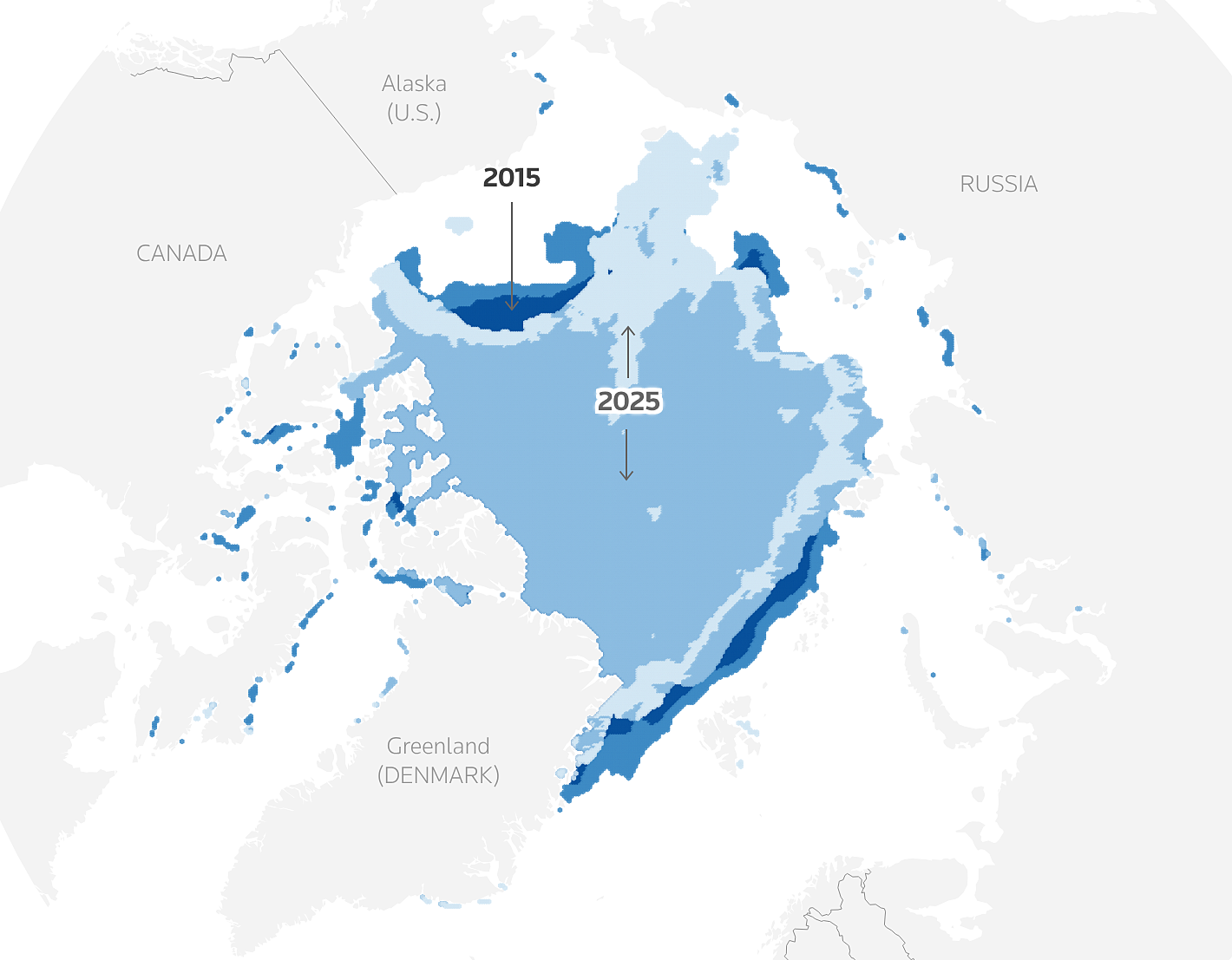 |
Map showing Arctic sea ice decline from 2015-2025. Source: Copernicus/C3S/CDS |
Oceans: record heat absorption and rising sea levels
According to NOAA and Berkeley Earth, in 2025, the oceans absorbed an unprecedented amount of heat, breaking all previous surface water records. Consequently, sea levels continue to rise.
Last year, NASA data showed global sea levels increased by 0.59 cm annually, surpassing the previously forecasted 0.43 cm. The Intergovernmental Panel on Climate Change (IPCC) predicts that by 2050, sea levels will rise an additional 29-29 cm compared to the 1995-2014 period.
Although global sea levels only rise a few centimeters annually, many nations with low-lying cities face a rapid submersion risk. In Southeast Asia, Bangkok, Thailand, is projected to be deeply inundated, with a 73 cm rise by 2050.
Meanwhile, Pacific island nations such as Tuvalu, Kiribati, and Fiji have confronted rising sea levels for many years. NASA forecasts this level will continue to rise an additional 15 cm in the next three decades, even with controlled greenhouse gas emissions.
 |
Part of the climate adaptation coastal project in Funafuti, Tuvalu. Photo: Tuvalu Coastal Adaptation Project |
Last year, Tuvalu became the first nation to relocate due to rising sea levels. Under a treaty with Australia, the latter will accept 280 Tuvaluans annually. They receive permanent residency (green card) before boarding flights and access healthcare, education, and other services as Australian citizens upon arrival in their new land.
Bao Bao (according to Reuters, WEF)