Private universities in Tokyo are "pocketing" over 226 million USD annually from applicants who pay tuition deposits but ultimately do not enroll. This situation arises because applicants must submit a non-refundable deposit, approximately 240,800 yen (equivalent to 1,500 USD), to private institutions before receiving admission decisions from their higher-priority choices. If an applicant then opts for another university, they incur "double tuition" by paying fees at both the new institution and the initial private one. These findings come from a survey conducted by the youth group Nyugakukin Chosa Project, published late last month.
Japan's university entrance examination period runs from january to march. Beyond the national common test, individual universities may conduct their own entrance exams. Public universities typically announce results in mid-to-late march, while private universities release theirs around february. This staggered timeline often forces applicants to commit to private institutions before knowing their public university outcomes.
In june, Japan's Ministry of Education urged universities to consider reducing enrollment fees and offering more flexible payment deadlines to alleviate financial strain on applicants.
However, out of 120 institutions surveyed, only four — Sanno, Daito Bunka, Kaetsu, and Bunka Gakuen — have taken action. For example, Sanno University offers a 100% refund if an applicant cancels enrollment before 11/3, whereas Bunka Gakuen deducts 100,000 yen (about 640 USD) before processing a refund.
 |
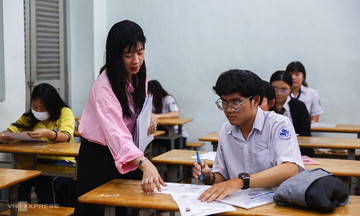
Students at Sanno University, Japan. Photo: university website |
This practice of collecting non-refundable holding fees extends beyond Tokyo to many other regions. A survey by the Kawaijuku Education Organization indicated that by the end of september, only two schools fully refunded fees to applicants who withdrew their enrollment, with others providing partial refunds.
Universities cite the Ministry of Education's june announcement, issued mid-academic year, as making timely adjustments difficult.
"According to Supreme Court precedent, enrollment fees are not considered illegal, so we don't see a need for change," a representative from a private university in Kanto added.
Yuma Igarashi, the research team leader, emphasizes that paying a fee does not necessarily equate to a genuine intent to enroll. To address inequalities in admission opportunities and reduce the financial burden on applicants, Igarashi advocates for extending the enrollment fee payment deadline to 31/3.
Hai Yen (from The Mainichi)