According to data from the Berkeleytime statistics platform, the percentage of University of California, Berkeley (UCB) students receiving F grades in two computer science courses, CS 10 and CS 61A, was 35,3% and 10,6% respectively. This marks a sharp increase compared to less than 10% two years prior.
These results contradict the regulations of the Electrical Engineering and Computer Sciences Department, which limits the percentage of D and F grades in introductory courses to a threshold of 7%. The average grade for both classes also dropped to 2,3/4, equivalent to a C+, significantly lower than the usual 2,8-3,3.
Professor Dan Garcia, who teaches both courses, stated that the main reason for this anomaly is a sharp increase in cheating. Students are overly reliant on large language models like Claude, ChatGPT, or Google Gemini to complete assignments.
"Most students who received F grades were overly dependent on AI for their homework, leading them to completely lose foundational knowledge and feel helpless when entering the exam room," Garcia shared, adding that in CS 10 alone, nearly 30 students were caught cheating on take-home exams.
Notably, Garcia does not grade on a curve (based on ranking relative to classmates) but uses a fixed grading scale. He strongly opposes limiting the percentage of A grades, as Harvard does, arguing that the curving method merely "conceals" students' poor performance and pretends everything is fine.
Furthermore, gaps in math knowledge have also prompted many professors to raise alarms.
Gireeja Ranade, professor of "Optimization Models in Engineering," stated that her class recorded a failure rate of 16,8%, three times higher than the usual for specialized courses. She was shocked to discover many students struggling with linear algebra - a mandatory subject.
This situation led more than 1.300 faculty members from the University of California system, including Garcia and Ranade, to sign a petition last month. The petition demands the reinstatement of SAT and ACT scores for STEM admissions to ensure input quality.
Professors also believe that students themselves are becoming increasingly indifferent to their studies. They are frustrated because in-person academic advising hours, once fully booked, are now consistently empty, despite strong encouragement from faculty.
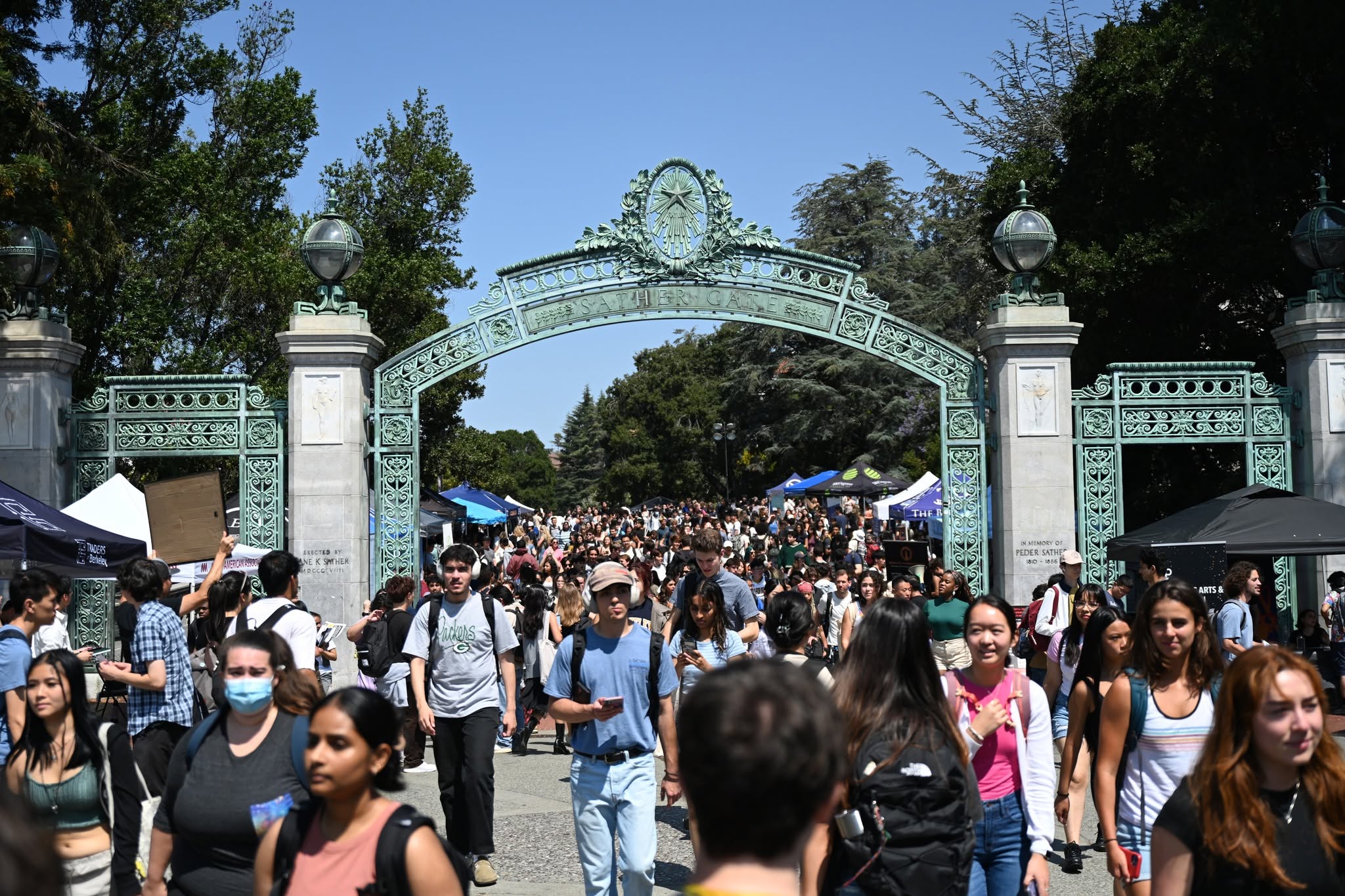 |
A corner of the University of California, Berkeley campus. Photo: University Fanpage
Both professors stated they would reform their teaching methods. Garcia plans to publicly release all failure statistics for this year on the first day of the new term to warn students, while also seeking early screening and support mechanisms for those with knowledge gaps.
Meanwhile, Ranade emphasized that in the age of AI, instructors must teach even more to cultivate critical thinking in students.
"Ambiguity and confusion are the sweat of learning. Unfortunately, many students today do not want to sweat," she concluded, quoting a colleague.
UCB is one of 9 campuses within the University of California system, the number one public university system in the US, excelling in engineering, computer science, business, and more, according to US News.
Khanh Linh (According to The Daily Californian, New York Post)