To avoid waking up with a bloated, uncomfortable feeling in the morning, consider adopting these practices to balance your gut microbiota and support stable bowel movements.
Going to bed and waking up at the same time daily can promote regular bowel movements. A consistent sleep-wake schedule helps regulate the body's circadian rhythm, improving digestive issues. Adults should aim for 7-8 hours of sleep each night and wake early. Having a bowel movement at the same time each day is also a beneficial habit for gut health.
Choose the right foods, prioritizing fiber-rich options, to facilitate easier bowel movements the next morning. Fiber helps move food and waste through the body. Fiber-rich foods include: whole grains (oats, barley, or quinoa), carrots, spinach, kale, and fruits. Avoid overeating, which can lead to bloating and discomfort.
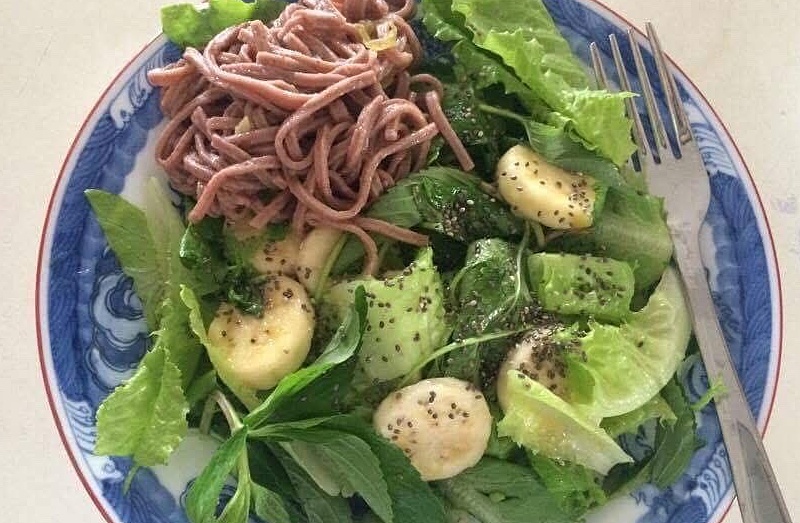 |
Vegetables and brown rice are fiber-rich and easy to digest for dinner. Duc Hanh |
Vegetables and brown rice are fiber-rich and easy to digest for dinner. Duc Hanh
Avoid constipation-inducing foods in the evening, such as fast food, fried items, sugary drinks, and processed meats. These slow digestion, make bowel movements difficult, and can cause abdominal pain and discomfort, disrupting sleep.
Eat dinner early, as eating too late can cause digestive disturbances and increase blood sugar, affecting food metabolism and leading to fatigue and insomnia. Aim to finish your meal two to three hours before bedtime. Individuals with hypoglycemia should have a light snack one hour before sleep to manage hunger and prevent low blood sugar. Prioritize easily digestible foods like nuts and unsweetened milk.
Staying hydrated and drinking warm water in the evening supports regular bowel movements. The body needs water for fiber to work effectively. Insufficient water intake with high-fiber foods can cause discomfort. When dehydrated, the intestines transport food slower, leading to constipation. However, avoid drinking too much water in the evening to prevent nighttime urination. Warm water before bed helps relax the intestines and stimulate colon activity. Herbal teas you can choose include: ginger, peppermint, and chamomile to soothe the gut.
Take probiotics to supplement beneficial bacteria, contributing to gut balance and promoting daily, regular bowel movements. Some probiotics also stimulate more effective intestinal muscle contractions, preventing abdominal pain and bloating. Consult a doctor regarding the appropriate probiotic dosage.
Walking after dinner stimulates intestinal muscles and promotes regular bowel movements. Gentle walking does not disrupt sleep; instead, it aids food movement through the digestive tract and reduces bloating.
Gentle self-abdominal massage relaxes abdominal muscles and helps move stool through the intestines. Begin at the lower right side of the abdomen, massaging clockwise along the path of the large intestine.
Drinking prune juice, which contains a sugar alcohol called sorbitol, can ease bowel movements. Sorbitol draws water into the colon to soften stool. It also stimulates muscle contractions to expel stool. Additionally, prune juice contains a good amount of fiber, promoting regular bowel movements.
By Anh Chi (According to Very Well Health)
| Readers can submit questions about digestive health here for doctors to answer. |