Late on 21/8, the first child of a mother in TP HCM was born via vaginal delivery, presenting with cyanosis, poor reflexes, and weak muscle tone – signs of severe respiratory distress in an extremely premature infant. Neonatal pediatricians immediately resuscitated the baby, kept her warm with a specialized radiant warmer, intubated her for respiratory support, and closely monitored her vital signs. The baby regained a healthy pink color and was transferred to the Neonatal Intensive Care Unit, which admits the most critical premature cases.
According to Dr. Le Anh Thi, Head of the Neonatal Intensive Care Unit, infants born at 23 weeks gestation are classified as "extremely premature", facing significant survival challenges. Typically, a full-term pregnancy lasts 37-40 weeks. At 23 weeks, a baby's organs are still immature and not fully developed to adapt to life outside the mother's womb. Specifically, the lungs do not produce enough surfactant, leading to severe respiratory distress, the brain is vulnerable to injury and hemorrhage, the skin is very thin causing rapid heat and water loss, and the immune system has almost no self-defense capability, making infection likely.
"Weighing just 640 grams – equivalent to a carton of fresh milk – the baby's body was too fragile to adapt outside the womb," the doctor stated.
The baby underwent more than three months of intensive treatment. Upon admission, she received mechanical ventilation and surfactant to support her immature lungs, improving gas exchange and skin color. She required invasive mechanical ventilation for 55 continuous days, then transitioned to non-invasive respiratory support (HFNC) for an additional 18 days. Adjusting ventilator parameters required continuous monitoring to limit lung damage.
During her time in intensive care, the baby repeatedly faced risks of sepsis, requiring courses of strong antibiotics and blood transfusions due to anemia. She was also given vasopressors to maintain blood pressure and support cardiovascular function.
By 17/10 (day 58), the baby's weight reached 1,180 grams, stable enough for transfer to the Neonatal Department for continued monitoring and feeding. Subsequently, the baby girl still experienced mild cyanotic episodes and labored breathing, necessitating continued antibiotic treatment, monitoring for apnea, and respiratory physical therapy to strengthen muscles and clear her airways.
Kangaroo care (skin-to-skin contact) was implemented, which helped stabilize her body temperature, heart rate, breathing rate, and supported neurological development. For nutrition, the baby started with breast milk via a gastric tube, then progressed to spoon feeding, and finally could breastfeed independently – a crucial milestone indicating the maturation of her reflexes. On 26/11, 97 days after birth, the baby weighed 1,745 grams and was cleared for discharge.
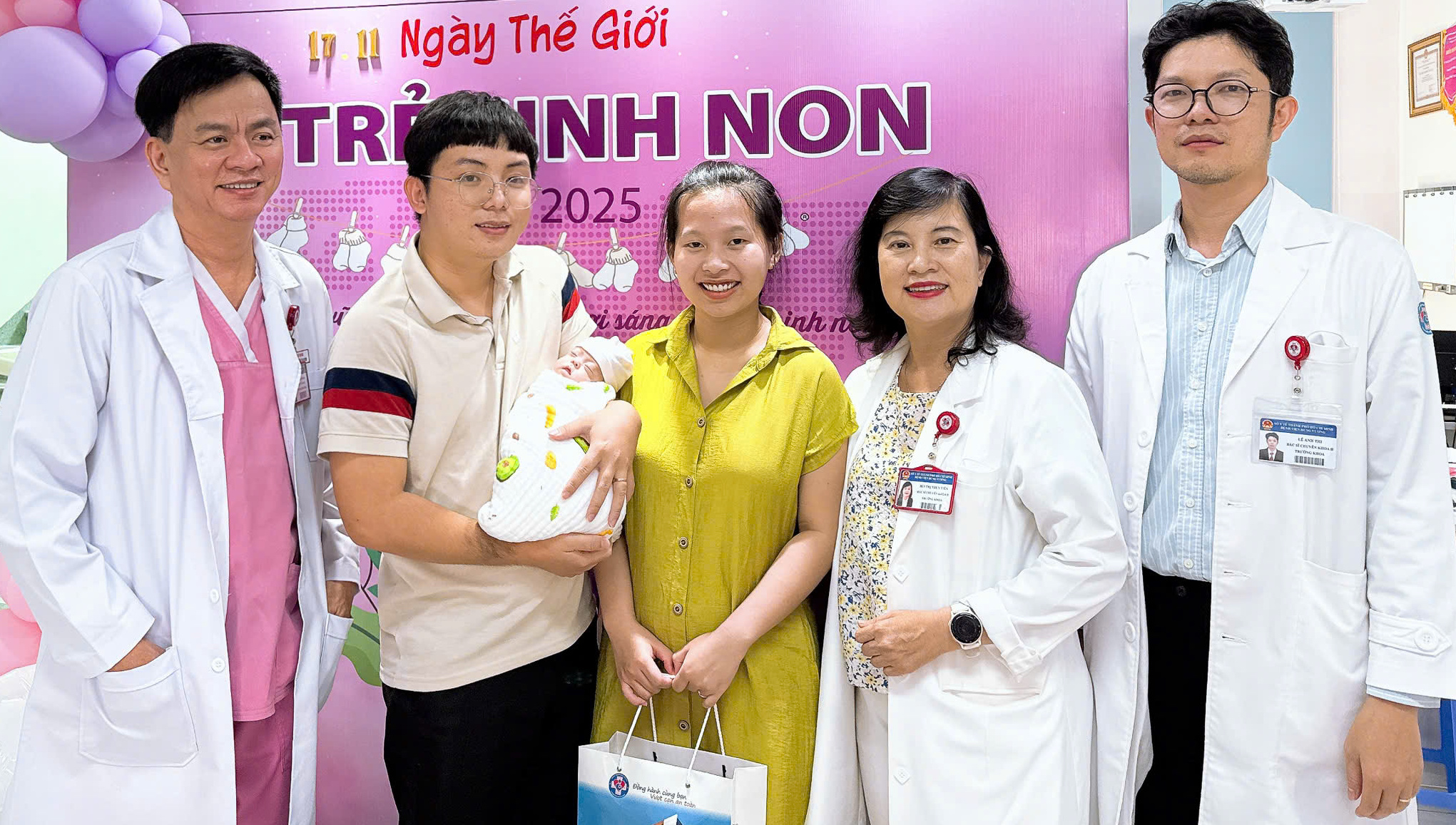 |
Doctors at Hung Vuong Hospital celebrate the baby's discharge. Photo: Hospital provided |
Doctors at Hung Vuong Hospital, a leading obstetrics and gynecology facility in TP HCM and the Southern region, described this as a medical miracle. This case marks the first successful nurturing of an extremely premature infant at 23 weeks gestation at their unit, expanding their capacity to care for very high-risk newborns in the future.
Le Phuong