Josephine Cordina, 64 years old, from southwest Sydney, recently became the first person in Australia to undergo magnetic resonance imaging (MRI)-guided cryoablation. Previously, a 9 mm tumor compressed her spine, causing chronic insomnia and unresponsiveness to painkillers. Instead of traditional open surgery, bone fixation, and weeks of hospitalization, Josephine was pain-free immediately after the procedure and discharged the next day.
The medical team performed this technique at the IR-MACS complex at Liverpool Hospital. Guided by continuous MRI, specialists inserted a small gas probe precisely into the tumor. The device then released argon gas, lowering the temperature to below -40 degrees Celsius. This process created an "ice ball" that enveloped and destroyed the cancer cells instantly.
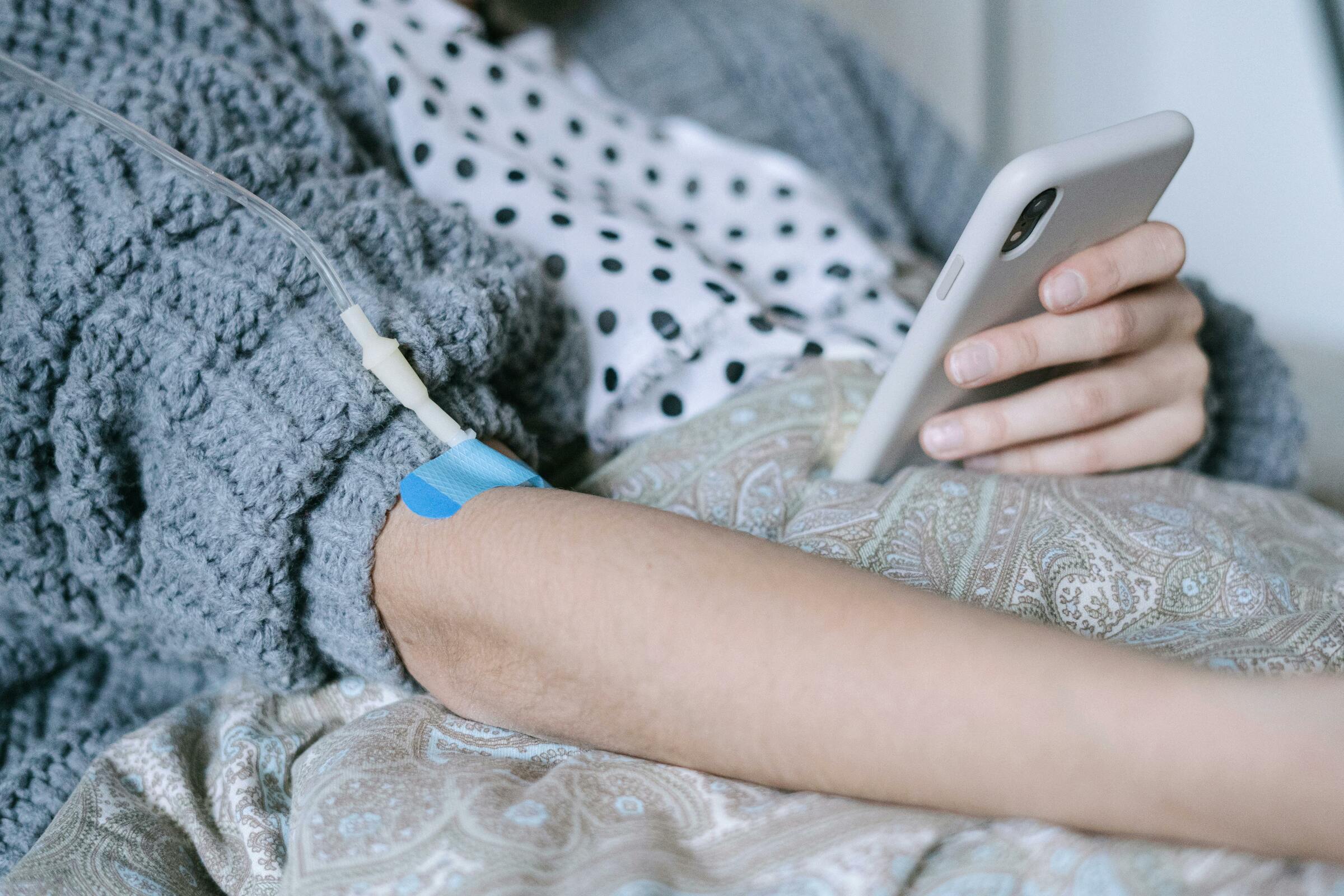 |
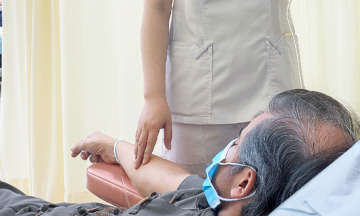
Illustration of a cancer patient. Photo: Pexel |
On 22/11, Dr. Glenn Schlaphoff, Director of Imaging at the hospital, stated that high-resolution imaging technology allows doctors to observe the tumor in real-time during the freezing process. This enables the team to control the "ice ball's" scope, ensuring complete destruction of the lesion without harming healthy tissue or nearby nerves. This method is particularly effective for hard-to-reach or high-risk locations such as the spine, liver, and kidneys.
The case's breakthrough lies in the application of the IR-MACS complex. This is a multimodal integrated system combining interventional radiology, MRI, angiography, and computed tomography (CT) scan in one space. Clinicians seamlessly transition from diagnostic imaging to needle localization and immediate treatment, eliminating patient transfers between waiting rooms.
Liverpool Hospital is currently the first public hospital in Australia to combine cryoablation technology with MRI guidance. This advancement is part of the New South Wales Health Department's AUD 830 million redevelopment project to support advanced cancer therapies. Adopting this minimally invasive procedure reduces the burden of major surgeries, shortens waiting lists, and significantly saves post-operative costs for the public health system.
Globally, the demand for non-invasive treatments is increasing due to rising cancer rates. The National Health Service (NHS) in the UK and hospitals in Germany and Singapore are also piloting similar technologies. However, a fully integrated model combining cryoablation, MRI, and angiography in one room, like at Liverpool, remains rare even by global standards. The hospital expects to incorporate this technique into routine care when the new Cancer Center officially opens in 2027.
By Binh Minh (Source: 9news.au, Global Brands Magazine)