According to the American Red Cross, a blood group is considered "rare" when its prevalence is less than one in 1,000 people. With an estimated prevalence of about one in 6 million, Rh-null stands as the rarest blood group globally.
This unique blood group is characterized by the complete absence of all 61 antigens within the Rhesus (Rh) system. This lack of antigens presents significant challenges for transfusions to individuals with Rh-null blood, as they can only receive blood from donors who share the same Rh-null type.
Conversely, because it carries no Rh antigens, Rh-null can be safely transfused to anyone with a rare blood group within the Rh system, making it invaluable and earning it the moniker "golden blood."
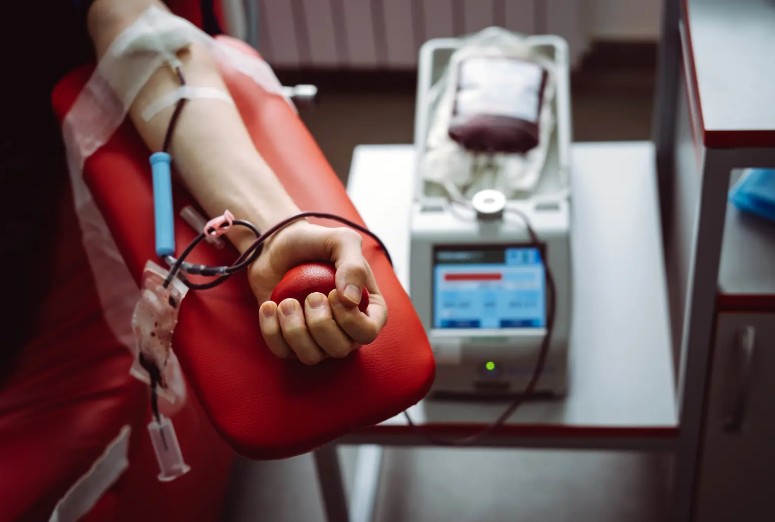 |
Illustration: NY Post |
Medical science typically classifies blood based on two primary antigen systems: ABO (comprising A, B, AB, O) and Rhesus (Rh). The Rh system is most commonly recognized for the presence of the RhD antigen, which determines positive (+) or negative (-) blood types. This classification yields eight basic blood groups: A+, A-, B+, B-, AB+, AB-, O+, O-.
However, the Rh system is considerably more complex, containing over 60 types of antigens. "We test for RhD because it is the most immunogenic and clinically important antigen, but it is not the only one," explained Zaher Otrock, a transfusion medicine physician, on Cleveland Clinic.
The extreme scarcity of "golden blood" has spurred scientists to explore methods of laboratory cultivation. In 2018, Professor Ash Toye's team at the University of Bristol (UK) successfully recreated this blood group using CRISPR-Cas9 gene editing technology. Despite this breakthrough, the technology remains controversial and strictly regulated, potentially requiring many more years before it can be applied to humans.
Currently, Professor Toye co-leads the RESTORE clinical trial, the world's first study to transfuse laboratory-grown red blood cells into human volunteers. Nevertheless, he acknowledges that obtaining blood directly from donors remains far more efficient and cost-effective for the foreseeable future. "For individuals with ultra-rare blood groups, being able to cultivate additional blood for them would truly be a tremendous step forward," he stated.
Binh Minh (According to BBC, NY Post)