Answer:
Knee osteoarthritis is a condition where the joint cartilage wears away, causing the joints to rub against each other more forcefully. This leads to pain, swelling, stiffness, reduced mobility, and sometimes the formation of bone spurs in the knee area.
In mild to moderate stages, patients often receive conservative treatment, which includes medication (oral or injectable) and physical therapy. Joint injections deliver medicines such as corticosteroids and hyaluronic acid directly into the knee joint to reduce inflammation, relieve pain, increase joint lubrication, and improve mobility.
Your indication for knee replacement suggests the disease has progressed severely, causing significant pain and limited mobility, or that you have not responded to conservative treatments. Injections cannot regenerate cartilage or repair bone structures. While you may use joint injections to delay surgery, their effectiveness will diminish over time, from one year to only a few months.
Frequent joint injections, especially corticosteroids, can also lead to complications such as muscle atrophy and joint infection, making subsequent knee replacement surgery more challenging.
 |
Dr. Thu explains joint function to a patient. *Illustration: Tam Anh General Hospital*
Many people worry about not being able to walk after knee replacement surgery. Like other surgical procedures, knee replacement can have complications such as infection and blood clots. However, the rate is very low if closely monitored and managed with multidisciplinary coordination at reputable hospitals and medical facilities.
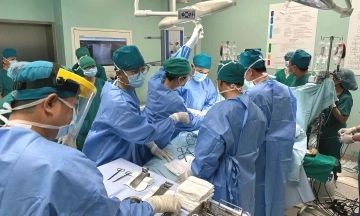
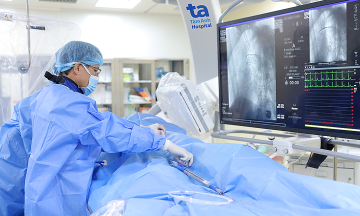
Modern knee replacement techniques, including mechanical alignment, kinematic alignment, and functional alignment, are minimally invasive and offer rapid recovery. Hospitals also combine these techniques with robotic surgical assistance systems like Cuvis-Joint. This system provides precise bone positioning and cutting, helps preserve more healthy bone tissue, and balances soft tissues and load distribution within the joint space. As a result, the joint moves more flexibly and naturally after surgery, extending the lifespan of the artificial joint. Patients can typically walk on the first day after surgery and are discharged after one or two days.
Once surgery is indicated, you should undergo the operation as soon as possible. Joint injections cannot replace surgery and should only be used in cases where underlying medical conditions prevent immediate surgery.
Dr. Pham Thi Xuan Thu, MS
Department of Rheumatology and Musculoskeletal Diseases
Tam Anh General Hospital, Ho Chi Minh City
| Readers can submit questions about musculoskeletal diseases here for doctors to answer. |