Initially, doctors in the Pediatrics Department at Tam Anh General Hospital Hanoi diagnosed Phuc with acute pharyngitis and severe vomiting with dehydration. After fluid replacement, the patient became alert, his headache subsided, and vomiting stopped. However, he continued to experience severe headaches in the temples and crown, which worsened with changes in posture, along with nausea, neck stiffness, and light sensitivity.
Cerebrospinal fluid analysis revealed a sharp increase in white blood cell count, primarily lymphocytes. Doctor Bui Thi Khuyen, a specialist in Pediatrics (Level II), diagnosed meningitis and ordered tests to identify the cause. The results confirmed that Phuc was positive for Enterovirus (EV).
Enterovirus meningitis is an infection of the membranes surrounding the brain and spinal cord. Enterovirus is a group of viruses with many different strains, some of which are highly virulent, capable of causing epidemics, and commonly circulate during the summer and autumn. The virus spreads through the digestive (fecal-oral) and respiratory routes.
According to Doctor Khuyen, most Enterovirus infections are asymptomatic or cause only fever, rash, cold-like symptoms, or hand, foot, and mouth disease. However, some strains can cross the blood-brain barrier, invade the central nervous system, and cause meningitis or encephalitis. The disease is common in infants and young children under 5 years old due to their immature immune systems and habits like thumb-sucking or putting toys in their mouths.
Compared to bacterial meningitis, Enterovirus meningitis generally has a good prognosis and a low rate of complications if detected early. However, if diagnosed late or treated improperly, the disease can still lead to acute myocarditis, acute pulmonary edema, and cerebral edema, Doctor Khuyen explained.
Currently, there is no specific treatment or vaccine for Enterovirus. The primary treatment regimen involves supportive care such as anti-inflammatory medication, fever reduction, pain relief, electrolyte balance, and intracranial pressure management.
Doctors advised Phuc to rest in bed with his head elevated 30 degrees to reduce intracranial pressure, combined with intravenous anti-inflammatory drugs and appropriate nutritional supplementation. After 5 days of treatment, he was alert, fever-free, no longer vomiting, and his headaches had resolved, allowing him to be discharged from the hospital.
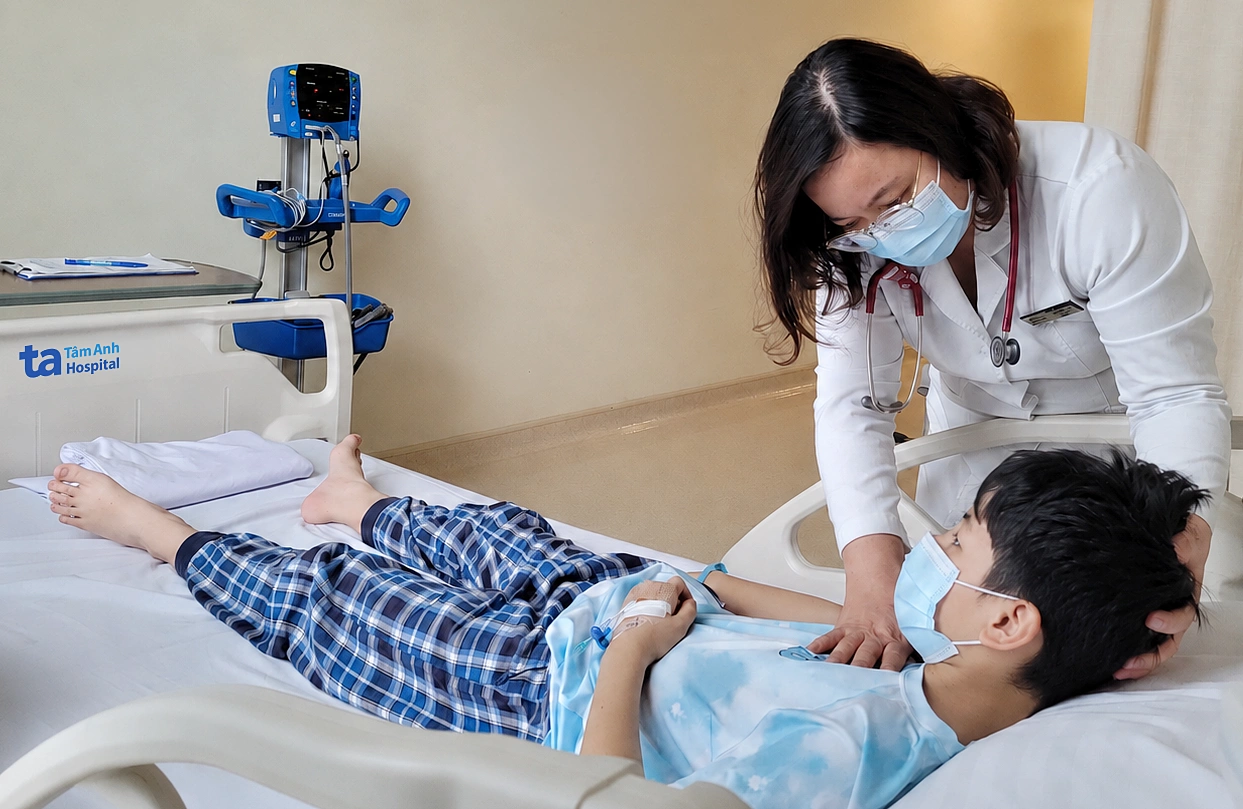 |
Doctor Khuyen examines Phuc. Photo: Hai Au |
Doctor Khuyen stated that headaches are a prominent symptom of viral meningitis. Children may also experience nausea, vomiting, mild fever, light sensitivity, or a stiff neck. Some cases may also show other signs of Enterovirus infection, such as localized blisters or a generalized rash, but these are less common.
To prevent the disease, doctors advise parents to ensure children wash their hands frequently with soap before eating, after using the toilet, and after coughing or sneezing. Families should eat cooked food, drink boiled water, use clean food, sanitize toys, and disinfect frequently touched surfaces like doorknobs and furniture to limit virus transmission.
Parents should take their children to the hospital promptly if they exhibit symptoms such as high fever that is difficult to reduce, severe headaches, frequent vomiting, stiff neck, light sensitivity, lethargy, or unusual fatigue.
Trinh Mai
| Readers can send questions about children's diseases here to receive answers from doctors |