Answer:
The coronary arteries are the system of blood vessels that supply the heart muscle, consisting of three main branches: the left anterior descending artery, the circumflex artery, and the right coronary artery. Coronary artery narrowing of 50% or more is classified as coronary artery disease. The disease develops from the accumulation of calcium, cholesterol, fats, and other substances in the blood vessels, forming atherosclerotic plaques that adhere to the artery walls, which restricts blood flow to the heart muscle.
In younger individuals, coronary artery narrowing typically ranges from 1-20%, progressing to 30% or 40% with subtle, often unrecognized signs. As people age, atherosclerotic plaques are more likely to develop, and the degree of narrowing can gradually increase from 50% to complete blockage (100%) if not detected and treated effectively.
70% coronary artery narrowing means that atherosclerotic plaque occupies a significant portion of the vessel lumen, causing a narrowing of up to 70% within the coronary artery. This degree of narrowing is considered significant and begins to restrict blood flow to the heart during strenuous activity or exertion. If left uncontrolled, the condition can lead to impaired heart function in the long term.
However, in its early stages, symptoms are often subtle and not pronounced, as in your case, which can lead to them being mistaken for signs of aging or the body's reaction to exertion.
 |
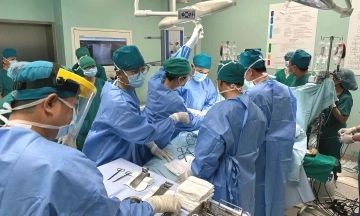
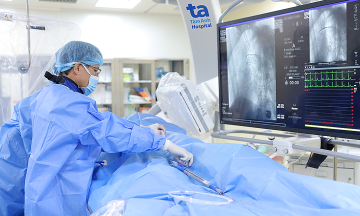
Doctors place stents for patients with coronary artery narrowing to prevent acute myocardial infarction. Illustration: Tam Anh General Hospital |
Coronary artery disease intervention depends not only on the degree of vessel narrowing but also on factors like gender, age, frequency and severity of angina, and response to medication. Typically, individuals with coronary artery narrowing between 50% and 80% do not require stent placement if they are asymptomatic or lack risk factors such as: smoking, physical inactivity, or underlying conditions (diabetes, hypertension, dyslipidemia).
If a patient experiences chest pain, fatigue, shortness of breath, or has associated risk factors, doctors will conduct in-depth subclinical tests, including an electrocardiogram, stress test, and fractional flow reserve (FFR) measurement, to determine whether a stent is needed.
In addition to hemodynamic assessment, doctors may perform optical coherence tomography (OCT), which is likened to an "intravascular microscope." OCT provides detailed visualization of atherosclerotic plaque structure, helping to identify "unstable" plaques (with thin caps and large lipid cores) that pose a risk of rupture, leading to acute myocardial infarction, even if the coronary artery narrowing is not severe. For very severe narrowing (above 80-90%), doctors recommend early stent placement to address the constriction and prevent complete blockage.
The risk of myocardial infarction for individuals with 70% coronary artery narrowing is not excessively high if the patient is asymptomatic and can effectively manage risk factors. However, the degree of danger is not solely determined by the extent of narrowing; it also heavily depends on the stability of the atherosclerotic plaque.
In some cases, narrowing may only be 60-70%, but the atherosclerotic plaque is unstable, meaning its core contains a large amount of lipids while the outer fibrous cap is very thin (TCFA). This structure is fragile and prone to rupture when a patient experiences events such as intense emotional stress or a sudden surge in blood pressure. When an atherosclerotic plaque ruptures, it triggers the formation of a blood clot, causing sudden vessel blockage and leading to acute myocardial infarction.
To determine if you need a stent, you should undergo a specialized cardiovascular examination so doctors can assess relevant factors. Concurrently, you should adhere to a healthy lifestyle to slow the progression of coronary artery narrowing, including a diet prioritizing: vegetables, fruits, whole grains, and reducing foods high in saturated fat and salt. Regular exercise, stress management, not smoking, limiting alcohol, and routine health check-ups are also crucial.
Master, Doctor Pham Hoang Trong Hieu
Interventional Cardiology Center
Tam Anh General Hospital, TP HCM
| Readers can submit cardiovascular questions here for doctors to answer. |