Prolonged heavy rains from 18/11 to 19/11 caused river levels in Khanh Hoa, Dak Lak, and Gia Lai provinces to rise to record highs. This situation not only cut off traffic and forced hundreds of households to evacuate but also left severe environmental consequences, directly threatening public health as soon as the water receded.
Doctor Vu Minh Dien, from the National Hospital for Tropical Diseases, noted that the elderly, young children, and those with underlying health conditions face the highest risk due to weakened immune systems. In cold, humid conditions with nutritional deficiencies, children are susceptible to respiratory illnesses such as influenza, tonsillitis, pneumonia, and even superinfections. Additionally, gastrointestinal diseases like cholera, dysentery, and typhoid are poised to erupt from contaminated water sources. Severe complications of dehydration and electrolyte imbalance can lead to low blood pressure, circulatory collapse, and multi-organ failure.
Humid environments and stagnant water after the storm also provide a breeding ground for Aedes mosquitoes, increasing dengue fever cases. Typical symptoms include high fever, muscle and joint pain, rash, and subcutaneous hemorrhage. Doctors advise residents to lower fever with paracetamol when body temperature exceeds 38.5 degrees Celsius, actively rehydrate, eat easy-to-digest food, and seek medical attention if symptoms do not improve. Furthermore, contaminated water is a primary cause of eye diseases such as keratitis, pink eye, or blepharitis.
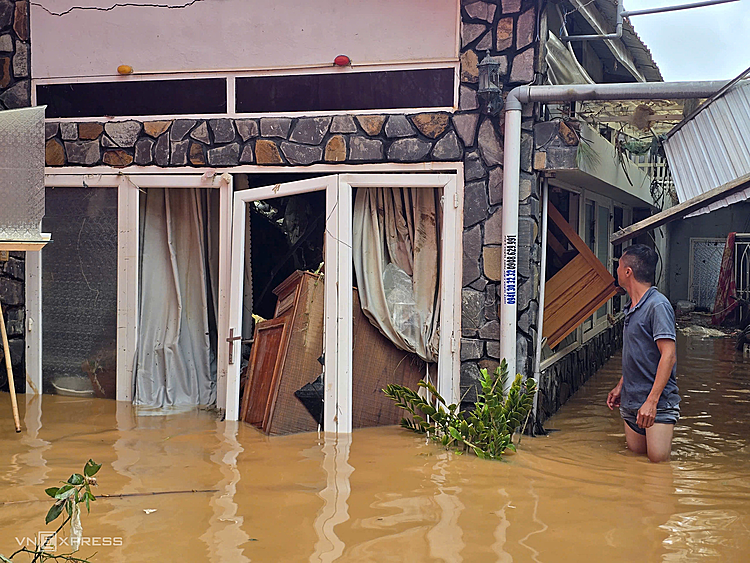 |
Flooding in many homes in Lam Dong. Photo: Phuoc Tuan. |
Frequent contact with dirty water and mud exposes residents to dermatological diseases. Doctor Nguyen Tien Thanh, of the Vietnam Dermatology Association, stated that contact dermatitis and fungal infections are the two most common conditions. The skin's natural protective barrier weakens with prolonged water immersion, creating openings for bacteria to enter, causing erythema, blisters, and itching, especially between the toes, groin, and armpits. Experts caution patients not to self-medicate with corticosteroid-containing creams to prevent lesions from spreading and becoming harder to treat.
More concerning is the appearance of Whitmore's bacterium (Burkholderia pseudomallei), also known as "flesh-eating bacteria". Floodwaters disturb deep soil layers, spreading the bacteria widely into the environment. The pathogen enters through scratches and open wounds when residents clean up without protective gear. This acute bacterial infection is difficult to detect but progresses rapidly, with a high mortality rate, especially in immunocompromised individuals.
To prevent illness, Doctor Vu Viet Sang, from Military Hospital 108, recommends that residents follow the principle of "clean as the water recedes". Families should clean water tanks, treat domestic water with Chloramine B or alum, and filter sand according to medical guidelines. Eating cooked food, drinking boiled water, and washing hands with soap must be strictly followed. Residents should limit wading in stagnant water, thoroughly clean and dry hands and feet immediately after contact with dirty water. Additionally, the community needs to work together to collect waste and eliminate mosquito larvae to prevent widespread disease transmission.
Thuy Quynh