Many people worry that overly sweet fruit will harm the body, with some diabetes and fatty liver patients completely abstaining. However, Doctor Thai Minh Cat, a Taiwan-based obesity treatment specialist, states that fruit is not a "killer" destroying health; the true key lies in the quantity and method of consumption.
On his personal page, he pointed out eight widespread misconceptions that many people hold:
Drinking 100% pure juice is equivalent to eating whole fruit.
Doctor Thai Minh Cat explains that the juicing process removes most fiber. This causes the rate of sugar absorption into the body to skyrocket, making blood sugar levels "spike and then crash" like a rollercoaster ride. Moreover, while two oranges might make you feel full, a glass of juice often requires at least 5 oranges to fill.
Eating fruit in the morning is "gold," while eating it at night is "trash."
For healthy individuals, the time of day for consumption is not the deciding factor; the total daily intake is the key. Remember this simple mantra: "Eat a fist-sized portion of fruit twice a day," and you will never exceed the recommended amount.
Eating fruit causes fatty liver.
Fatty liver only results from excessive fruit consumption. Conversely, eating an appropriate amount helps prevent this condition. The fiber and antioxidants in fruit offer excellent liver protection when consumed in reasonable quantities.
Eating fruit leads to diabetes.
In reality, only eating too much fruit poses a risk of developing the disease, while moderate consumption helps prevent diabetes. Many large-scale studies have shown that people who maintain a habit of eating a suitable amount of fresh fruit daily have a significantly lower risk of developing type 2 diabetes compared to those who avoid it entirely.
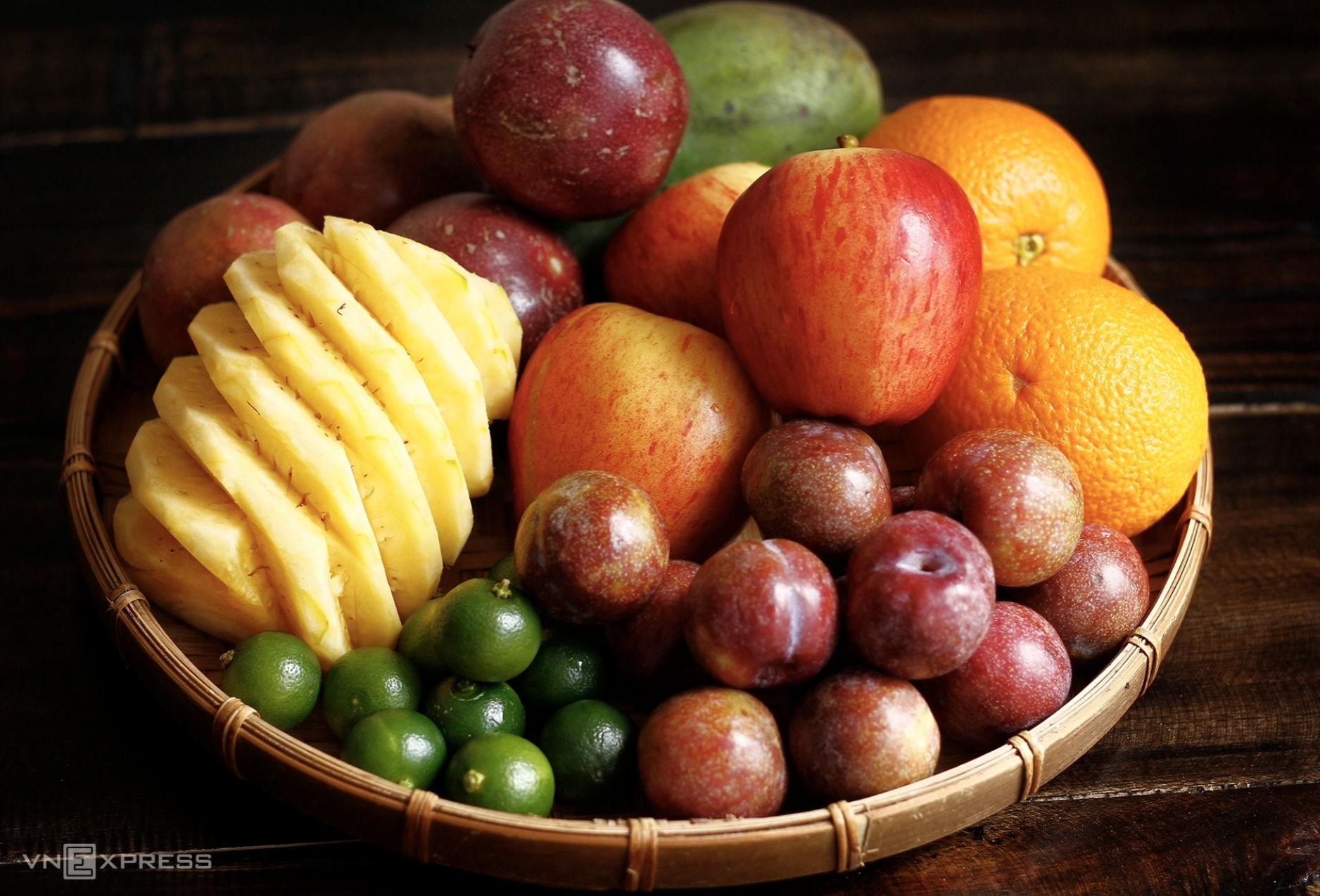 |
Regardless of its origin, all fruit is beneficial food as long as portion sizes are controlled. Photo: Bui Thuy |
Fruit contains fructose, and fructose is a harmful type of sugar.
"The truly harmful type of sugar is high-fructose corn syrup added to artificial products," Doctor Thai asserts.
For fruit, it must be evaluated based on its overall structure, including fiber and water – components that are very beneficial for health. Natural, wholesome foods provided by nature should not be equated with refined syrups found in bubble tea and industrial beverages.
The sweeter the fruit, the higher its sugar content.
Sweetness does not equate to sugar content. The sweetness of fruit is influenced by organic acids, water content, and the ratio of different sugars like fructose, sucrose, and glucose.
Some fruits may not taste sweet but have a high sugar content; conversely, some are very sweet but, due to their juiciness, have a lower actual total sugar content.
People afraid of elevated blood sugar should only eat non-sweet fruits.
Even with different types of fruit, as long as portion control principles are well managed, the total sugar intake will not exceed dangerous levels. In medical studies, experts primarily focus on the quantity consumed, rather than differentiating between fruit varieties.
Eating over 100 g of fruit will stop the body from burning fat.
The human body's metabolic system is a complex dynamic equilibrium, not a simple on/off switch.
Doctor Thai states frankly: "The thing that absolutely stops your body from burning fat is not that 100 g of fruit, but rather the full-size, sugar-laden bubble tea you just drank, or the plate of fried chicken from your late-night meal."
According to Doctor Thai, regardless of where fruit comes from, as long as portion sizes are controlled, it is all beneficial food. The doctor emphasizes that the public should stop stigmatizing fruit as "poison." A balanced diet and moderate consumption are the most appropriate ways to maintain a healthy body.
My Y (According to SETN)