Doctor Tran Thi My Linh, a specialist in Dermatology - Aesthetic Dermatology at Tam Anh General Hospital, TP HCM, noted that Mr. Hung's nose, nose tip, and part of his forehead (T-zone) showed significant redness with superficial dilated capillaries, despite not having many pimples. His skin was very sensitive and bled easily with friction. The doctor diagnosed him with vascular rosacea, a condition often mistaken for allergic dermatitis or alcohol-induced facial redness.
Patients with vascular rosacea experience prolonged facial redness or episodic flushing, often accompanied by a burning, stinging sensation or increased sensitivity to external triggers. The most prominent sign of this type is the presence of superficial dilated capillaries, clearly visible to the naked eye, particularly in the central facial areas such as the nose, cheeks, chin, and forehead. Unlike other forms, vascular rosacea has few or no pustules.
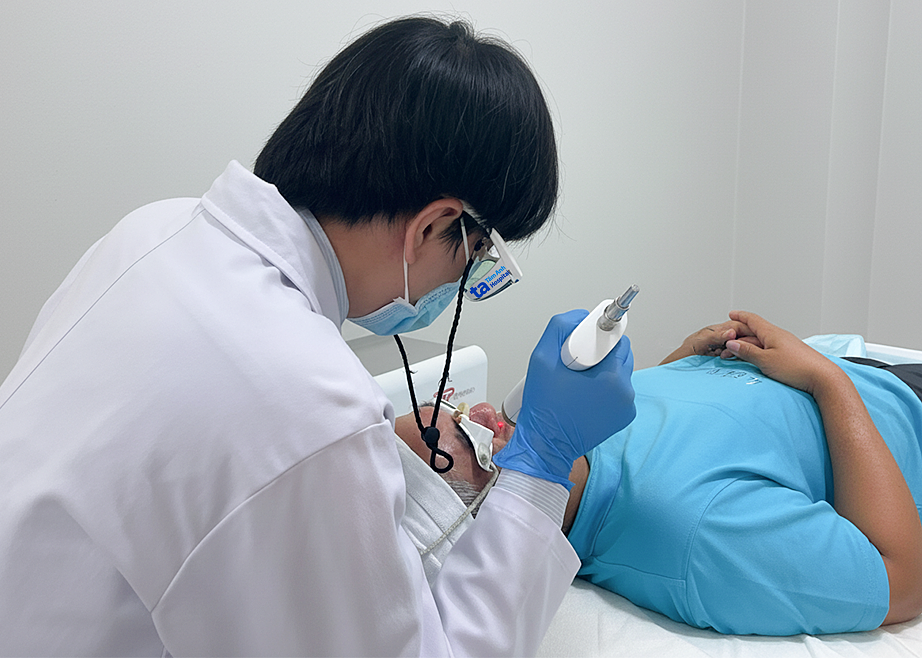 |
The doctor uses long-pulsed YAG laser to treat Mr. Hung's dilated capillaries. *Photo: Tam Anh General Hospital* |
According to Doctor Linh, rosacea is a common chronic skin condition, often seen in light-skinned individuals between ages 30 and 50. While women are more frequently affected, rhinophyma, a complication involving nasal hypertrophy, is more common in men. Factors such as sun exposure, spicy foods, alcohol, stress, or weather changes can easily cause blood vessels to dilate and the face to flush. If prolonged, vessel walls lose elasticity, leading to fine capillary networks and increasingly thin, vulnerable skin. Without treatment, the condition can progress to rhinophyma, a characteristic deformity of long-standing rosacea.
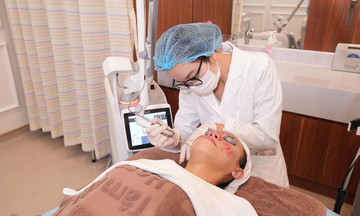
Doctor Linh prescribed long-pulsed YAG laser treatment for Mr. Hung to help shrink dilated capillaries, reduce redness, and achieve a more even skin tone. The treatment plan consisted of 4-6 sessions, each spaced 2-4 weeks apart. He also received a combination of anti-inflammatory topical medications and skin barrier repair products to reduce irritation and limit the risk of recurrence.
Doctor Linh noted that the long-pulsed YAG laser selectively targets dilated blood vessels, leading to a noticeable reduction in redness immediately after each treatment session. However, patients must also use topical medications and adjust their lifestyle to maintain the effectiveness. After 3 laser sessions and following medication instructions, the redness on Mr. Hung's nose significantly decreased. His skin no longer bled easily when washing his face, and the red patches on his forehead gradually faded.
Following laser treatment, patients need strict sun protection by applying broad-spectrum sunscreen, wearing protective clothing when outdoors, and moisturizing twice daily for better skin recovery. For the first two days, patients should avoid steaming, strenuous activity, or using harsh cleansers. Mild redness may occur but will diminish with cool compresses and prescribed medication.
The doctor advises against complacency regarding persistent redness on the nose or face. Individuals should visit a hospital with a Dermatology - Aesthetic Dermatology department for early diagnosis and treatment to reduce the risk of severe vascular dilation or nasal deformity.
Minh Huong
*Character's name has been changed