An MRI scan at a hospital revealed a lesion under Sen's liver capsule, measuring 30x28x17 mm, which doctors initially diagnosed as a digestive disorder. The patient did not exhibit typical signs of ectopic pregnancy, such as a missed period or vaginal bleeding. Doctor Hoang My Kim, from the Obstetrics and Gynecology Center at Tam Anh General Hospital Hanoi, identified this as a case of fetal implantation within the liver capsule. Fetal implantation in the liver capsule occurs in 1/15,000 pregnancies. If not detected early, the developing fetus can cause the liver capsule to rupture, leading to massive blood loss and a high risk of death.
Over 90% of ectopic pregnancies occur in the fallopian tubes; the remaining cases can be found in the ovaries, abdominal cavity, peritoneum, kidneys, or other unusual locations, according to Doctor Kim. In patients without clear obstetric symptoms, fetal implantation in the liver is often mistaken for liver abscess, liver cysts, liver tumors, or digestive disorders.
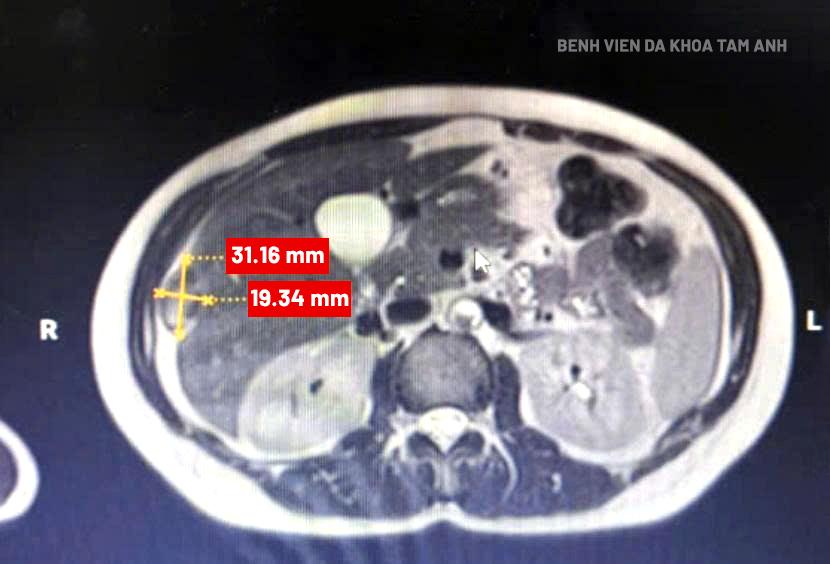 |
MRI image showing the fetal mass implanted in Sen's liver. *Photo: Tam Anh General Hospital*
The mechanism of fetal implantation in the liver is not fully understood; it may occur when the embryo escapes the fallopian tube, travels into the abdominal cavity, and then attaches to the liver. In the early stages, the fetus continues to develop, but by mid-pregnancy, there is a risk of liver rupture and abdominal hemorrhage. Risk factors include salpingitis (inflammation of the fallopian tubes), pelvic inflammatory disease, or intrauterine device (IUD) use.
Doctor Kim assessed Sen's ectopic pregnancy as being in a sensitive location, where surgery carried a high risk of complications. The patient required treatment with chemotherapy to dissolve the fetal mass instead of surgery. If beta-hCG levels do not decrease or if the mass is large with a high risk of rupture, surgery becomes necessary. After treatment, the patient's beta-hCG levels were continuously monitored to ensure the fetal mass had dissolved.
Doctor Kim advises women of reproductive age who experience prolonged abdominal pain, accompanied by a low-grade fever or unexplained digestive disorders, to seek medical attention.
Thanh Ba
| Readers can ask questions about obstetrics and gynecology here for doctors to answer. |