Han, an office worker in TP HCM, frequently ate processed foods and drank bubble tea to curb cravings and manage work stress. Believing her youth offered immunity, she ate without restraint. In the last 4 months of last year, Han gained from 52 kg to 58 kg, despite being only 1,53 m tall, making her feel sluggish and heavy.
In mid-December, during a routine company health check-up, she was alarmed when her blood fat levels sharply increased. Skeptical of the diagnosis, she sought a second opinion at another hospital, but received the same results. Doctors advised her to lose weight, limit fast food, and increase physical activity to lower her blood fat levels and prevent cardiovascular complications.
"I'm scarred for life", Han said, "I never thought my eating habits could lead to such a condition."
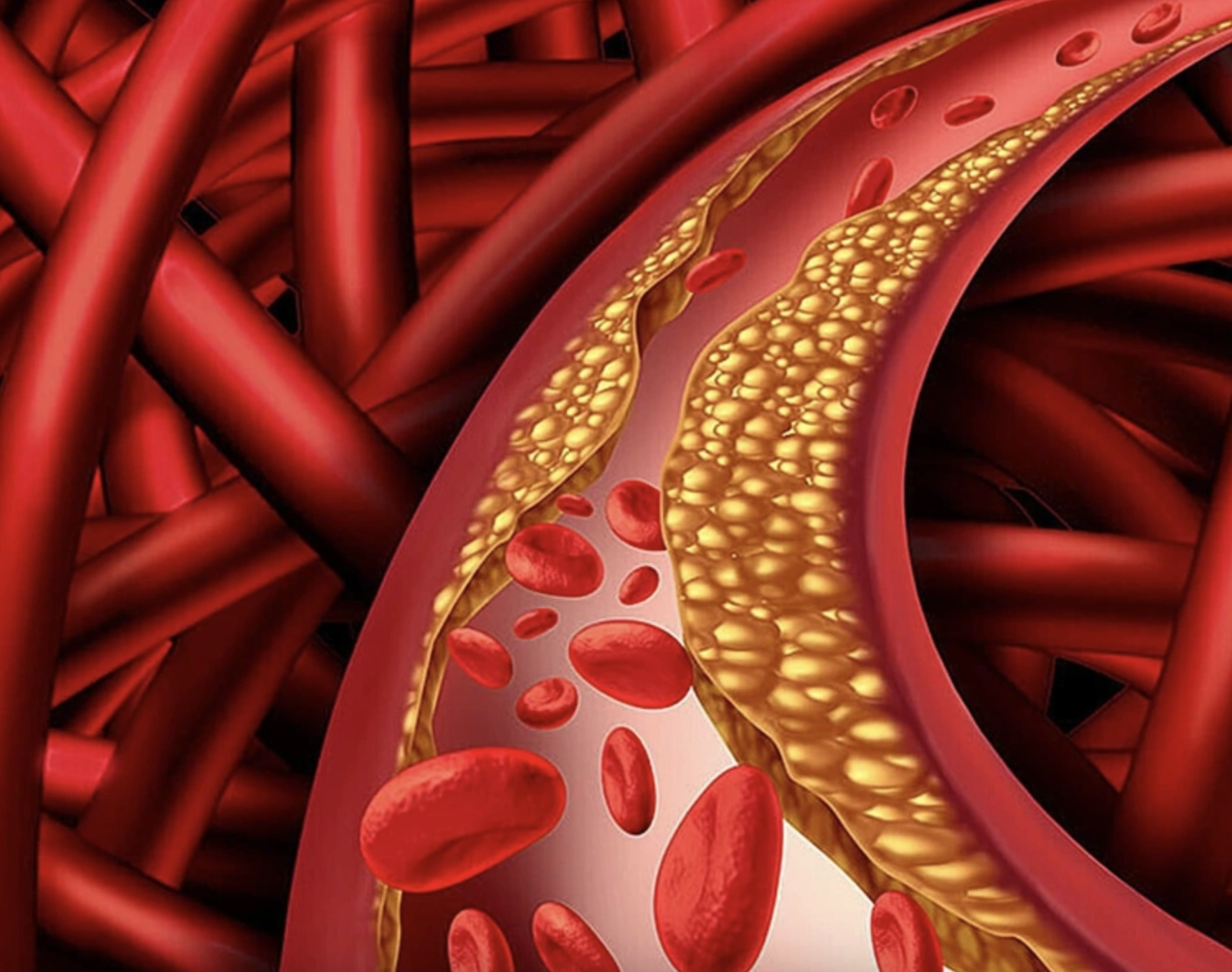 |
Illustration of cholesterol accumulation in blood. Photo: My Health My Life
In mid-July, Medlatec General Hospital also treated a 22-year-old man who sought care for pain and swelling in his left ankle joint. Test results revealed he suffered from multiple metabolic conditions: obesity, gout, lipid metabolism disorder, and grade 2 fatty liver.
The young man was surprised because he ate little to no carbohydrates, and even ran and went to the gym regularly. However, he habitually consumed large amounts of red meat, organ meats, seafood, and alcohol, believing exercise would burn off all the calories. Doctors explained that these habits directly caused his high blood fat and obesity. He was subsequently advised to drink plenty of water, eat more green vegetables and fruits, and engage in regular, moderate exercise.
Cholesterol, a component of blood fat, is vital for the body, participating in nerve cell activity and hormone production. However, when levels of 'bad' cholesterol (low-density lipoprotein or ldl) or triglycerides rise, it becomes a health risk, leading to high blood fat, also known as dyslipidemia.
This condition is becoming an alarming concern in Vietnam. According to the national survey on non-communicable disease risk factors, the percentage of adults (18-69 years old) with high cholesterol increased from 30,2% to 44,1%. Another statistic from the Vietnam Medical Association indicates that almost 50% of urban adults suffer from high blood fat. The primary cause identified is lifestyle, specifically an imbalanced diet and insufficient physical activity.
While official statistics on the prevalence of this disease among young people aged 18-30 in Vietnam are unavailable, hospitals are reporting a growing number of cases in this age group. This trend is also global. A 2021 study published in the Journal of the American College of Cardiology revealed that up to 27% of young adults in the US (approximately 26,3 million people) had elevated bad cholesterol.
Dr. Hoang Tien Trong Nghia, head of the Neurology Department at Military Hospital 175, stated this is a concerning health indicator as it directly links to the risk of atherosclerosis and various other serious diseases.
The main cause stems from modern lifestyles. Habits of consuming excessive fried foods, processed foods, sweets, and a sedentary lifestyle prevent the body from fully metabolizing and eliminating excess fat. Associate Professor Dr. Lam Vinh Nien, head of the Nutrition and Dietetics Department at University Medical Center TP HCM, emphasized that high blood fat affects both lean and overweight individuals. Many mistakenly believe only overweight people are susceptible, leading lean individuals to be complacent and maintain unhealthy eating habits.
Furthermore, a lack of physical activity reduces lipid metabolism efficiency. Statistics show that approximately 25% of adults in Vietnam do not meet the World Health Organization (WHO) recommendation of at least 150 minutes of moderate-intensity activity per week.
 |
Han's diagnosis of lipid metabolism disorder from her routine company health check-up. Photo: Provided by subject
The most concerning aspect of high blood fat in young people is its often asymptomatic nature, progressing silently until severe complications arise. Many young individuals only discover the condition incidentally during health check-ups or when symptoms of other diseases appear.
Uncontrolled, high blood fat can lead to fatty liver, atherosclerosis, and ultimately cardiovascular events such as myocardial infarction and stroke. A 2020 study indicated that the younger a person is when diagnosed with high blood fat, the greater their lifetime risk of cardiovascular disease.
High blood fat is a leading risk factor for stroke. Data from the Asia-Pacific Stroke Research Collaboration (APCSC) shows that a mere 1 mmol/L (equivalent to 38,7 mg/dL) increase in total cholesterol concentration raises the risk of ischemic stroke by 25%. The WHO also reported that high blood fat is linked to 48% of cerebrovascular accident cases and 56% of myocardial ischemia cases worldwide.
This process occurs when bad cholesterol accumulates in blood vessel walls, causing inflammation and forming atherosclerotic plaques. When these plaques rupture, they form blood clots, leading to sudden vascular blockage, resulting in heart attack or stroke.
Dr. Nghia warned that the risk multiplies when high blood fat is accompanied by other conditions. "If hypertension is also present, the cardiovascular risk triples. If diabetes is added, this 'deadly trio' increases the risk more than 6 times", he said.
Therefore, health experts recommend that everyone, especially young people, proactively prevent this condition by maintaining a healthy lifestyle: eating a balanced diet, limiting fats and sweets, increasing green vegetable intake, exercising regularly, and avoiding excessive alcohol and tobacco use. Most importantly, annual routine health check-ups are crucial, even when feeling perfectly healthy, to detect and intervene early against this 'silent killer'.
My Y