Phase one trials will determine the optimal dose and monitor side effects. Participants include individuals previously treated for early-stage lung cancer with a high risk of recurrence, along with some undergoing lung health checks within the National Health Service (NHS) screening program.
Previously, laboratory tests showed the vaccine could "train" the immune system to identify and eliminate abnormal lung cells before they develop into cancer.
LungVax was developed by researchers at the University of Oxford and University College London (UCL), utilizing technology similar to the Oxford/AstraZeneca Covid-19 vaccine. The vaccine introduces "genetic instructions" into the body, enabling the immune system to recognize and destroy abnormal cells. These cells carry warning proteins called neoantigens, which arise from DNA mutations.
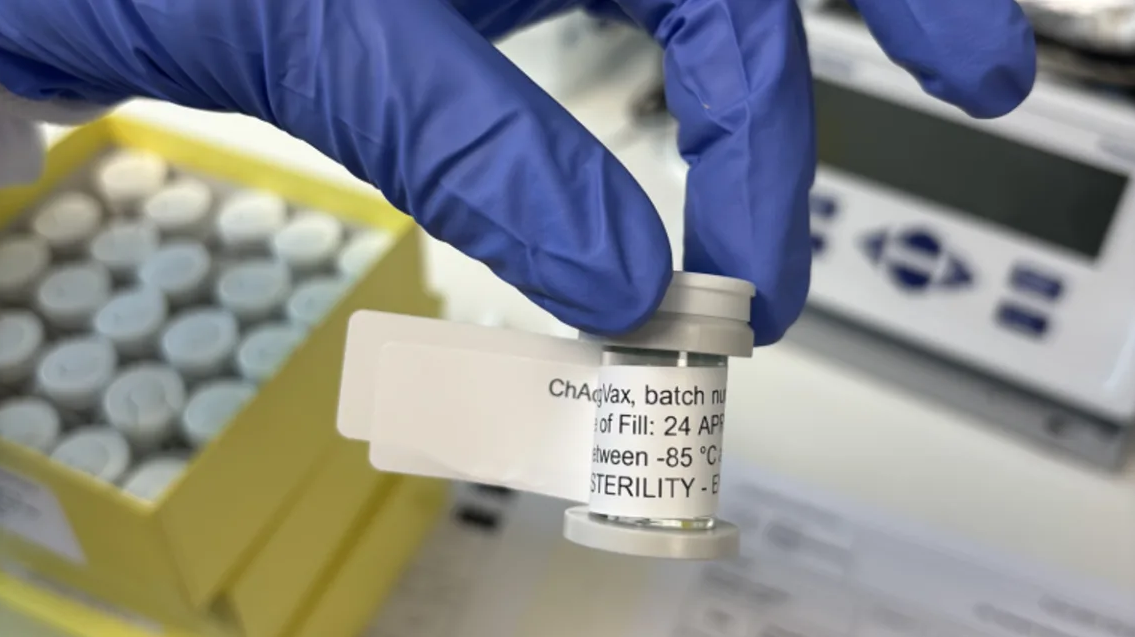 |
A vial of LungVax in a researcher's hand. Photo: Sarah Blagden/University of Oxford. |
A vial of LungVax in a researcher's hand. Photo: Sarah Blagden/University of Oxford.
Unlike therapeutic vaccines, LungVax aims for early prevention, eliminating abnormal cells before they transform into cancer. While further research and trials are needed, LungVax represents a significant step forward in efforts to prevent cancer and disease early.
Lung cancer is currently the leading cause of cancer death in the UK, accounting for approximately 20% of all cancer fatalities annually. The disease is challenging to detect and treat early, with only about one in ten patients surviving beyond 10 years after diagnosis.
By Van Ha (Source: Cancer Research UK)