The elderly man, who has high blood pressure, type 2 diabetes, heart failure, and chronic kidney failure, recently recovered from a complicated urinary tract infection. After reading national news about rising respiratory illness cases, he wanted to get vaccinated as soon as possible.
"He was afraid of crowds, so he constantly reminded us about the appointment and the need to arrive early", said Thao, his grandson, adding that his family's company recently sponsored nearly 20 employees for influenza and pneumococcal vaccinations to prevent illness.
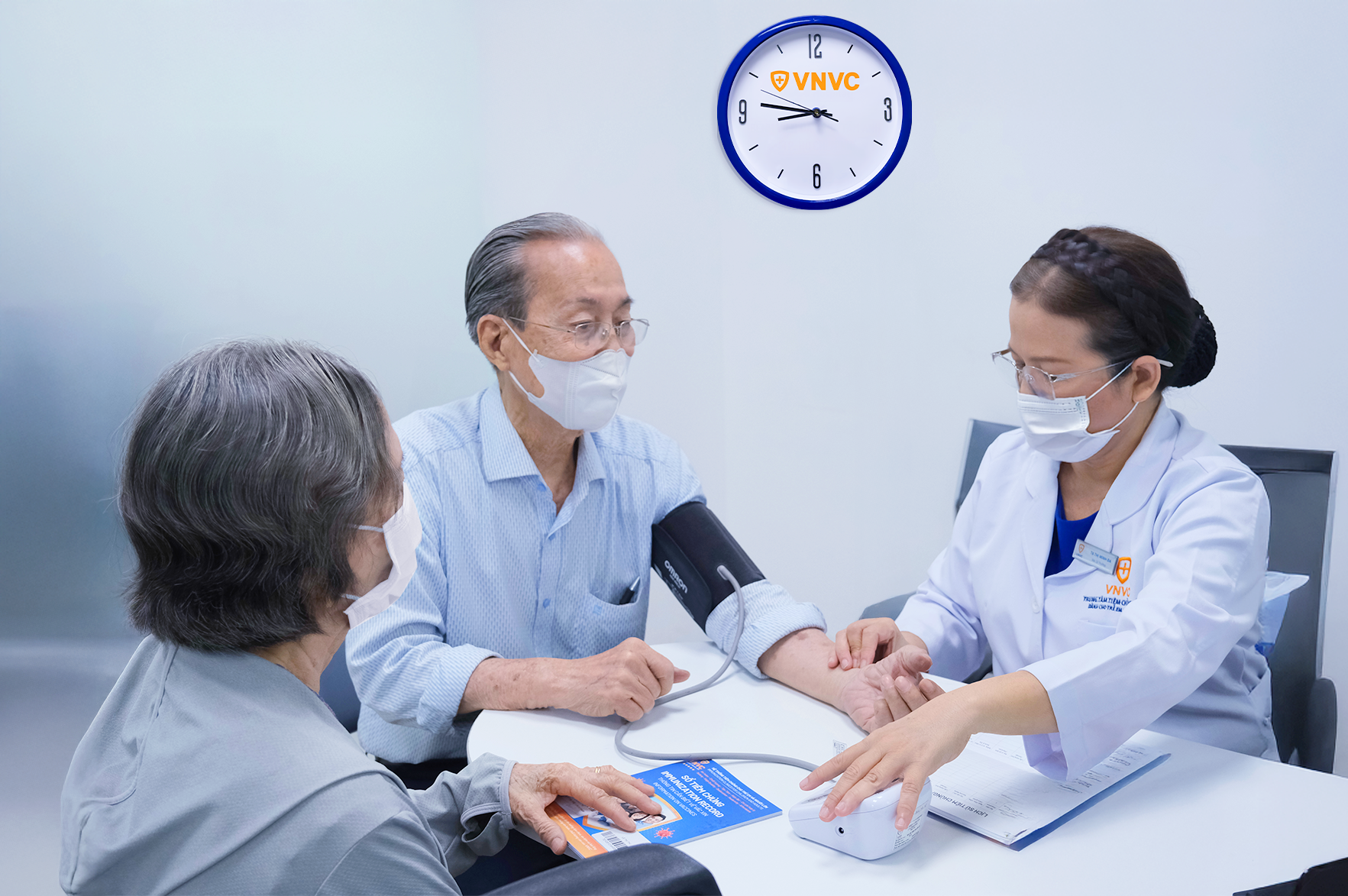 |
Doctors screen and check the health of elderly people before vaccination. Khanh Hoa
Meanwhile, Phuong Anh, 35, from Dong Nai, dedicated one day of the week to take her husband and two children for vaccinations. Her family's elderly grandfather, who has had diabetes for many years, was recently hospitalized for monitoring due to a flu infection that led to elevated blood sugar and pneumonia complications. As the primary caregiver, and with her children frequently visiting their grandfather, she decided to vaccinate the entire family for peace of mind.
"I also worried that if my children got sick this time, there would be no one left in the family to care for them", Phuong Anh said.
Since early november, VNVC vaccination centers nationwide have seen a sharp increase in influenza vaccination appointments. Most weekends, waiting areas were filled with people. Additionally, the number of pre-registrations via hotlines, websites, fanpages, and apps surged due to concerns about vaccine shortages. To meet demand, the centers increased staff, doctors, and nurses to facilitate quick influenza vaccinations for the public.
 |
Over the past month, the VNVC Vaccination System recorded 30% of people receiving their first influenza vaccination. Khanh Hoa
Notably, over the past month, the highest proportion of vaccine recipients were children under 10, the elderly, and those with underlying conditions, with approximately 30% being first-time vaccinators. Many young, healthy families are also proactively preventing illness with vaccines, bringing three to four generations to get vaccinated together.
For instance, Tien, 42, in Ho Chi Minh City, vaccinated his grandparents, relatives, and children. Half a month ago, he experienced a cough, fever, and body aches during his daughter's full moon celebration. Unwilling to miss this meaningful moment, he attended the party and held his baby for photos. One day later, the baby developed a high fever over 39 degrees Celsius, had convulsions, and turned cyanotic. The baby was hospitalized for treatment, requiring a ventilator for one week before being discharged. Doctors diagnosed the baby with pneumonia due to influenza. Additionally, his wife and several relatives who attended the party and had contact with him also contracted the illness, experiencing coughs and fevers afterward.
"Influenza causes severe illness, it's not simple; vaccination not only protects oneself but also those around you", Tien said.
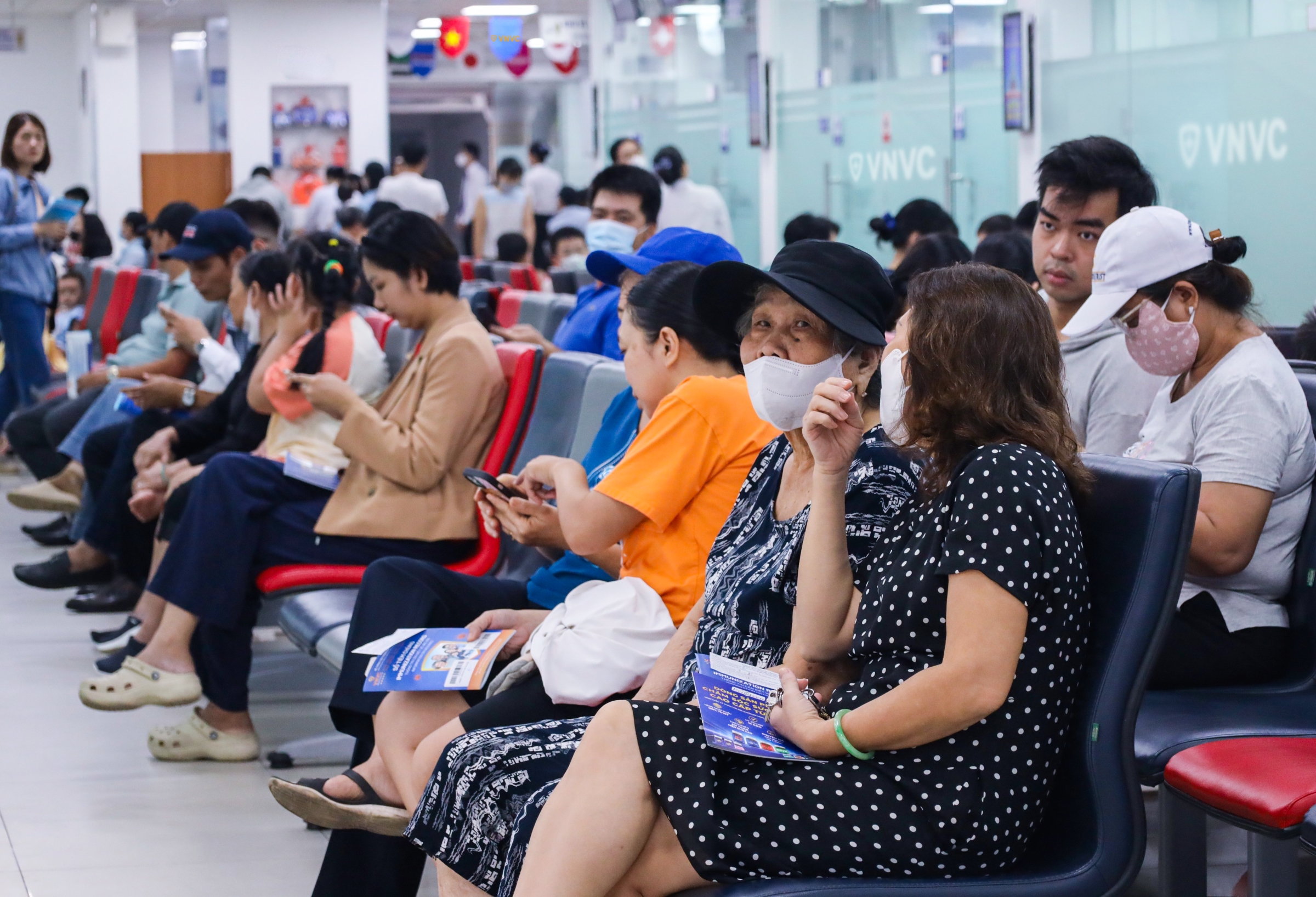 |
Many people come to VNVC for influenza vaccination due to concerns about contracting the illness and its impact on health. Hoang Duong
Doctor Bach Thi Chinh, Medical Director of the VNVC Vaccination System, stated that people are increasingly proactive in getting influenza vaccines and clearly distinguish between influenza and the common cold. This indicates that the community better understands the illness, recognizing that influenza can cause severe complications such as pneumonia, meningitis, and respiratory failure, which are particularly dangerous for young children, individuals with chronic illnesses, and pregnant women.
Influenza vaccination helps reduce the risk of illness by up to 60%, hospitalization by 90%, and mortality by 70-80%. The vaccine is administered to children from 6 months of age and older, and adults. Children under 9 years old who have not been previously vaccinated require two doses administered one month apart; individuals 9 years and older and adults require one dose. Pregnant women can be vaccinated at any stage, ideally from the fourth month. Because the influenza virus constantly changes and immunity wanes after 6-12 months, everyone needs an annual booster shot and should not wait until an outbreak occurs to get vaccinated.
Additionally, cold, dry weather conditions at the end of the year also facilitate the development of pathogens such as pneumococcus, measles, chickenpox, and respiratory syncytial virus (RSV). These diseases can lead to serious complications like pneumonia and meningitis. Everyone should proactively prevent illness to avoid cross-infection or superinfection leading to severe complications.
Furthermore, people should practice good personal hygiene: frequently wash hands with soap, cover their mouth when coughing or sneezing, wear masks in crowded places or public areas, limit contact with individuals exhibiting respiratory symptoms like fever, cough, or runny nose, eat a balanced diet, increase fruit and vegetable intake, get enough sleep, and exercise regularly. Individuals with symptoms like cough or fever should seek medical examination for diagnosis and treatment guidance, and avoid self-medicating.
Khanh Hoa