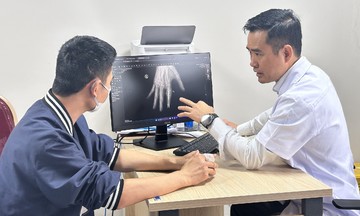
Vietnamese expatriates are increasingly opting to receive vaccinations in Vietnam, citing reasons such as cost-effectiveness, the availability of specific vaccines not routinely offered in their countries of residence, and the prevalence of certain diseases in Vietnam. Minh Trang's family, for example, has lived in Cyprus for many years, where her children receive free vaccinations. However, some vaccines, like those for japanese encephalitis, are not part of Cyprus's standard program due to the rarity of the disease there. During their recent trip to Vietnam, the family noticed many mosquitoes in their living environment, which could transmit the disease to her children. Therefore, Trang decided to have her children vaccinated early.
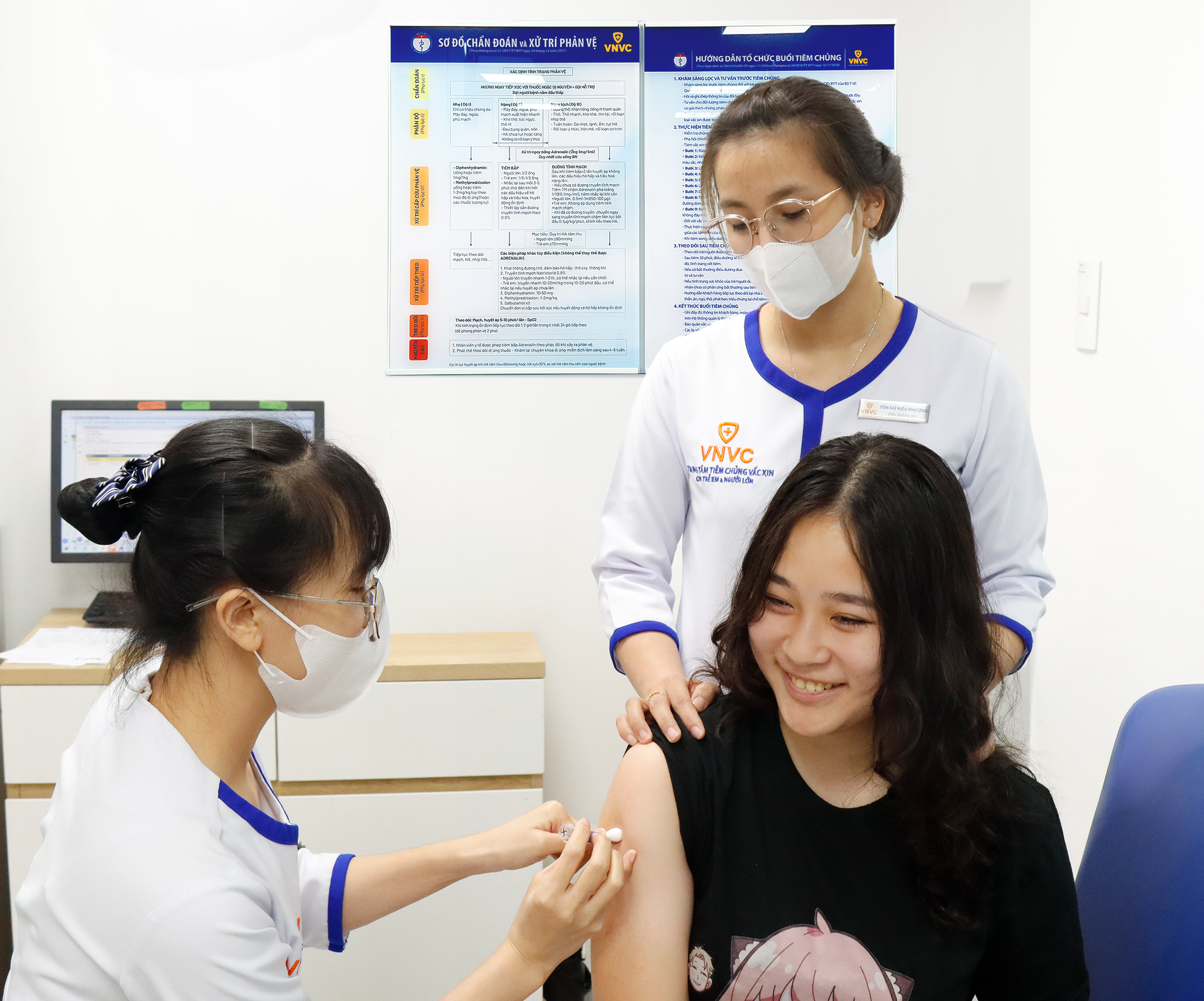 |
Trang took her 15-year-old daughter for a japanese encephalitis vaccination at VNVC District 7 Immunization Center, Ho Chi Minh City. Photo: Binh An
Initially, Trang planned vaccinations only for her 13-month-old youngest child. However, doctors advised that japanese encephalitis can affect all ages, so her two daughters, aged 11 and 15, also received shots. She had also intended to get vaccinated against dengue fever, but her stay in Vietnam did not align with the vaccination schedule, so she skipped it.
The trend extends to other expatriate families. At VNVC Hoang Van Thu, Ho Chi Minh City, Margaret, a 69-year-old Irish national, also brought her 5-year-old grandson Paul for tetanus-diphtheria-pertussis-polio and hepatitis A vaccinations. Paul, who is Irish-Vietnamese, understands both English and Vietnamese, and cooperated well during the session. Margaret stated that her family places high importance on disease prevention, and she herself has received most recommended vaccines. Last year, she received a flu vaccine in Vietnam and praised the efficient service, reasonable cost, and attentive staff.
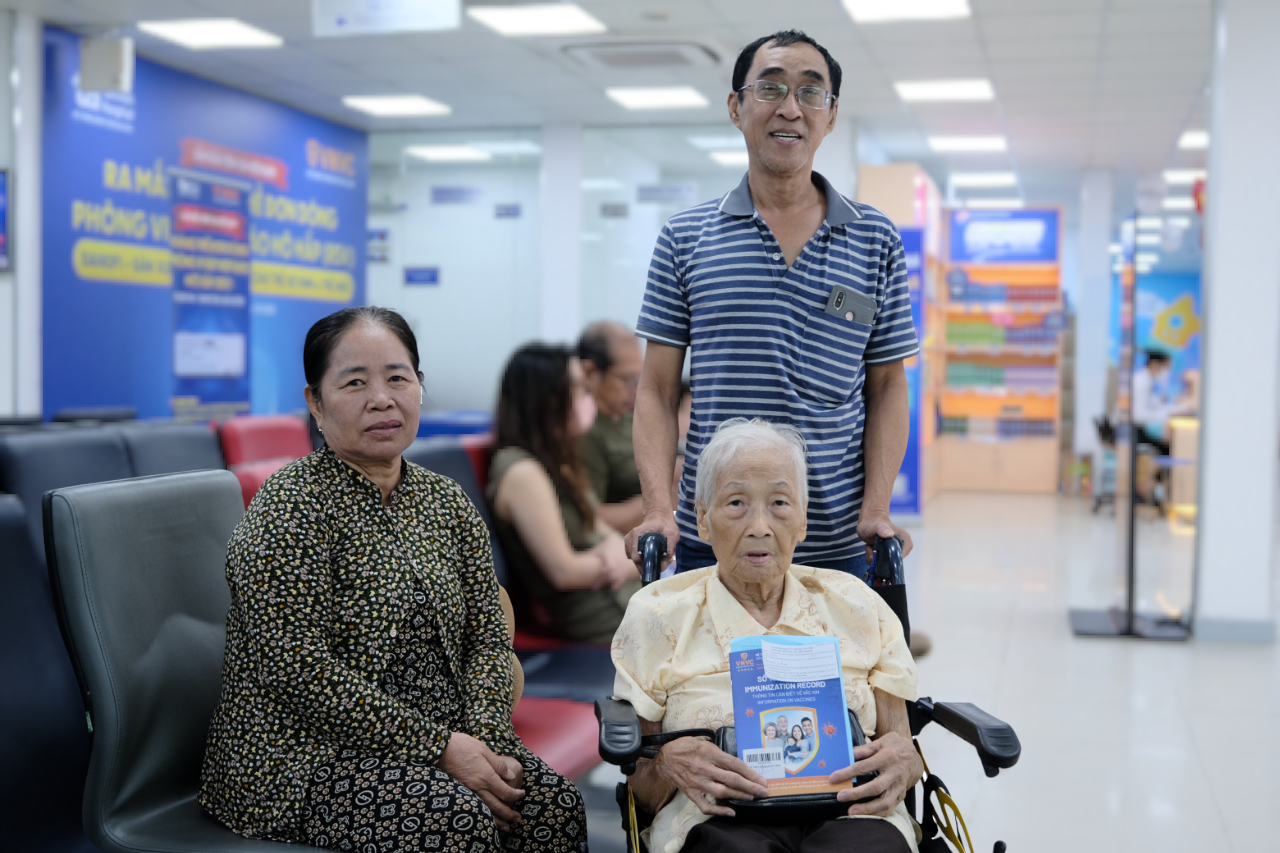 |
The family brought Ms. Cham for vaccination at the VNVC Immunization System. Photo: Moc Thao
Similarly, Vu Thi Cham, 94, after relocating from the US to Vietnam, was taken by her daughter to VNVC for flu and dengue fever vaccinations. She had previously received many vaccines in the US but had lost her vaccination records. "Upon returning to Vietnam, we observed the complex disease situation, particularly dengue fever, so the family wanted to get mom vaccinated immediately", her daughter stated.
Duong Hung Qui, Director of VNVC District 7, Ho Chi Minh City, reported that the system's nearly 250 centers nationwide regularly serve Vietnamese expatriates for vaccinations. Many families take advantage of their visits home to get vaccinated, protecting their health and saving costs. Many also bring their relatives for vaccinations as a meaningful gesture upon returning to their homeland.
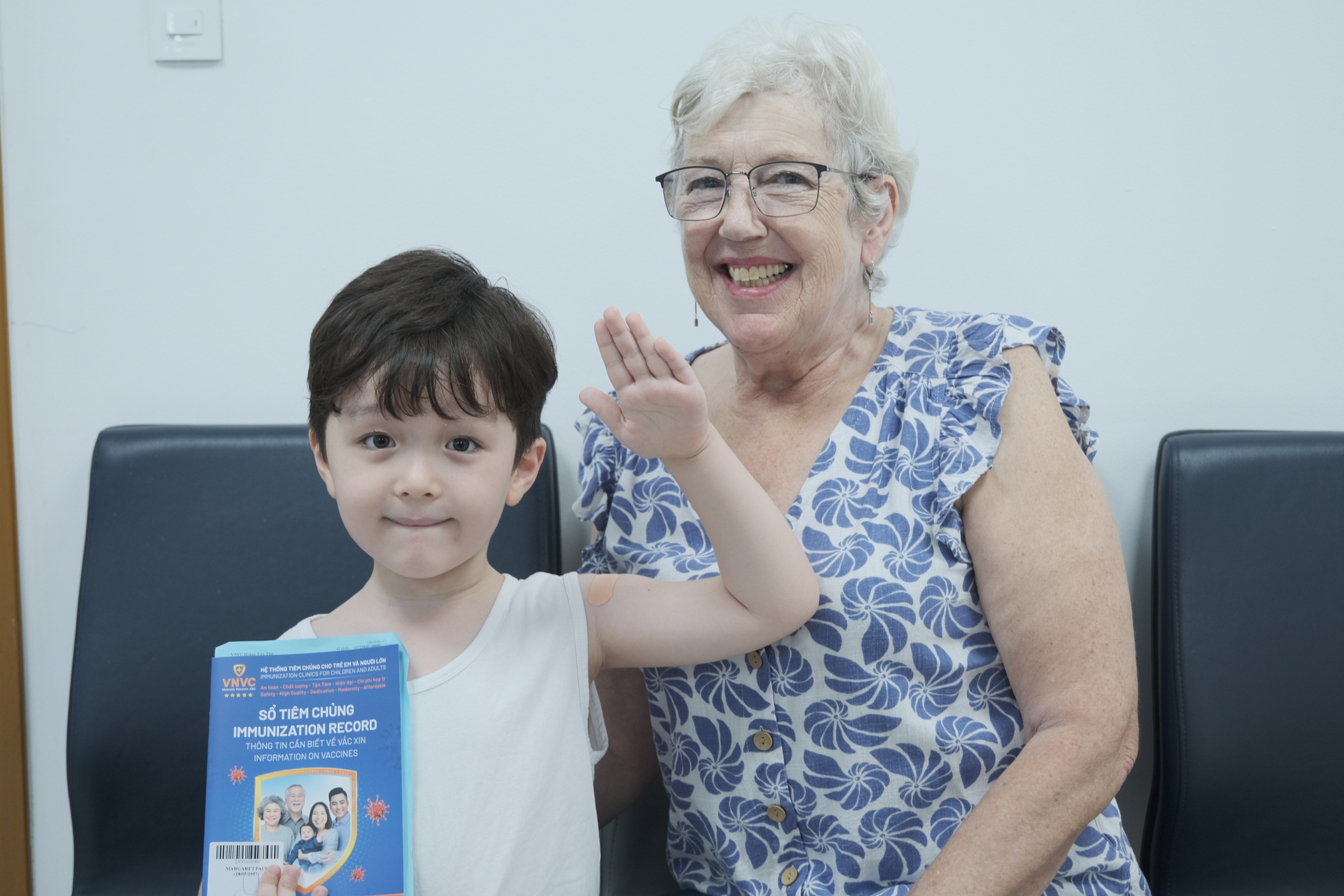 |
Margaret and Paul, along with many other foreign families residing in Vietnam, also choose VNVC for vaccinations. Photo: Binh An
According to Qui, each country possesses distinct climate, environmental, and epidemiological characteristics. Vietnam, situated in a tropical, hot, and humid region, provides a favorable environment for bacteria, viruses, mosquitoes, and parasites to thrive. Consequently, Vietnamese expatriates or tourists visiting Vietnam are often advised to review their vaccination history and get supplementary vaccines for prevalent diseases such as japanese encephalitis, hepatitis A, hepatitis B, and rabies. These vaccines may not be part of the routine immunization programs in their countries of residence.
Furthermore, returning home often involves visiting relatives, tourism, and extensive travel, leading to increased exposure to crowds at airports, train stations, and bus terminals, which elevates the risk of infection. Therefore, vaccination is the most proactive and effective measure to protect health. Qui also advises everyone to maintain healthy lifestyle habits, including a nutritious diet, adequate sleep, and good personal hygiene, to ensure disease prevention.
Hoa Binh