On 9/12, Doctor Nguyen Toan Thang, from the Pediatric Cardiology Department at Hanoi Heart Hospital, announced that the hospital, in collaboration with the health stations of Toan Thang commune and Muong Bi commune in Phu Tho province, organized a free congenital heart screening program for children aged 0-16. This initiative is part of a series of medical support programs for children in remote areas, aiming for early detection of dangerous cardiovascular conditions.
The screening involved direct examination and echocardiography by specialist doctors for nearly 1,700 children. The results identified seven cases of congenital heart disease requiring early intervention, including Bui Thu Ha, four years old, a Muong ethnic child from Muong Bi commune.
Bui Thu Ha lives with her maternal grandparents because her parents work as laborers far from home. Her grandfather shared that the child often felt tired and occasionally experienced shortness of breath, but the family attributed it to her being "weak" and lacked the means for a medical examination. Now, she has been diagnosed with congenital heart disease, necessitating early intervention. Without timely treatment, her condition could worsen, impacting her health and development.
Many other cases were also identified among children from poor families residing in highland regions, who have limited access to specialized medical services. For all children diagnosed with a condition, the hospital will collaborate with organizations and philanthropists to provide sponsored, free treatment.
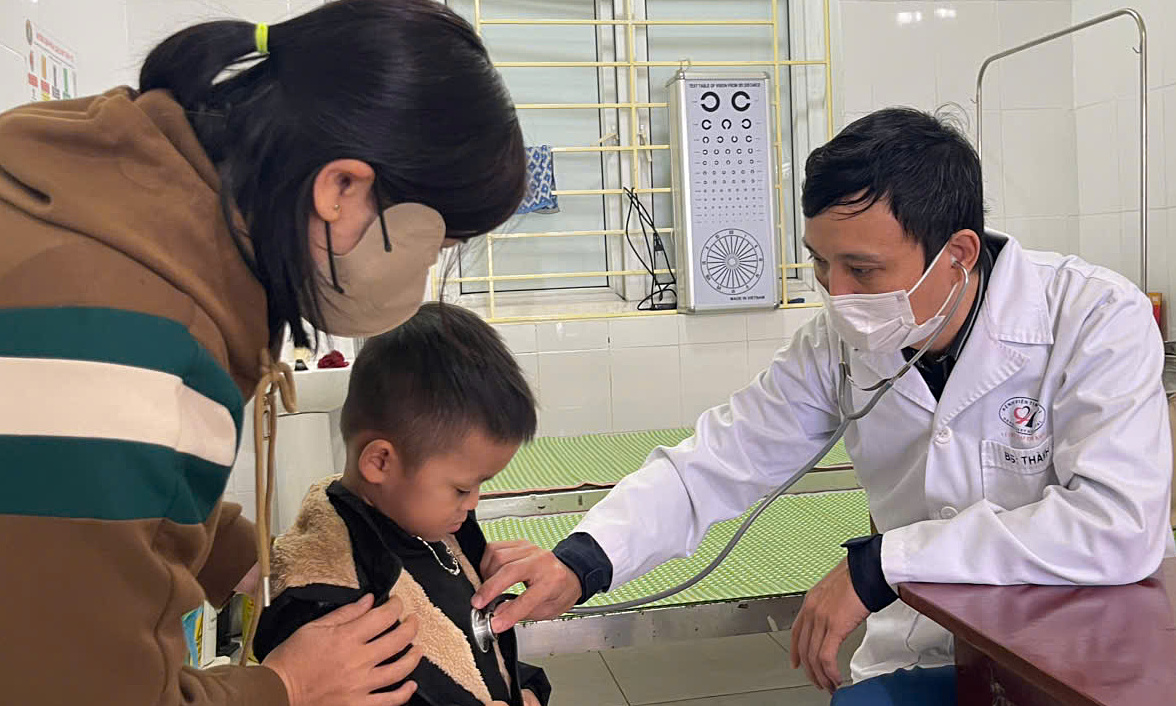 |
A boy is screened for cardiovascular disease by doctors. Photo: Quang Hung
Doctor Thang stated that the congenital heart screening program is organized annually by the hospital to offer a life-changing opportunity for affected children. The program will expand to other localities, aiming to support an increasing number of children silently living with dangerous conditions who lack access to medical examinations.
Congenital heart defects are structural abnormalities of the heart and blood vessels present in children from birth. According to statistics from the World Health Organization (WHO), eight out of every 1,000 children born have congenital heart disease. Many children with uncomplicated heart lesions, when screened, detected, and treated early, have a high chance of recovery and a healthy life.
Doctors explain there are more than 50 types of congenital heart disease, each requiring an individualized treatment plan for effective results. Some children may only need monitoring or medical treatment, while others require intervention or surgery.
The cost of examining and treating congenital heart disease is substantial. While children under six years old have health insurance, out-of-pocket expenses and other costs not covered by insurance are considerable. Many poor families cannot afford heart surgery for their children and rely on support from the state and the community.
Le Nga