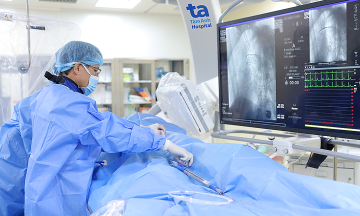
An MRI scan at Tam Anh General Hospital in Ho Chi Minh City revealed a cystic tumor on Minh's left ovary, measuring 30x15x18 cm. Dr. Phan The Thi, Specialist Level II, from the Obstetrics and Gynecology Center, stated that the large tumor increased abdominal pressure, posing a risk of torsion or rupture, and required immediate intervention.
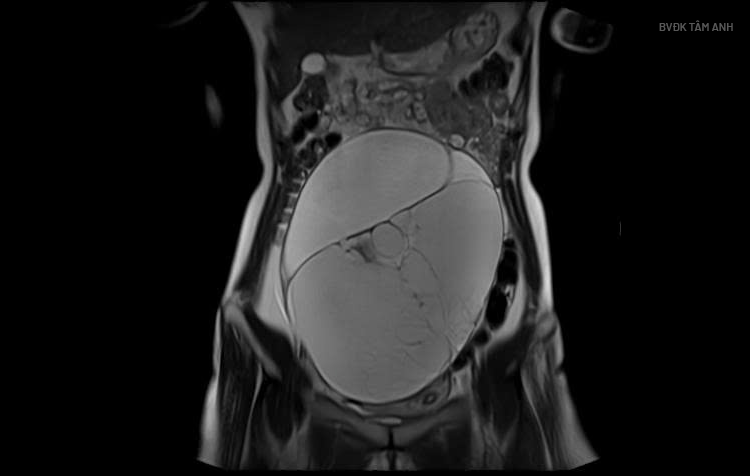 |
MRI image of a large ovarian tumor compressing multiple abdominal organs. *Photo: Tam Anh Hospital*
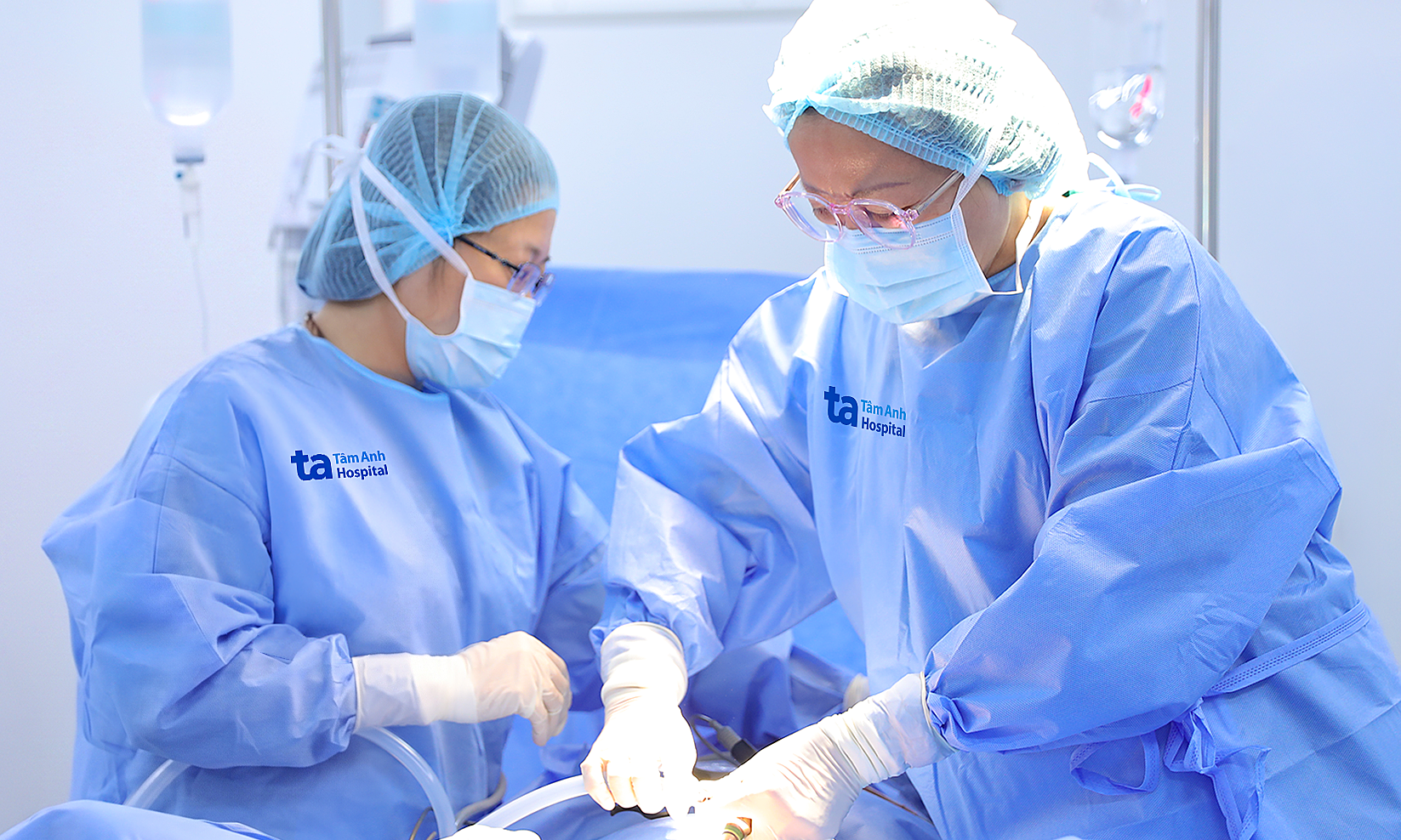
The surgical team made a midline incision from the pubic bone to above the navel to access and remove the ovarian tumor. During the operation, doctors observed that the tumor was multi-lobed, had a thin wall, and contained about three liters of mucinous fluid.
After surgery, the patient recovered well. Her abdomen, initially distended to the size of a 7-month pregnancy due to the tumor, had flattened. Minh no longer experienced abdominal distension and could eat comfortably.
 |
Dr. The Thi (right) and the team performing open abdominal surgery to remove Minh's ovarian tumor. *Photo: Tam Anh General Hospital*
According to Dr. Thi, ovarian cysts are common in women of reproductive age. Most are benign, but a small percentage carry a risk of malignancy. If a tumor grows rapidly or is suspected to be malignant based on ultrasound, MRI imaging, or cancer marker tests, surgery is recommended for a definitive diagnosis and appropriate treatment planning.
Early-stage ovarian cysts are often difficult to detect due to their non-specific symptoms. As the tumor grows larger, patients may experience dull or progressively worsening abdominal pain, pelvic pain, gradual abdominal enlargement, or a palpable mass in the lower abdomen.
If solid cysts or tumors show rapid growth, patients require regular follow-ups, approximately once every six months.
Tue Diem
*Patient's name has been changed.
| Readers can submit questions about obstetrics and gynecology here for doctors to answer. |