A 42-year-old woman in Ho Chi Minh City shared that her family was shocked when her husband announced his diagnosis. After understanding the cause and discussing it within the family, she encouraged her husband to seek treatment at a reputable medical facility. She and her daughter also underwent examinations and, fortunately, were not infected, so they received the vaccine for prevention.
At VNVC, both mother and daughter received the Gardasil 9 vaccine. The daughter required two doses, 6-12 months apart, while the mother followed a three-dose regimen. Doctors recommend that even individuals who have contracted the disease, such as her husband, should still be vaccinated to protect against other HPV types.
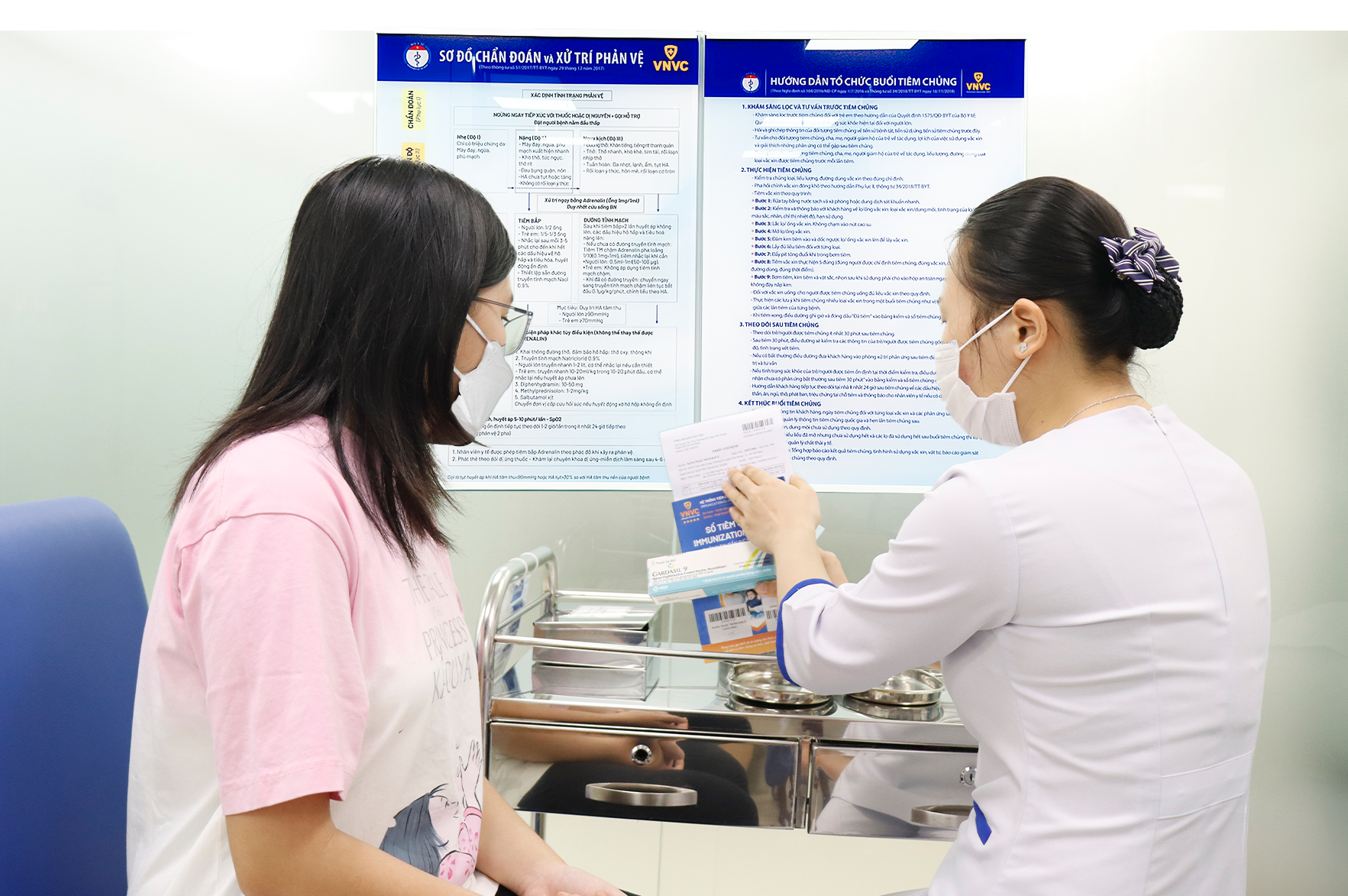 |
Children are brought by parents for HPV vaccination at VNVC Vaccination System. *Photo: Thien Thao* |
Similarly, Ms. Hoang Anh, 36, brought her 9-year-old son for HPV vaccination, aiming to proactively prevent cancer and genital warts for him.
"We are not well-off, but we believe in preventing illness for our children, so we make the effort", Ms. Hoang Anh said.
Doctor Pham Van Phu, Medical Manager at VNVC Vaccination System, stated that HPV is a human papillomavirus, prevalent worldwide. For individuals with at least one opposite-sex partner, the average lifetime HPV infection rate reaches 91,3% for men and 84,6% for women.
Scientists have identified over 200 viral serotypes, with about 40 transmitted through sexual contact and 15 posing a high risk for cancer. Genital warts, also known as condyloma acuminata, are primarily caused by HPV types 6 and 11.
The primary transmission route for HPV is unprotected sexual contact, including vaginal, oral, and anal. However, the virus can also spread through sharing personal items like towels or underwear, or from mother to child during childbirth.
"There have been cases where children contracted HPV and genital warts from their parents, or where young children, not yet sexually active, developed cervical cancer. Therefore, parents should proactively vaccinate their children", Doctor Phu said.
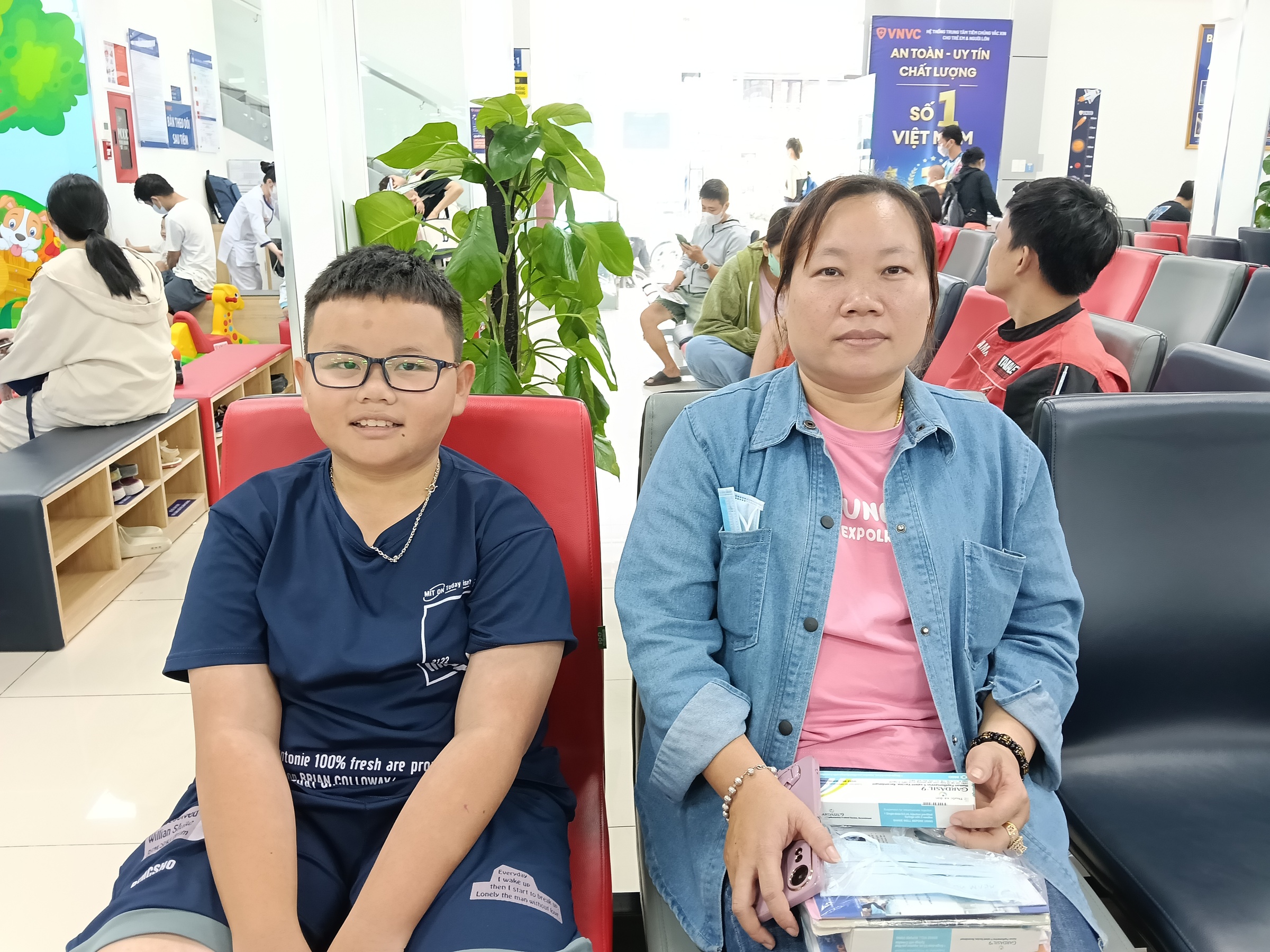 |
Ms. Hoang Anh and her child receiving vaccination at VNVC Tan Thuan. *Photo: Hoang Duong* |
Currently, Vietnam offers two types of vaccines that protect against common HPV virus types causing cervical, vulvar, and vaginal cancers in women, as well as genital warts, oropharyngeal, and anal cancers in both sexes. The Gardasil vaccine protects against four common virus types: 6, 11, 16, and 18, and is administered to females aged 9-26. Females from 9 to under 14 years old receive two doses, 6-12 months apart, while those aged 14-26 receive three doses within 6 months.
The Gardasil 9 vaccine is a new generation vaccine that protects against nine virus types: 6, 11, 16, 18, 31, 33, 45, 52, and 58. It is administered to both males and females aged 9-45. Children from 9 to under 15 years old receive two doses, 6-12 months apart, while those aged 15-45 receive three doses within 6 months.
Additionally, individuals should proactively adopt measures to prevent cross-infection, such as practicing safe sex by being faithful to their partner and using condoms. They should also avoid sharing personal items like towels or underwear, even with family members.
Hoang An