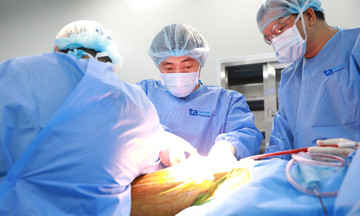
Specialists in neurosurgery, radiation oncology, medical oncology, and intensive care from K Hospital consulted, determining it a difficult case with a high risk of patient death due to widespread disease progression.
The patient underwent ventriculoperitoneal shunt surgery to address hydrocephalus. Cerebrospinal fluid tumor markers indicated an intracranial germ cell tumor. One day post-surgery, the patient remained in a coma, prompting doctors to initiate simultaneous resuscitation and chemotherapy.
"This was a major challenge because the patient's condition was critical; waiting for post-surgical stabilization before starting chemotherapy could allow the tumor to spread further," stated Associate Professor, Doctor Nguyen Duc Lien, Head of the Neurosurgery Department, on 25/11.
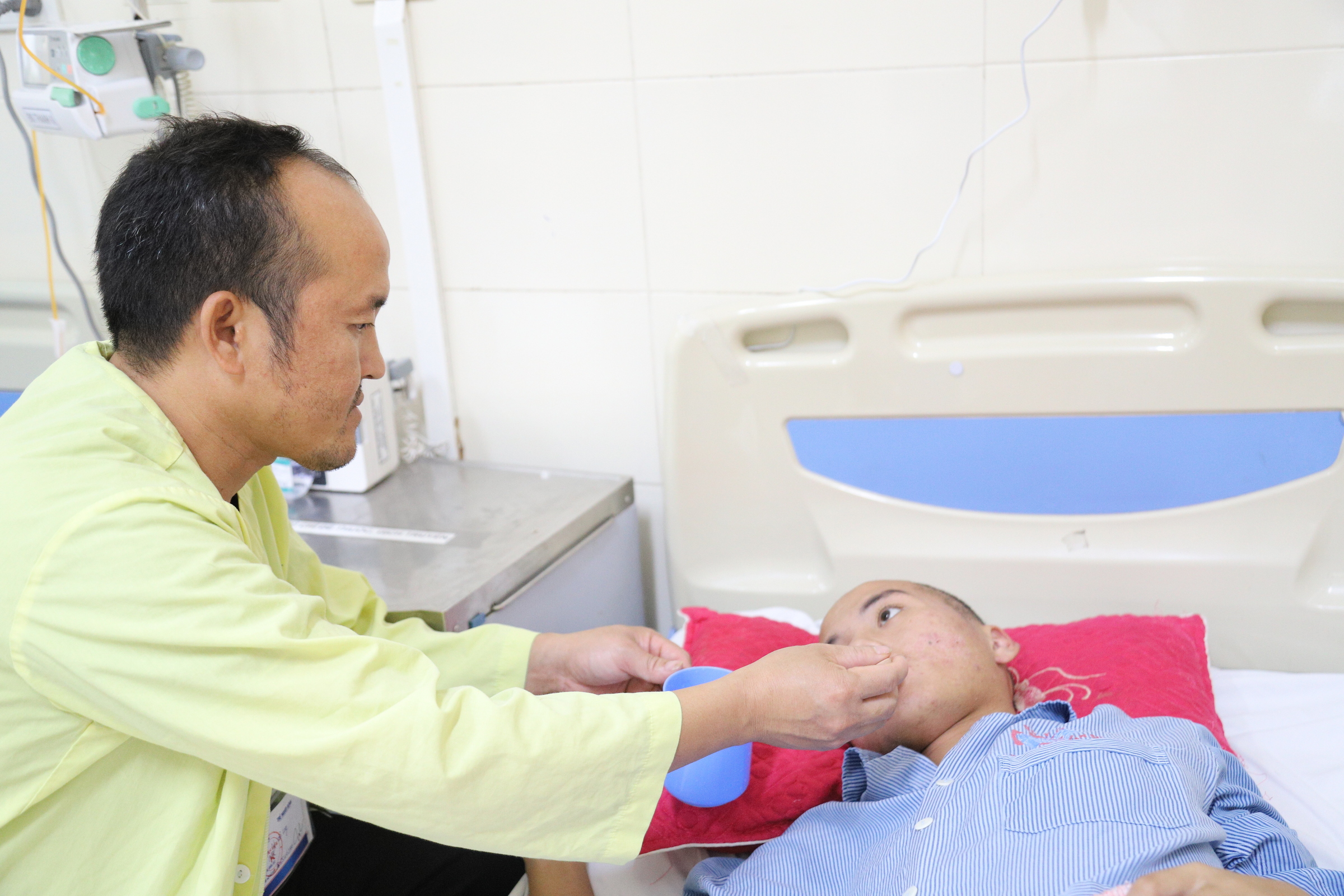 |
The patient showed good progress after surgery. *Photo: Manh Tran* |
Fortunately, after 10 days of the first course of chemotherapy, the patient was weaned off the ventilator, began eating and walking independently, and no longer felt weak or tired as at the beginning of hospitalization. This was a development the patient's family called an "unexpected miracle."
Associate Professor Lien emphasized that the biggest challenge in this case was providing emergency treatment for hydrocephalus, promptly diagnosing the disease, and administering chemotherapy simultaneously with resuscitation. "The patient regaining consciousness after 19 days is a good sign, indicating that emergency treatment and resuscitation were timely and effective."
Intracranial germ cell tumor is a rare disease, accounting for about 1-3% of intracranial lesions in children and more common in males. The exact cause of these tumors is unclear, but they originate from abnormally migrating germ cells during embryonic development, often concentrating in the pineal gland, suprasellar region, or thalamus.
This type of tumor responds well to chemotherapy and radiation therapy; the 10-year survival rate for patients with intracranial germ cell tumors after chemoradiation can range from 70% to 80%. This rate largely depends on the tumor type, disease stage, and individual patient factors.
Master, Doctor Hoang Thu Trang, Deputy Head of the Pediatric Internal Medicine Department at K Hospital, stated that this patient was a special case due to the advanced progression of the intracranial germ cell tumor. Coordination between the Neurosurgery Department, Emergency Resuscitation, and Pediatric Internal Medicine was crucial in helping the patient overcome the dangerous phase. The patient will continue chemoradiation according to a standard protocol to achieve optimal effectiveness and reduce the risk of recurrence.
Le Nga