Traditional Medicine Practitioner Do Minh Tuan, from the Hanoi Traditional Medicine Association, states that in Eastern medicine, kidneys are the root of vitality, governing essence, marrow, and opening to the ears. They play a vital role in overall health. Kidney deficiency causes fatigue, mental decline, weakened libido, premature graying hair, tinnitus, and accelerated aging.
Kidneys filter waste products from the blood and excrete them through urine. However, if the body consumes too many sweet and fatty foods, the kidneys must work overtime to process these byproducts. Over time, this overwork weakens the kidneys, leading to kidney failure.
Some foods, when consumed excessively, can damage the kidneys, particularly the following white foods, according to practitioner Tuan:
white sugar
White sugar falls under the category of "tan cam sinh thap," meaning excessive sweetness generates phlegm-dampness, causing turbid qi. Phlegm-dampness is a traditional medicine condition describing the accumulation of "phlegm" (mucus) and "dampness" (moisture) in the body due to dysfunction of organs like the spleen, lungs, and kidneys. Long-term accumulation impacts the spleen and stomach, producing phlegm, damaging the kidneys, causing turbid urine, fatigue, and even kidney stone formation. Excessive sweetness also impairs the spleen's metabolic and excretory functions, creating conditions for oxalate stones to form, which harms the kidneys.
white alcohol
White alcohol is hot and pungent, affecting organs such as the liver, lungs, heart, and kidneys. Drinking a small amount can improve blood circulation, but abuse generates "heat toxin," depleting kidney yin. When yin fluids are deficient, the body experiences symptoms like dryness, thirst, insomnia, nocturia, back pain, and knee weakness. Over time, kidney deficiency can lead to serious diseases such as glomerulonephritis, kidney failure, or decreased libido.
pork fat
Pork fat is a saturated fat, greasy and difficult to digest. It easily generates phlegm-dampness, hindering the spleen and stomach's digestive function. When the spleen is deficient, qi and blood are not adequately produced, weakening the kidneys. Phlegm-dampness also causes qi stagnation and blood stasis, depriving the kidneys of nourishment and further impairing them. People who consume a lot of pork fat often feel heavy, urinate little, experience swollen limbs, and have a thick, greasy tongue coating—typical signs of phlegm-dampness and weak kidneys.
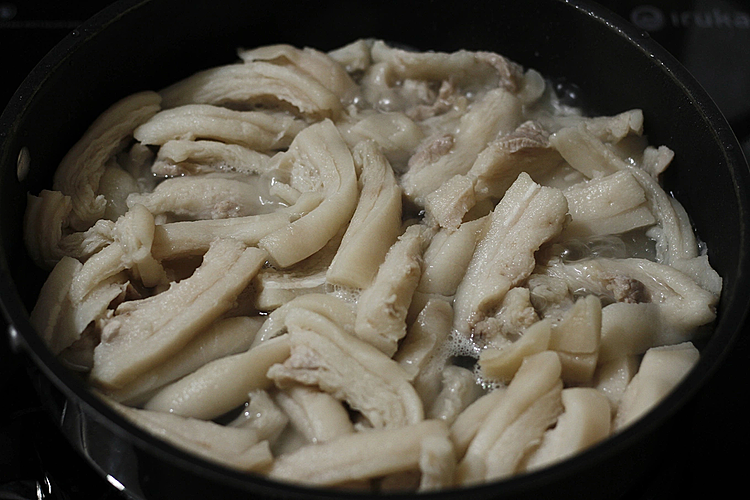 |
Pork fat is greasy and hard to digest; consuming too much often makes the body feel heavy, urinate little, and develop a thick, greasy tongue coating—signs of phlegm-dampness and weak kidneys. Photo: Bui Thuy
To maintain healthy kidneys, you should observe five principles:
- Drink enough water: Drink warm water, taking small sips throughout the day to support kidney excretion and maintain balance.
- Gentle exercise: Exercises like walking, twisting, and deep breathing help improve blood circulation, nourishing the kidneys effectively.
- Keep feet warm: Kidneys are connected to the feet, so keeping them warm helps protect the kidneys from cold energy.
- Get enough sleep, avoid overexertion: Kidneys store essence, requiring adequate rest to preserve vital energy and prevent depletion.
- Regular health check-ups: Detect early signs of abnormalities to adjust your lifestyle promptly.
In addition to these recommendations, adopting a healthy lifestyle will help keep kidneys strong, contributing to an improved quality of life.
Thuy Quynh