Dr. Do Minh Tuan, a member of the Hanoi Traditional Medicine Association, states that kidneys are vital organs responsible for filtering waste, balancing electrolytes, regulating blood pressure, producing red blood cells, and synthesizing vitamin D to maintain bone health. However, kidneys are vulnerable to damage from an unhealthy lifestyle, stress, late nights, a diet high in salt and protein, and alcohol consumption.
When kidney function declines, various signs can appear on the body. Among these, certain darkened areas can serve as early warning signals that should not be overlooked.
Persistent dark circles under eyes
Dark circles under the eyes can stem from various causes, such as late nights, lack of sleep, or fatigue. However, this condition can also relate to kidney function. Weak kidneys can cause the skin under the eyes to become dry and lack vitality, leading to dark circles. In some cases, kidneys leaking protein through urine can cause fluid retention, manifesting as puffy eyes, especially in the morning. If dark circles appear suddenly or worsen, accompanied by swelling, fatigue, or other unusual signs, you should promptly have your kidney health checked.
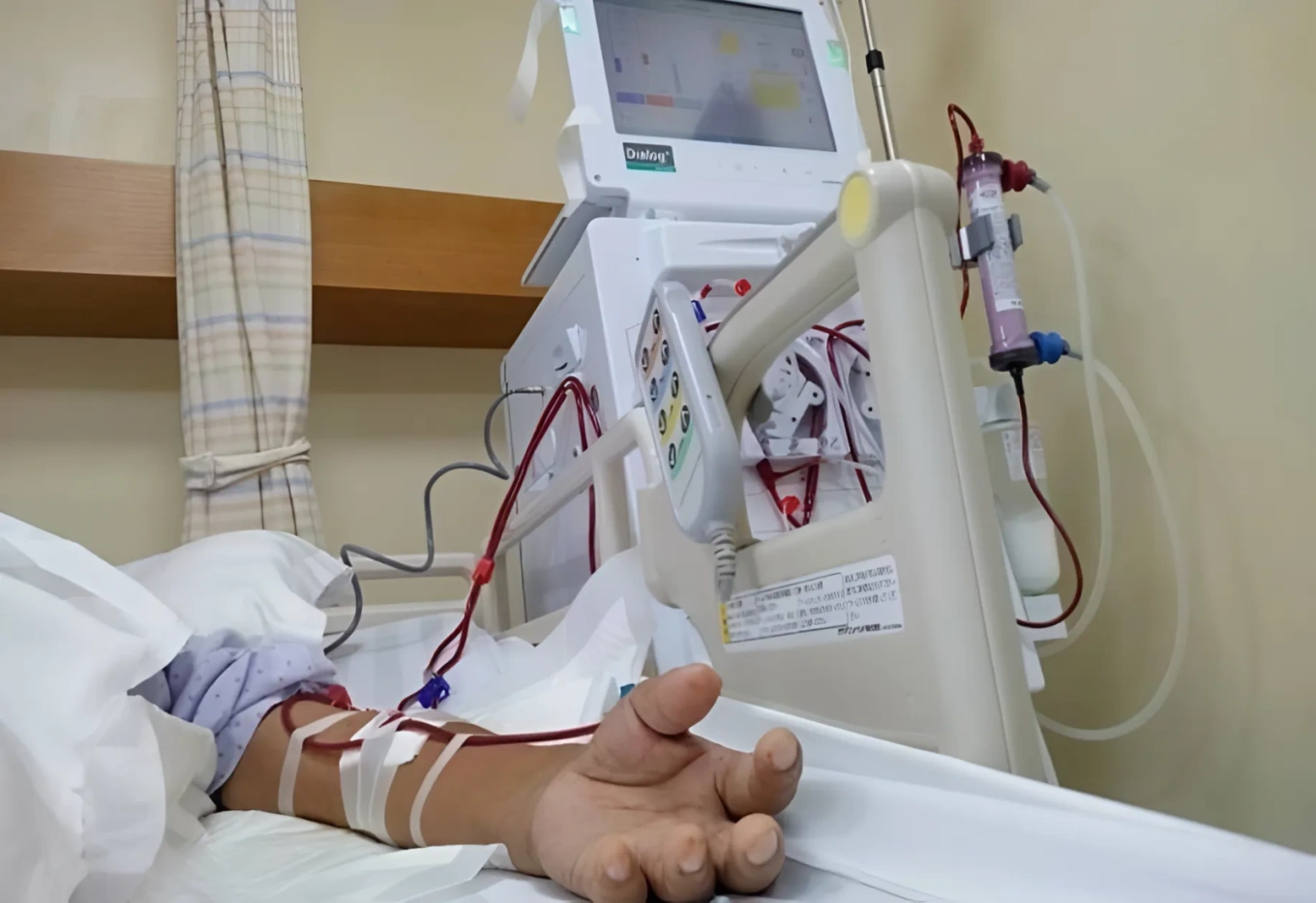 |
A patient undergoing hemodialysis. Photo: Dinh Tien
Darkened lips
When kidneys are weak, toxins accumulate in the blood, reducing oxygen supply to tissues, including the lips. Decreased secretion of the hormone erythropoietin causes anemia, leading to pale, dark, or dull lips. However, it is important to distinguish this from lip darkening caused by lead-containing lipstick, smoking, or excessive sun exposure. You should also pay attention to your body. If unusual lip darkening appears suddenly or worsens, accompanied by swelling, fatigue, or other unusual signs, along with other symptoms of kidney disease, you should seek an early check-up.
Dark, brittle fingernails or white streaks
Fingernails can clearly reflect kidney health. If this organ is weakened, it leads to poor blood supply to the nails, resulting in unusually dark, dry, and brittle fingernails. Some individuals may also experience brittle, peeling, pitted nails, or the appearance of white streaks.
Healthy nails are typically pink and shiny. Any persistent changes on your fingernails should be noted, excluding changes due to chemical exposure. However, it's important to understand that these are not 100% diagnostic signs, but rather early indicators to seek timely medical examination.
Kidney disease is a condition where the kidneys are damaged and cannot filter blood properly, leading to the accumulation of waste products and fluid in the body. The disease can be acute (sudden and short-term) or chronic (gradual and long-term). Chronic kidney disease can progress to kidney failure, which is often irreversible.
To reduce the burden on your kidneys, you should limit the following food groups:
Excessively salty foods, as salt forces the kidneys to work continuously to excrete sodium. Long-term consumption weakens the kidneys and affects blood pressure and cardiovascular health. Eating too much red meat increases the burden on the kidneys. This can cause the body to accumulate heat and produce more toxins, which is not good for individuals already showing signs of kidney failure.
Additionally, alcohol affects the liver and indirectly causes kidney damage. Excessive consumption can also cause insomnia, increased nighttime urination, and hormonal imbalances. Other beverages like coffee and strong tea, consumed excessively, can cause insomnia, disrupt circadian rhythms, and weaken the kidneys over time. Especially after the age of 35, when kidney energy begins to decline, you should further restrict these.
If you frequently experience difficulty sleeping, waking up tired, back pain, cold hands and feet, darkened lips, eyes, or fingernails, reduced libido, weakness, frequent or infrequent nighttime urination, or other abnormal urination patterns, do not be complacent. Checking kidney function simply requires blood and urine tests, and an ultrasound. A kidney-friendly diet involves low salt, avoiding high-protein foods, choosing foods low in saturated fat and cholesterol, quitting smoking, and drinking enough water.
Thuy Quynh