Answer:
A giant cell bone tumor (osteoclastoma) is a characteristic bone tumor defined by the growth of multinucleated giant cells, structurally similar to osteoclasts, interspersed with stromal cells. This tumor frequently appears in the ends of bones near joints, such as the distal femur, tibia, and fingers, as well as tendon sheaths. It is less common in the wrist, hip, shoulder, sternum, coccyx, and pelvis. Giant cell bone tumors cause bone resorption, leading to weakened bones, increased fracture risk, local deformity, or erosion of surrounding bones as they grow.
Patients often seek medical attention when a giant cell bone tumor causes pain, which can spread when moving the joint and intensifies with activity. The larger the tumor, the more severe the pain, especially at night. Some giant cell bone tumors are painless, but patients may notice a growing mass or swelling. If the tumor causes bone resorption, patients experience sudden and intense pain only after a fracture occurs.
Doctors typically order X-rays, computed tomography (CT) scans, magnetic resonance imaging (MRI), and a biopsy to confirm the diagnosis. Most cases are benign, but the condition can progress to malignancy, necessitating surgery to remove the tumor, prevent bone damage, and avoid recurrence.
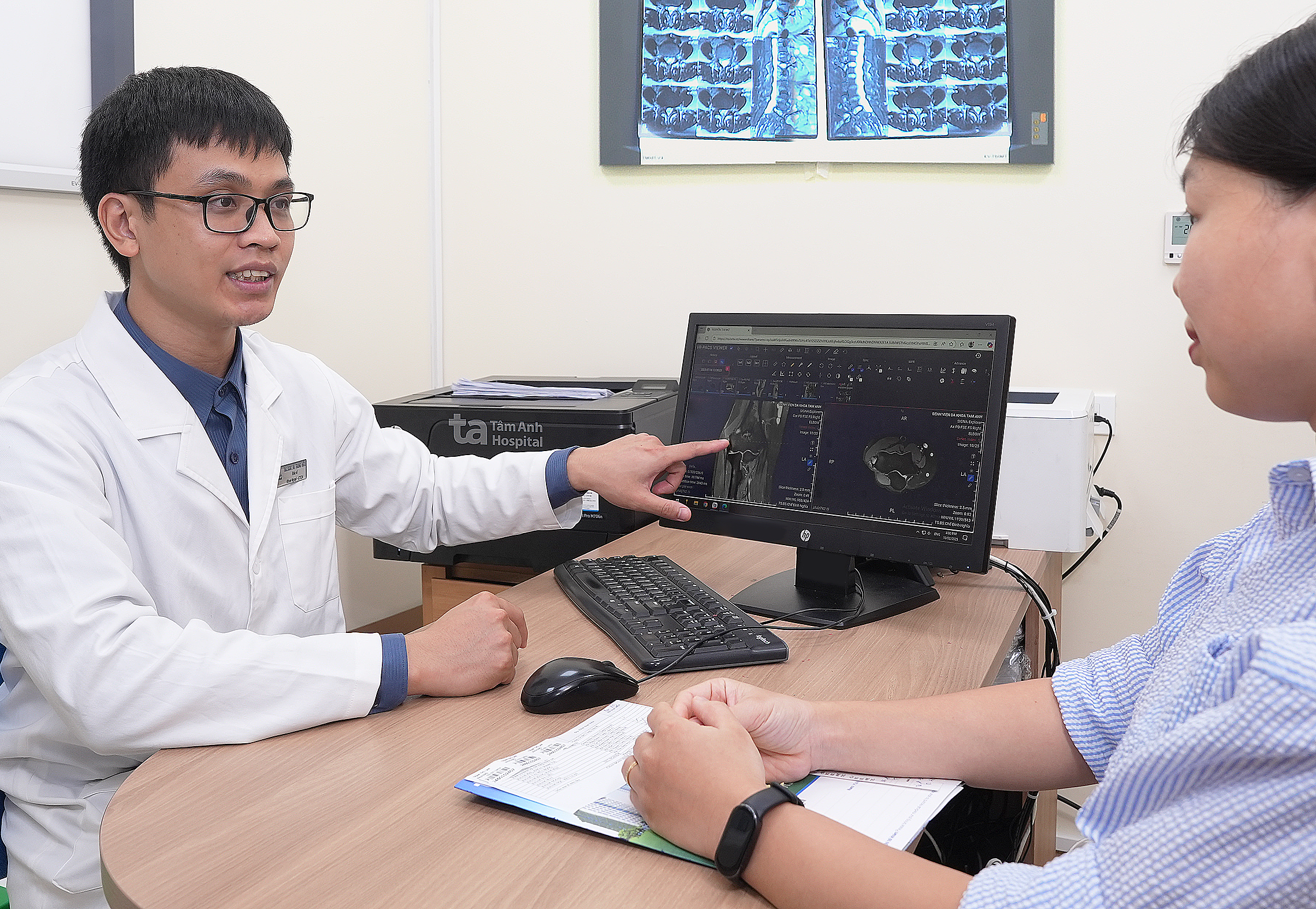 |
A doctor consults a patient with a giant cell bone tumor. Illustration: Tam Anh General Hospital |
If you have a giant cell bone tumor at the distal end of your femur, surgery may be recommended. The surgeon scrapes out the tumor and then uses adjunctive methods such as argon gas laser, liquid nitrogen, hydrogen peroxide, or phenol to cauterize and destroy any remaining tumor cells, preventing recurrence.
The resulting bone defect is then filled with an autologous bone graft, often harvested from the iliac crest, or with donor bone, or a bone cement mixture. For tumors at the femoral head causing extensive damage, doctors may perform a complete resection of the femoral head and replace it with an artificial knee joint. Post-surgery, patients may receive anti-resorptive drugs via infusion or injection to prevent disease recurrence.
In some cases, where the giant cell bone tumor is widely invasive and surgery is no longer an option, patients may receive radiation therapy to shrink the tumor, reduce pain, and alleviate symptoms. An embolization procedure, which blocks arteries supplying blood to the tumor, can also halt tumor growth and cause it to shrink.
Even benign giant cell bone tumors that have been surgically removed can recur, and in rare cases, they may metastasize to the lungs, leading to respiratory failure. Therefore, after surgery, patients should have follow-up appointments at the hospital every 3 months for the first 2-5 years. Subsequently, depending on the doctor's recommendations, patients should have follow-up visits every 6-12 months or whenever the tumor recurs locally.
Master, Doctor Vu Trung Hieu
Department of Orthopedic Trauma
Tam Anh General Hospital Ha Noi
| Readers can send questions about musculoskeletal diseases here for a doctor's response |