"We thought the hospital gave us the wrong baby," said Yang, Guojiang’s father.
The Yang couple, from Yancheng, Jiangsu province, welcomed their first child in 5/2022. At birth, Guojiang displayed features typical of Caucasians, despite both parents being Chinese.
The family was perplexed and conducted multiple DNA tests, which confirmed the girl was their biological child. Delving into their family history, they discovered Guojiang's paternal great-grandfather was Russian, who married a woman from Henan province, lived in China, and passed away in 1985.
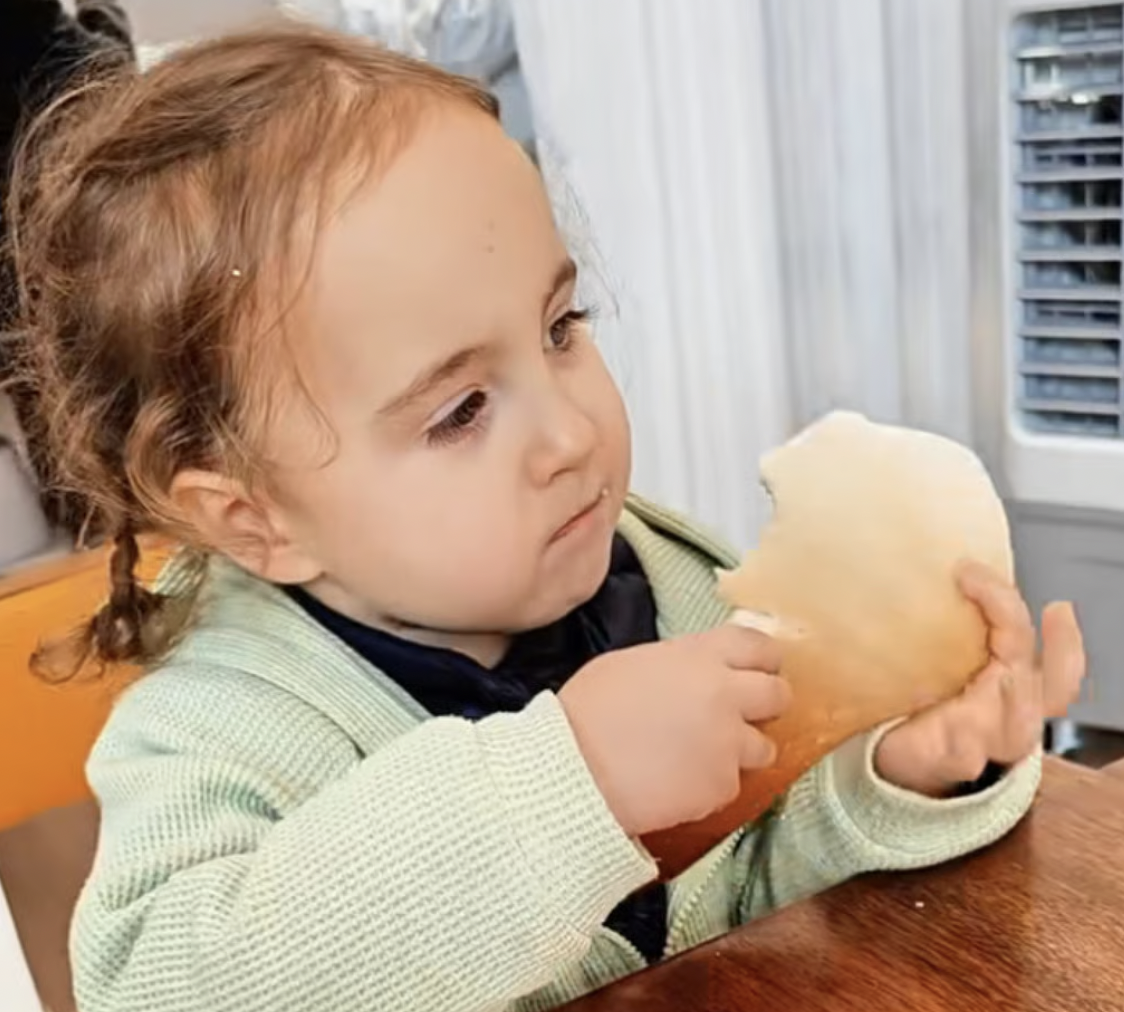 |
Guojiang in her kindergarten class in Jiangsu province, China. Photo: *Shanghai Daily*. |
Yang stated that all previous generations in his family had only sons. "The recessive gene from my great-grandfather seemed to only appear in daughters," he said. "Consequently, no sons in the family exhibited mixed-race traits."
The family mentioned they have a distant relative living in Serbia, but they rarely communicate.
When Guojiang was 8 months old, distinct features began to emerge: her eyes turned aquamarine. By her one-year birthday, her hair had become blonde and curly, with long eyelashes.
When the Yang couple took their daughter out, many people were curious, asking why she looked foreign. "Sometimes we get tired of explaining to strangers," he said.
In late september, Guojiang started kindergarten. Her teacher describes her as speaking fluent Chinese and being friendly with her peers.
Guojiang's mother said that appearance is determined randomly by genes and she does not dwell on it. She only wishes for her daughter to grow up healthy, happy, and become a useful member of society.
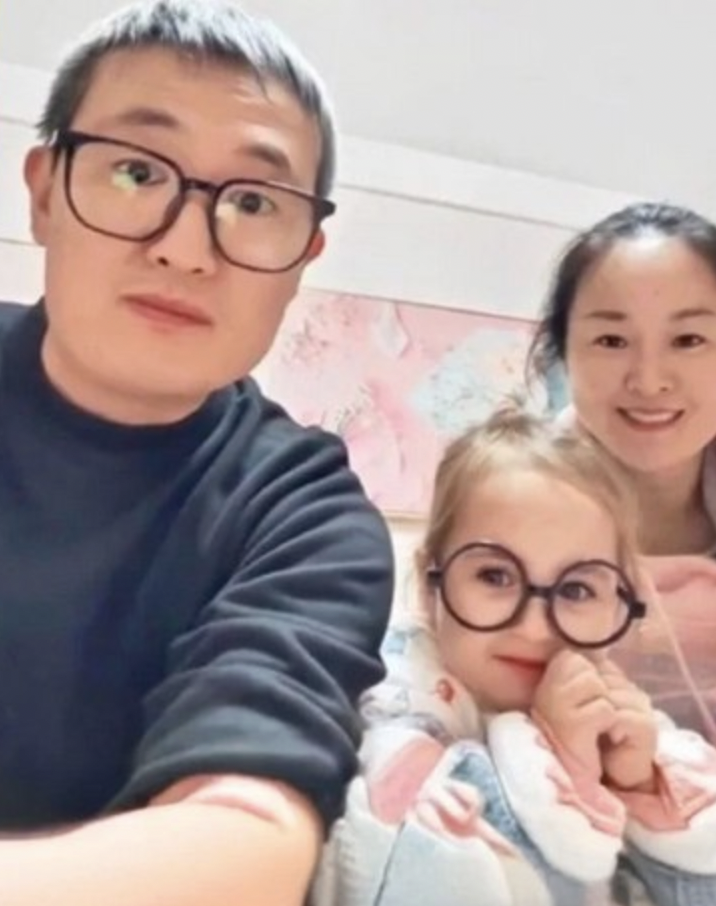 |
Guojiang with her parents in Jiangsu province, China. Photo: *Shanghai Daily*. |
Science blogger Lao Ren considers Guojiang a prime example of multigenerational inheritance. In East Asians, blue eyes and blonde hair are determined by recessive genes, meaning these genes only manifest when both copies are present.
Typical examples include the OCA2/HERC2 gene for blue eyes and MC1R for light hair. In China, the recessive blue-eye gene is rare, found in only 0.1–0.3% of the population, with natural blonde hair being even rarer. Guojiang's Russian great-grandfather carried two copies of these recessive genes, thus able to pass them down through generations.
Over four generations, the Yang family had only sons, causing these traits to remain "dormant." Males carrying the recessive gene did not express it clearly because testosterone hormone suppresses the melanin production pathway in hair and eyes.
In Guojiang's generation, the first daughter after four generations of sons, estrogen hormone activated this pathway, allowing both copies of the recessive genes from the paternal line to be fully expressed.
According to Chinese geneticists, the probability of a recessive gene sequence being transmitted through four generations of sons and then simultaneously appearing in one girl like Guojiang is less than 1/16,000.
Currently, the girl's story has garnered over 120 million views on Douyin.
By Ngoc Ngan (Source: *Shanghai Daily*, *Times of India*)