At dawn on the Pir Panjal mountain trail, Fatima Deader felt her first contraction. She and her family were nearing the midpoint of their journey from Rajouri in Jammu to the pastures of Kashmir.
Fog blanketed the forest, and the ground was slippery where the group of about 70 herders had camped the previous night. With one week left until her due date, Deader rode her horse, attributing her discomfort to fatigue until severe pain struck.
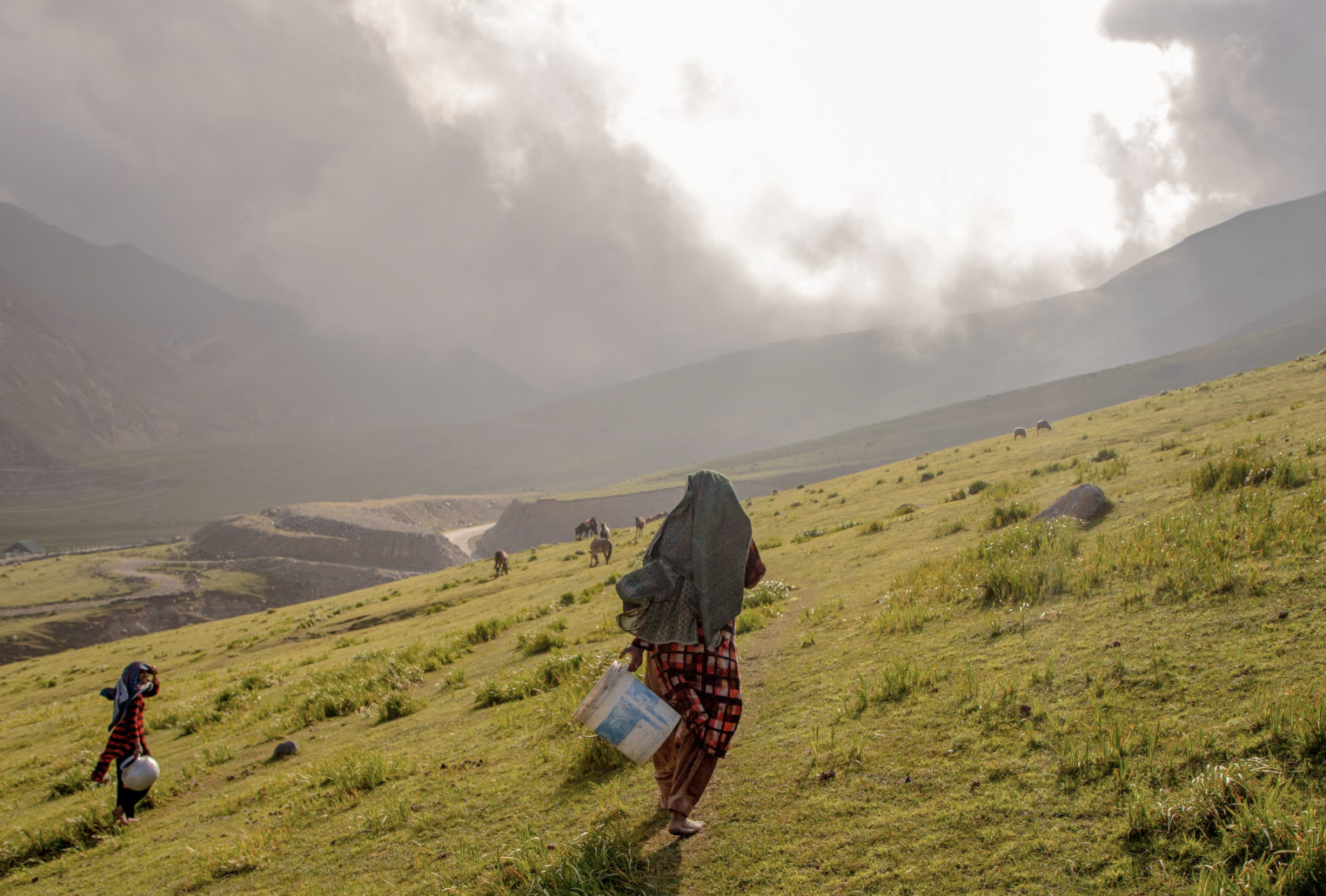 |
Kashmiri nomadic herders near Pir Panjal Pass, India. *Photo: Guardian* |
"There was no clinic, no nurse, no doctor", Deader, 23, recalled. At that moment, she had only her mother and traditional birth attendant Saira Begum to assist her in the damp tent. A few hours after giving birth, Deader, still weak and bleeding, had to continue riding her horse, carrying her newborn baby strapped to her, as the group traversed a forest inhabited by tigers and bears.
The Pir Panjal Pass, standing at 3,500 meters and also known as Peer Ki Gali, connects Jammu with the Kashmir Valley via the ancient Mughal route. Each year, as the snow melts, nearly one million Gujjar and Bakarwal nomads migrate with their goats, sheep, and horses on a journey lasting several months.
During the migration season, pregnant women still carry heavy loads and rest in tents pitched on damp ground. Newborns are often delivered under trees, by riverbanks, or in forest shelters. Some women give birth after days of inadequate food. Those who manage to reach a hospital often arrive exhausted, anemic, or suffering from infections.
The survival of these women often relies on traditional birth attendants. Saira Begum, 63, has helped dozens of babies come into the world along the mountain routes. She stated that sometimes, due to excessive blood loss, traditional birth attendants cannot save the mother. Begum recalled the case of a woman named Gulnaz in 2021. They were in Doodhpathri, 10 km from the nearest hospital, and food and water supplies were depleted. Gulnaz, eight months pregnant and suffering from liver disease, died before the group of traditional birth attendants could intervene. "We only have inherited knowledge, no medicine, no doctors", she said.
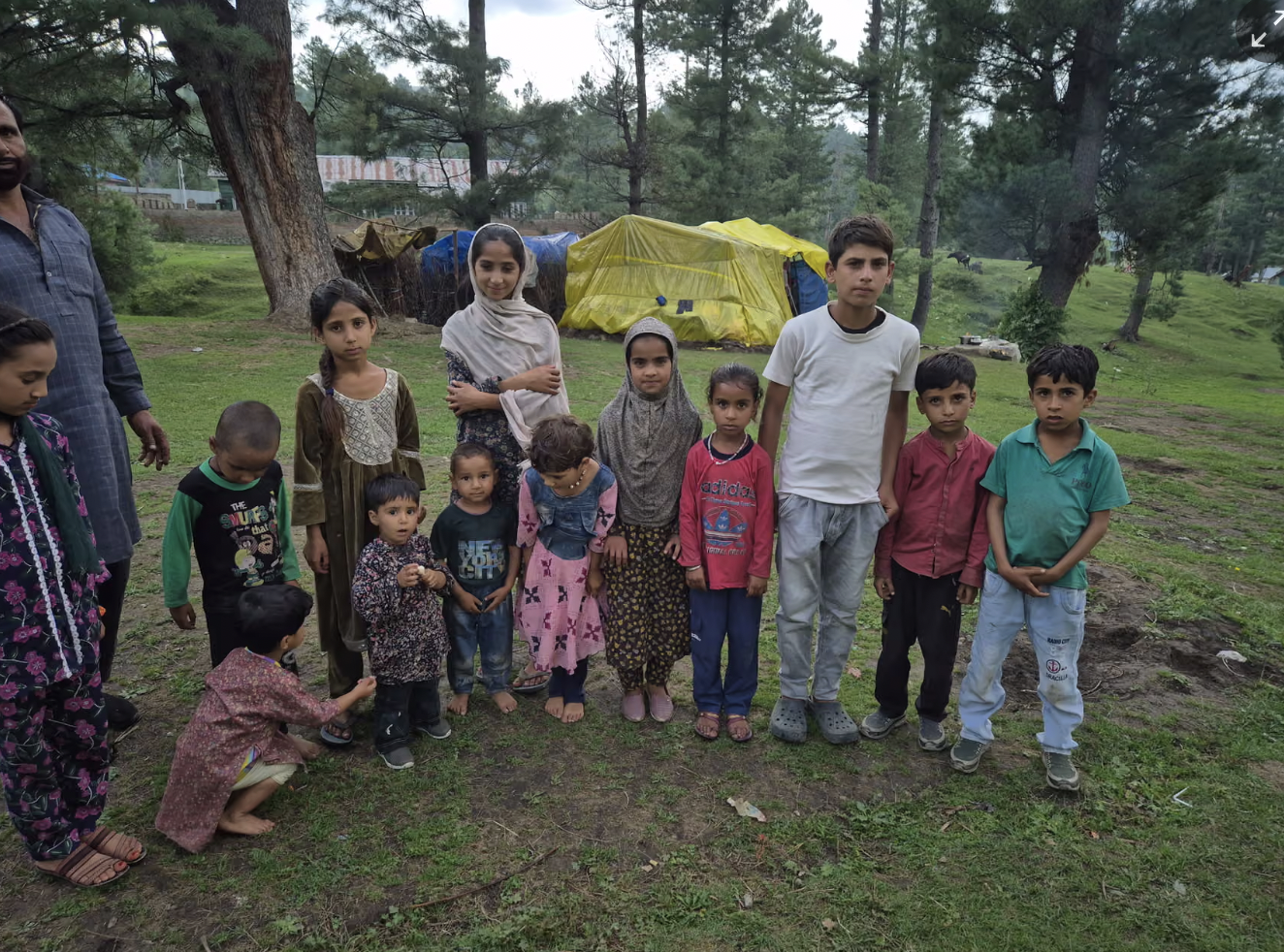 |
A nomadic group by their tents in Baramulla, India. *Photo: Arsalan Bukhari* |
Fozia Choudhary gave birth in 2016, at the age of 16. She had married her cousin at 14. She typically ate one cup of milk and one roti daily. When she went into labor, Choudhary's condition became critically weak. She was one of the few fortunate enough to reach a hospital, but doctors were shocked by her health. She required four units of blood transfused before she could give birth safely, and her recovery was slow and painful.
In 2022, the government estimated that for every 100,000 births in Jammu and Kashmir, 46 women died from pregnancy-related causes. This figure is lower than India's national average of about 103 cases and the global average of 224 cases, according to 2020 data. However, this figure does not account for most nomadic women, meaning their actual risk is significantly higher.
Dr. Mushtaq Wani, a public health researcher in Srinagar who works with nomadic communities, stated that the state's maternal mortality ratio (MMR) figures are based solely on hospital births. Women on migration routes rarely reach clinics in time, so many preventable deaths go unrecorded. Kashmiri local politician and doctor Yasin Rather noted that for decades, successive administrations promised to provide mobile healthcare for Gujjar and Bakarwal women, but this support has never materialized.
A senior, unnamed health official from the Jammu and Kashmir government acknowledged that staffing, funding, and challenging terrain pose significant obstacles to providing medical support. Doctors at district hospitals confirmed this reality. One doctor in Baramulla stated that many women arrive after walking or riding horses 10–15 km while in labor. By the time they reach the hospital, it is often too late to prevent complications or save the mother's life. Severe anemia, infections, and obstructed labor are common conditions.
Challenges in healthcare are exacerbated by poverty, early marriage, and malnutrition. Many women, especially young girls who marry early, become pregnant before their bodies are fully developed and lack proper nutrition, increasing the risk of complications for both mother and newborn.
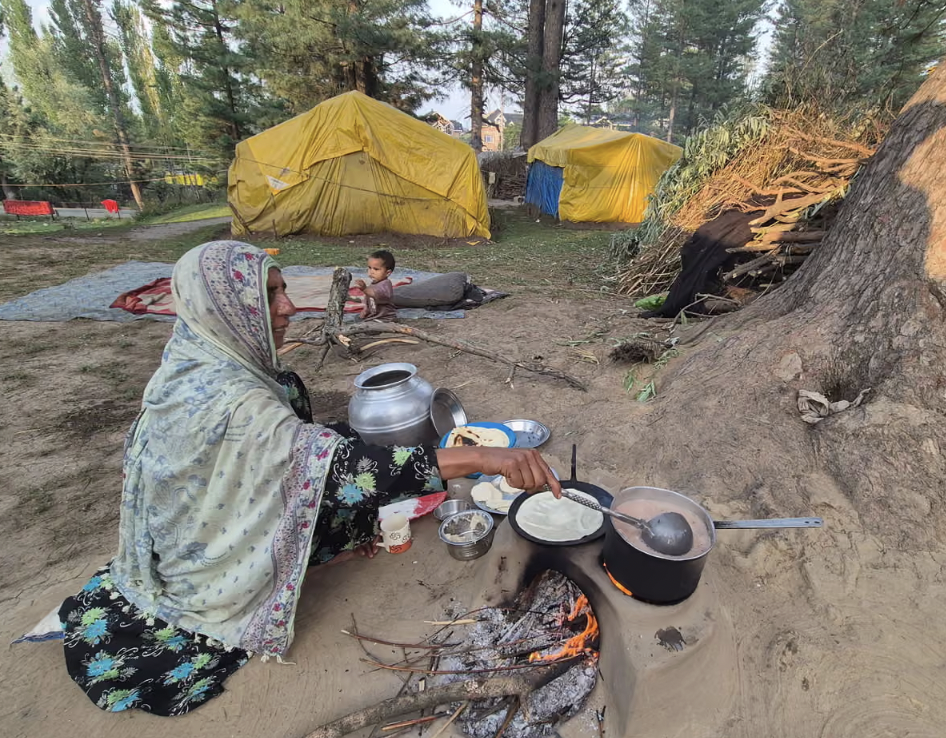 |
Saira Begum, a traditional birth attendant, in the mountainous region of Kashmir, India. *Photo: Guardian* |
Back in the forest, Begum folded a cloth after helping another young woman give birth. "In the deep forest, what do you have but an old woman's hands?" Begum asked. Meanwhile, new mother Fatima swayed her newborn by the fire, sharing a similar sentiment. "We were lucky to survive, but every year, one woman is not so fortunate", she said.
Ngoc Ngan (Source: Guardian)