On private jets transporting basketball teams across the United States, the rear section of the plane frequently becomes a miniature gambling den. Here, expense money and bonuses quickly vanish over poker games. A former National Basketball Association (NBA) player once revealed, "As soon as the plane lands, my pockets are empty, not to mention those ten-day-long tours."
To understand why sports figures become entangled in gambling, experts suggest examining their culture: a fiercely competitive world populated by individuals who are highly driven, wealthy, and possess excessive free time. An NBA talent scout likens this combination to a "perfect storm" leading athletes to the gambling table.
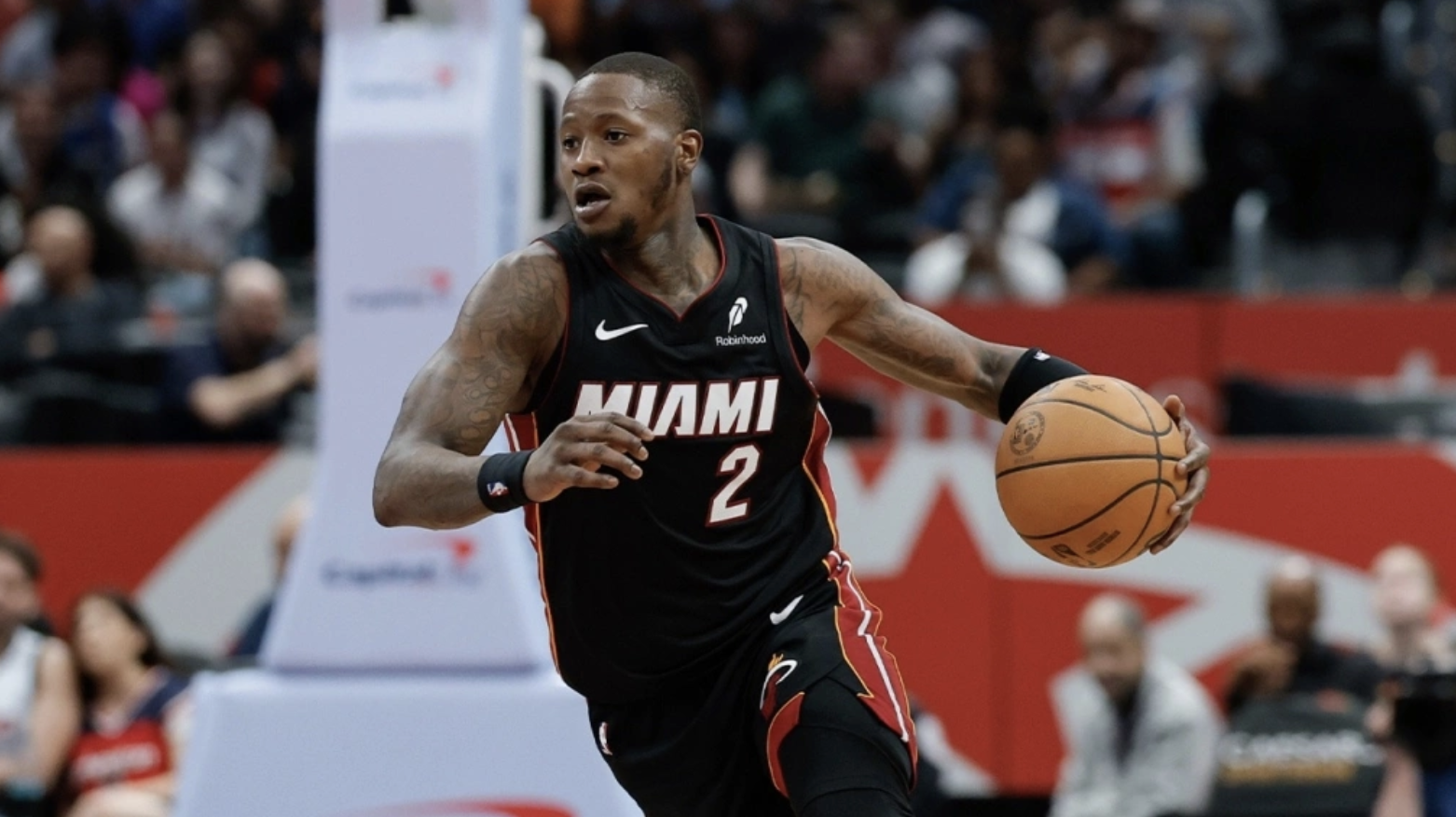 |
Player Terry Rozier in a Miami Heat jersey during a game last season. *Photo: Reuters* |
The "addiction to competition" instinct
The desire to win helps athletes excel on the field, but it also turns gambling into a deadly trap off it. The Center for Gambling Studies at Rutgers University in the United States indicates that the rate of athletes falling into gambling is 75% higher than that of the general population.
Fans have recently been shaken by a series of scandals. NBA coach Chauncey Billups was accused of colluding with criminals to fix poker games, while player Terry Rozier is suspected of leaking information to betting circles. Another case involved baseball players Luis Ortiz and Emmanuel Clase, who were accused of intentionally throwing pitches according to a script, helping a gambling ring win 400,000 USD.
Why do stars earning millions of USD risk their reputations for relatively small sums? An expert shared with CNN, "Selling their honor seems pointless, but perhaps they crave the thrill; it's an irresistible impulse."
Basketball legend Michael Jordan once wryly admitted, "I could quit gambling, but I have a problem with competition." For these athletes, gambling is not just about money; it is about the feeling of triumphing over an opponent.
Tragedy often begins with minor challenges. "They aren't sitting around reading books. On the practice court, if someone shouts, 'bet 100 USD I'll make this shot,' everyone jumps in," recounted a former NBA expert.
A permissive environment
Gambling has been a pastime intertwined with sports for decades in the United States. Tony Kubek, a famous former baseball player, recalled 36-hour train rides filled with 100 USD bills at gambling tables back in the 1950s.
Over 20 years ago, two basketball stars, Charles Oakley and Tyrone Hill, even got into a physical altercation on the practice court over a ten thousand USD debt. Oakley explained in GQ magazine, "If you borrow from a bank, you pay interest. If you don't pay me back, I have to collect it myself."
Today, the legalization of sports betting in 38 US states has blurred the lines even further. The proliferation of betting applications allows athletes to wager directly from hotel rooms or locker rooms.
Jayson Werth, a former baseball star who self-identifies as an "addict to competition," felt a profound emptiness upon retirement. He now seeks adrenaline by owning racehorses instead of competing directly.
Werth elucidated the plight of his colleagues who have stumbled: "We are raised to compete our entire lives. When the spotlight fades, that 'itch' becomes so uncomfortable that people are compelled to find a way to scratch it."
Minh Phuong (via CNN)