On the afternoon of November 23, the Department of Dyke Management and Disaster Prevention, under the Ministry of Agriculture and Environment, reported that floods have caused 91 fatalities. Dak Lak suffered the most severe impact with 63 deaths, Khanh Hoa 15, Gia Lai three, Da Nang and Hue two each, and Quang Tri one.
Total economic damage is estimated at 13.078 trillion VND, an increase of 4 trillion VND after updating data from Khanh Hoa. Specifically, Dak Lak sustained over 5.3 trillion VND in damage, Khanh Hoa 5 trillion VND, Lam Dong nearly 1.1 trillion VND, Gia Lai 1 trillion VND, and Quang Ngai 650 billion VND.
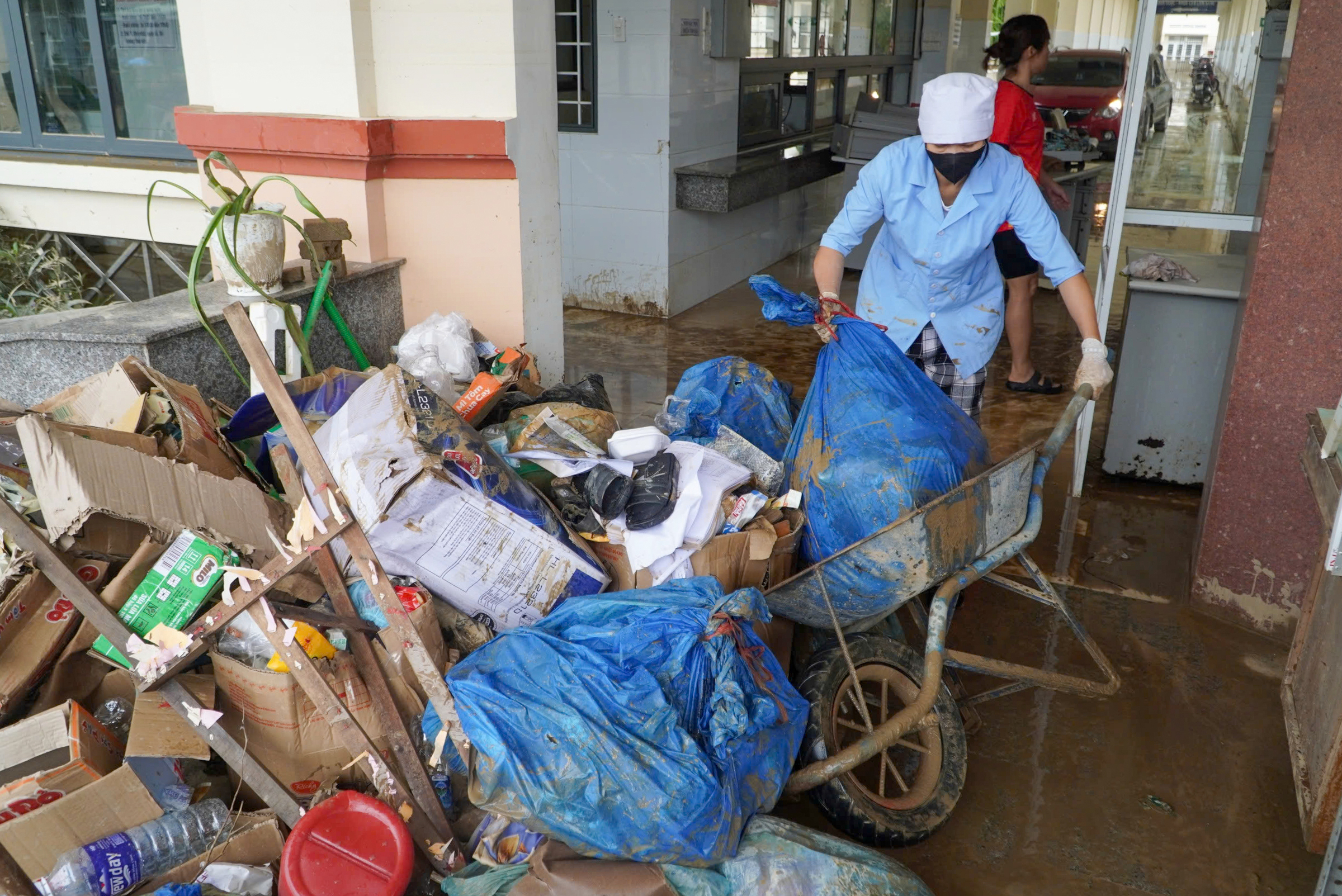 |
Quy Nhon Tuberculosis and Lung Hospital after the floods. Photo: Dinh Van |
The floods also destroyed 221 homes, primarily in Gia Lai with 127 homes and Lam Dong with 76 homes. Additionally, 933 homes were damaged, mostly in Lam Dong. At its peak, nearly 200,100 homes were submerged, with Dak Lak accounting for the majority at 150,000 homes and Khanh Hoa 30,000. Currently, inundation persists in two low-lying communes in Dak Lak, Hoa Thinh and Hoa My, while 127 households in Lam Dong remain flooded.
In agriculture, over 82,100 hectares of rice and crops and more than 117,000 hectares of perennial trees were damaged. Over 3.3 million livestock and poultry, along with 1,150 hectares of aquaculture, were lost or swept away. Dak Lak continues to be the most severely affected locality, with 63,000 hectares of rice, 117,000 hectares of perennial trees, 3.2 million livestock, and 1,000 hectares of aquaculture damaged.
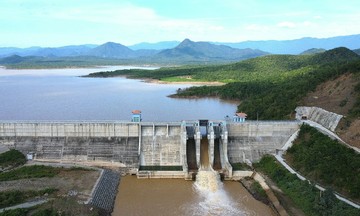
The floods also caused traffic congestion at 17 locations on National Highways 20 and 27C due to localized landslides. The railway system experienced 15 damaged points in the Dong Tac – Phu Hiep and Phu Hiep – Hao Son sections, primarily due to the impact of water discharge from the Song Ba Ha hydropower reservoir.
At its peak, nearly 1.2 million customers experienced power outages. To date, power has been restored to over 920,000 customers, but 20,000 households in Gia Lai, 162,000 households in Dak Lak, and 75,500 households in Khanh Hoa are still without electricity.
The specialized data transmission network from the provincial to communal level is currently disconnected in 62 communes and wards. Additionally, 343 BTS stations are disrupted, mainly in Dak Lak and Khanh Hoa.
Today, rainfall has decreased in the South Central region. Water levels on rivers are receding, but many areas still exceed warning levels. On the Ba River at Cung Son, the water level is 0.74 m above alarm one. The Krong Ana River at Giang Son is 0.11 m below alarm three. The Serepok River at Ban Don is 4.14 m above alarm three. The Dinh Ninh Hoa River at Ninh Hoa is 0.37 m above alarm one. The Dong Nai River at Ta Lai is 0.11 m below alarm two.
 |
Hanoi residents donate supplies to flood-affected areas. Photo: Tung Dinh |
Forecasts for the next 12 to 24 hours indicate that floodwaters on the Krong Ana River will recede below alarm three, while those on the Dong Nai and Dinh Ninh Hoa rivers will remain above alarm one. Flood levels on the Serepok River are expected to stay high, above alarm three.
This morning, Prime Minister Pham Minh Chinh chaired an urgent meeting from South Africa with the Standing Government and the National Steering Committee for Civil Defense, urging continued focus on addressing the aftermath of the floods in the Central region.
The government has provided urgent support totaling 1.1 trillion VND to affected localities: Dak Lak 500 billion VND, Lam Dong 300 billion VND, Khanh Hoa 150 billion VND, and Gia Lai 150 billion VND. The Ministry of Finance has also released 4,000 tons of national reserve rice, including 1,000 tons for Lam Dong, 1,000 tons for Gia Lai, and 2,000 tons for Dak Lak.
Gia Chinh