During a discussion on the draft amended Law on Intellectual Property on the morning of 24/11, Minister of Science and Technology Nguyen Manh Hung emphasized that this revision focuses on making intellectual assets economic assets for businesses. These assets must be quantifiable, tradable, recorded in financial statements, and usable as collateral for loans, particularly for new and digital technologies. The significant shift is moving intellectual property from a "rights protection" mechanism to one that "assetizes, commercializes, and markets" research outcomes.
The draft law also undergoes adjustments to align with other legislation concerning science and technology, innovation, technology transfer, high technology, digital technology, and artificial intelligence. The Minister stressed that intellectual property must become a strategic competitive tool for businesses and the nation. In developed countries, intangible assets often constitute up to 80% of total assets. He noted, "Vietnam has reached a stage where it must prioritize the development and protection of intellectual assets to achieve high-income status."
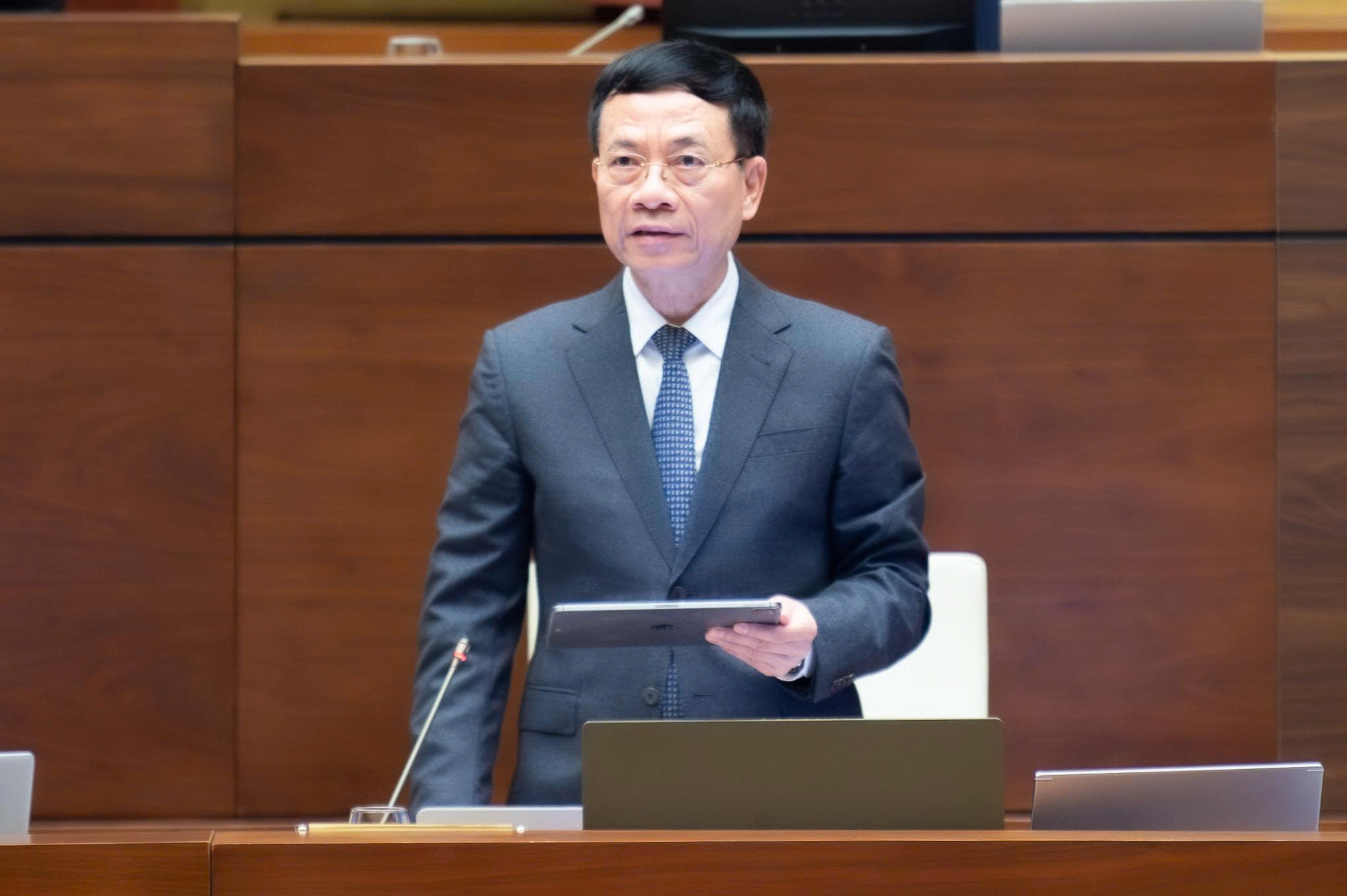 |
Minister of Science and Technology Nguyen Manh Hung speaks at the National Assembly. Photo: Hoang Phong |
Regarding intellectual property management within businesses, the Minister indicated that the law needs general provisions for recognizing and accounting for these assets. The government will issue detailed regulations on accounting standards, disclosure, and valuation. Assets not yet meeting the conditions for balance sheet inclusion will be separately tracked in ledgers. The draft law also expands industrial design protection to non-physical products, aligning with digital and artificial intelligence trends, and authorizes the government to specify conditions.
The government will explore integrating intellectual property into general education and university curricula. Additionally, it plans to refine the Specialized Intellectual Property Court and introduce stronger penalties for infringement, similar to how theft is handled in the physical world.
AI is not an intellectual property rights subject
During the discussion, many National Assembly delegates offered input on determining intellectual property rights for artificial intelligence-generated products. Delegate Pham Trong Nghia noted three current perspectives: non-recognition if human involvement is absent; conditional recognition; and full recognition of intellectual property rights for artificial intelligence.
Mr. Nghia proposed adopting a conditional model, ensuring human creativity remains the core element. He argued that artificial intelligence is merely a tool, not a subject of rights; the human user, who controls, contributes ideas, and makes creative decisions, remains the rights holder. This approach acknowledges artificial intelligence's role while maintaining the requirement for product originality.
Some delegates suggested distinguishing between artificial intelligence-assisted works and artificial intelligence-generated works. They also called for criteria to determine the extent of human creative contribution. The current draft law lacks provisions for legal responsibility when artificial intelligence creates copyright-infringing works. Therefore, it is necessary to add principles for tracing input data, clarify the human creative role in the creation chain, and restrict copyright registration for works entirely created by artificial intelligence.
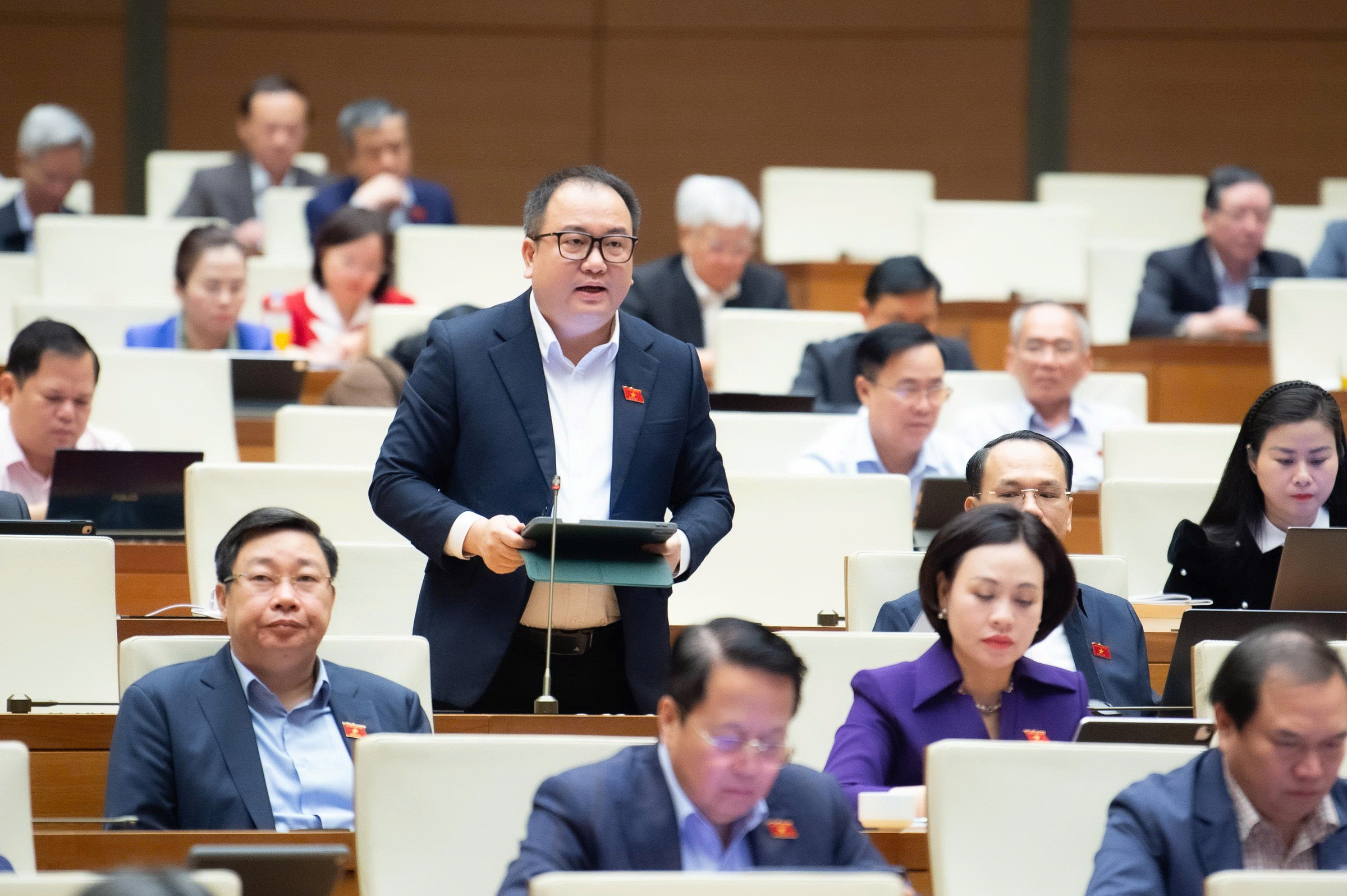 |
Delegate Pham Trong Nghia (specializing in the Culture - Social Committee). Photo: Hoang Phong |
Minister Nguyen Manh Hung affirmed that artificial intelligence is not an intellectual property rights subject. Artificial intelligence-generated products created without human involvement will not be protected as human creative works. Conversely, products where humans use artificial intelligence as a tool—similar to a paintbrush or camera—and contribute ideas, edits, or direction, will still recognize the human as the author or inventor.
In cases where humans provide only requirements and artificial intelligence performs most of the work, users will have rights to use and commercialize the output but will not be considered authors. The government will be tasked with determining the level of user creativity to apply appropriate protection mechanisms.
The drafting committee continues to research mechanisms for using public, legal data to train artificial intelligence, provided the output does not infringe upon copyright.