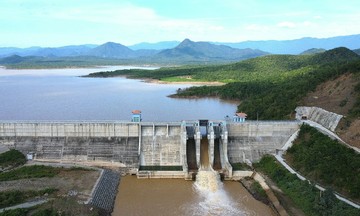
On the afternoon of 21/11, on the sidelines of the Digital Transformation Forum in Hydropower Dam Operation and Safety Assurance, organized by the Department of Water Resources Management and Construction, doctor Nguyen Quoc Dung, Vice Chairman of the Vietnam Large Dams and Water Resources Development Association, pointed out that many factors contribute to the severe flooding in the central region.
Recent rainfall exceeded decades-long records, lasting two to three days and saturating reservoirs and low-lying areas. This meant all new rain immediately flowed into already full basins. Floods were compounded by successive rain events, while current dam operating procedures are primarily based on single flood models, failing to keep pace with the realities of climate change.
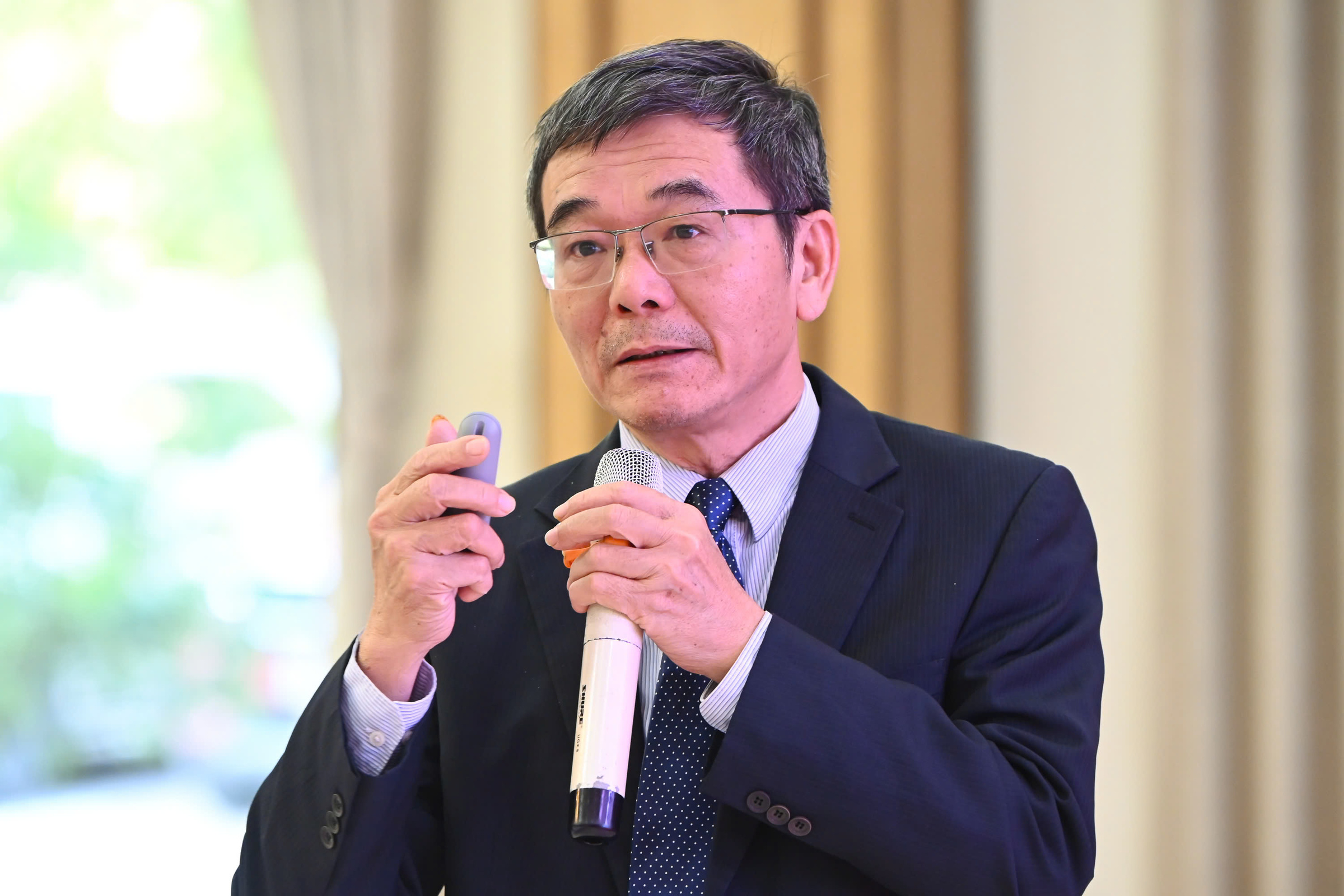 |
Nguyen Quoc Dung speaking at the forum on the afternoon of 21/11. Photo: N.C |
Regarding reservoir operations, Dung noted that "the worrying aspect is that everyone adheres to regulations". Dam owners confirm they follow procedures, and the Steering Committee for Natural Disaster Prevention and Control issues orders according to regulations. However, localities lack expert hydrological and hydraulic consulting teams to advise provincial chairmen on making early flood discharge decisions.
Most current advisors work for the Departments of Agriculture or Industry and Trade and are not specialized experts. Dung suggested Vietnam could learn from Japan and Trung Quoc, which have local hydrological offices. If immediate implementation is not feasible, localities should hire external consultants through socialized funding.
Another challenge involves conflicts of interest. Dung posed the question: if early discharges occur but then there is no rain, who bears responsibility? In 2017, the Hoa Binh hydropower dam faced heavy fines for insufficient power generation after an early discharge left its reservoir low.
Current dam operating procedures are designed to lower water levels at the start of the season to accommodate floods, discharge water in the mid-season so that flow does not exceed inflow, and store water to normal levels by the end of the season. However, recent floods occurred late in the season when reservoirs were already full, leaving almost no capacity to receive additional floodwaters. Hydropower dams, being corporate investments, prioritize electricity production and often hesitate when asked to lower water levels.
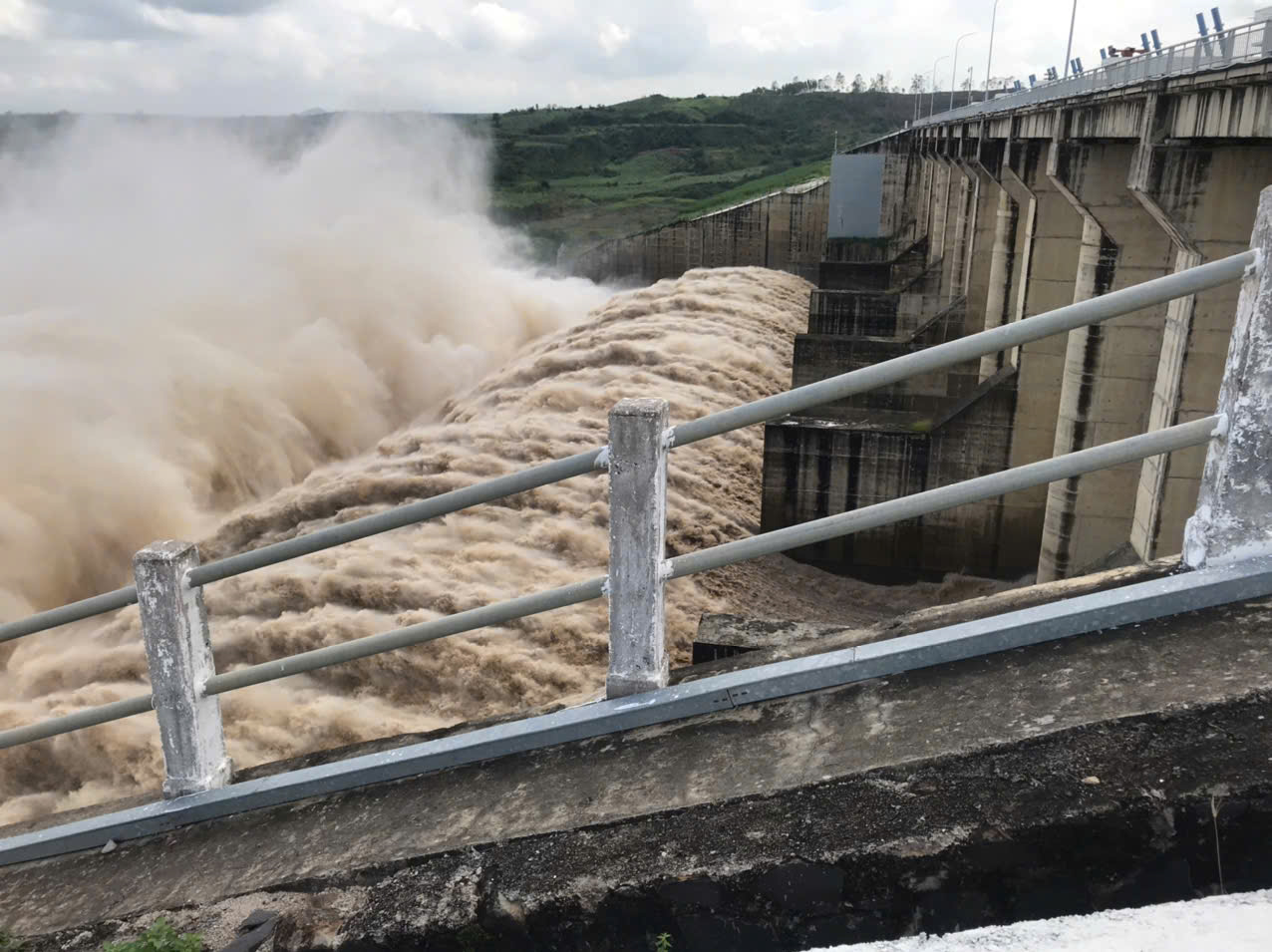 |
Song Ba Ha hydropower dam discharging water on 8/11. Photo: An Phuong |
Dung cited an example where procedures allow a wide discharge range of 0-5,000 m3/s. Dam owners might discharge only a few hundred m3/s in the morning, then increase it to 4,000 m3/s in the afternoon when floods arrive, leaving residents unprepared. "Dam owners are not wrong, because the procedure allows it. The issue is that the procedure is administrative and lacks flexibility," Dung stated.
Based on this reality, he proposed researching a mechanism for "renting flood storage capacity" for dams. When forecasts indicate a need for greater flood storage than currently available, the State could request dams to discharge water in advance to create safe capacity. If the subsequent flood is not as large as predicted, the Natural Disaster Prevention Fund would compensate dam owners for lost power generation.
On 19/11, large hydropower dams in the South Central Coast and Central Highlands were forced to open multiple gates. Notably, the Song Ba Ha hydropower dam at 18h opened 12 gates, discharging 16,100 m3/s while the inflow was 16,160 m3/s. The Song Hinh hydropower dam discharged 2,756 m3/s, with an inflow of 2,921 m3/s.
Other hydropower dams discharging 1,000 to 1,300 m3/s include Yaly, Se San 3, Se San 3A, Se San 4, Srepok 3, and Song Tranh 2.