Many areas in Northern and Central Vietnam experienced their highest temperatures of the summer yesterday, with several monitoring stations approaching 40 degrees Celsius. The National Center for Hydro-Meteorological Forecasting reported Vinh Yen (Phu Tho) as the hottest at 40 degrees Celsius, followed by Lang (Ha Noi) at 39,7 degrees Celsius.
A series of monitoring stations in the Central region, including Tinh Gia (Thanh Hoa); Huong Khe (Ha Tinh); Vinh, Tay Hieu, and Con Cuong (Nghe An); Dong Hoi and Ba Don (Quang Tri), recorded temperatures above 39 degrees Celsius.
The meteorological agency noted that these temperatures are measured inside weather shelters, 2 meters above the ground. Actual outdoor temperatures could feel 2-4 degrees Celsius higher, and even more so in areas with extensive concrete, asphalt roads, or sparse greenery.
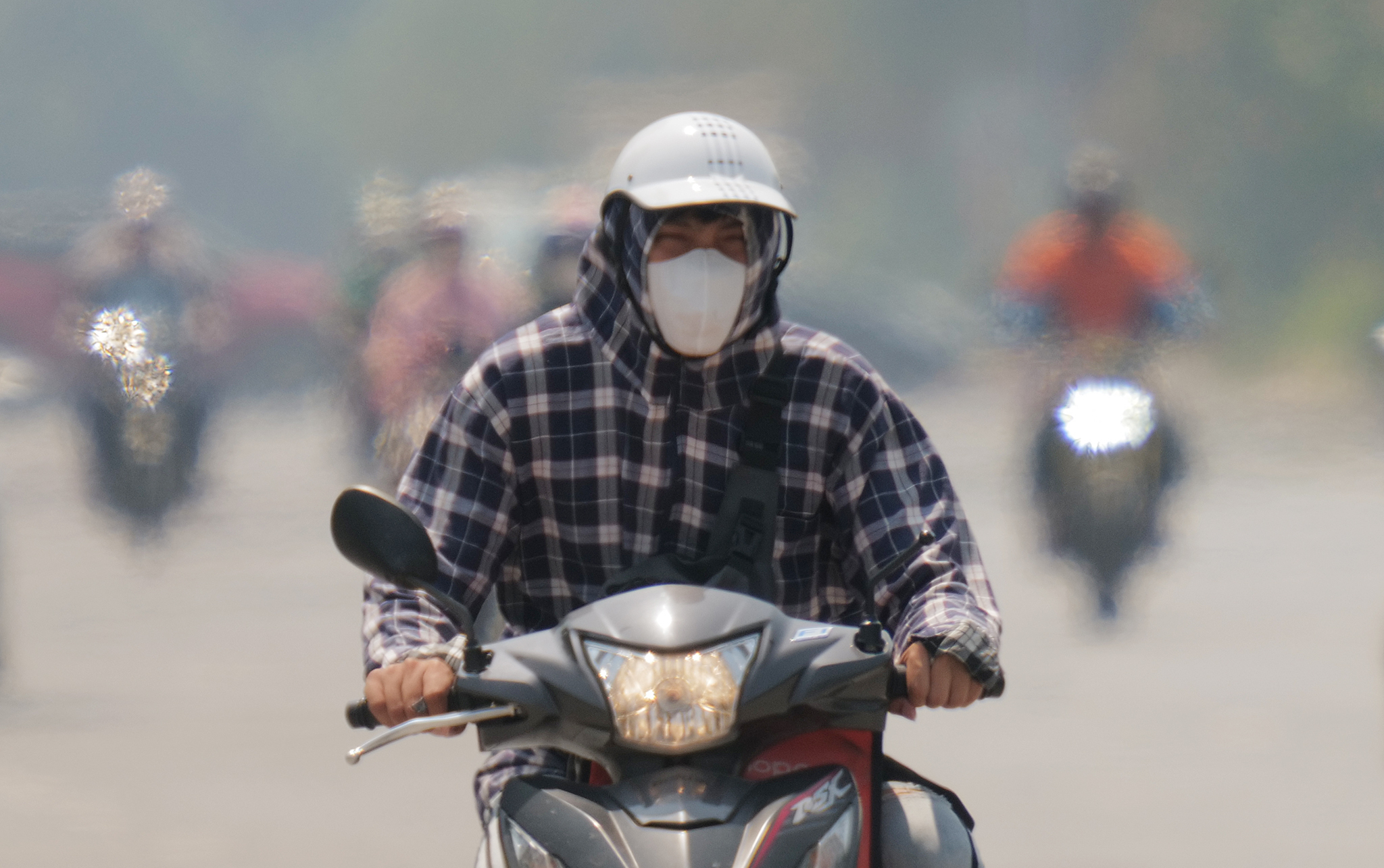 |
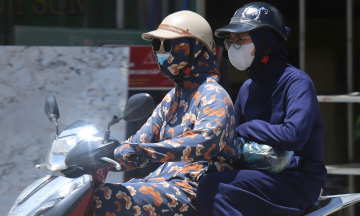
Hanoi residents commuting during the heatwave. Photo: Ngoc Thanh
The National Center for Hydro-Meteorological Forecasting predicts that today's temperatures will rise by about 0,5-1 degree Celsius compared to yesterday. The heat will be concentrated in provinces and cities from Thanh Hoa to Da Nang and eastern Quang Ngai, with peak temperatures generally ranging from 37-39 degrees Celsius, and some areas exceeding 40 degrees Celsius. The lowest humidity will typically be 40-45%.
In Northern Vietnam and the eastern provinces from Gia Lai to Lam Dong, the intense heatwave will persist, with peak temperatures generally between 36-38 degrees Celsius, and some areas over 39 degrees Celsius; the lowest humidity will be 45-50%.
US-based Accuweather forecasts Hanoi's temperature tomorrow at 30-42 degrees Celsius, rising to 30-43 degrees Celsius by tuesday. Temperatures will then gradually decrease, reaching 25-32 degrees Celsius only by the end of the week. High-altitude areas above 1.500 meters, such as Sa Pa (Lao Cai), will see temperatures of 19-27 degrees Celsius during the first two days of the week.
Due to the prolonged intense heatwave combined with low humidity, the risk of fires and explosions in residential areas is heightened by increased electricity demand. The dry, hot weather also elevates the risk of forest fires in many localities. The meteorological sector warns residents to guard against dehydration, exhaustion, and heatstroke-related health issues when engaging in prolonged outdoor activities.
>>See detailed 7-day temperature forecast here.
Gia Chinh