During a National Assembly discussion on 21/11 concerning the revised High-Tech Law, Representative Tran Anh Tuan (TP HCM) explained that strategic technology development starts from the conceptual stage, involving numerous lengthy, expensive testing phases, with a consistently low success probability. If current policies only offer incentives for common high technology, businesses will struggle to manage inherent risks and opt for less challenging areas.
“If budget expenditure solely demands success, no business will venture into strategic product development”, he stated, advocating for additional risk-sharing mechanisms, acceptance of testing failures, and enhanced support for research, development, and commercialization phases.
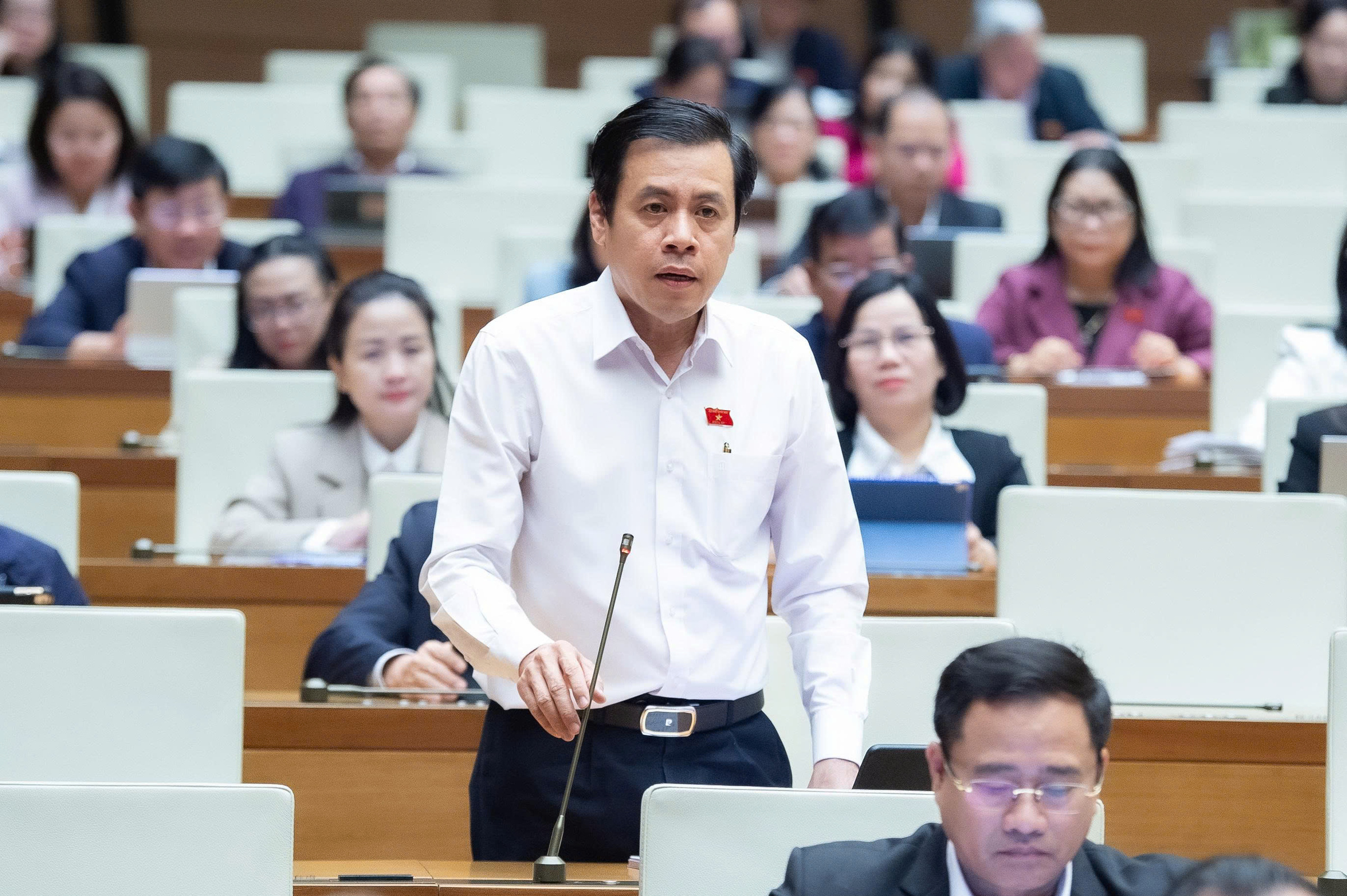 |
Representative Tran Anh Tuan (TP HCM) at the National Assembly. Photo: Hoang Phong |
Representative Pham Trong Nhan (TP HCM) echoed this sentiment, arguing that strategic products cannot emerge if the policies governing the High-Tech Law and Technology Transfer Law operate in isolation. Businesses aiming to develop strategic products need access to core technology, opportunities for testing in a sandbox environment, and sustained incentives from initial research through to application.
“Vietnam also needs to mandate technology transfer within foreign direct investment (FDI) projects, as domestic businesses cannot be expected to develop strategic products without access to foundational technology”, he emphasized.
He highlighted that in technologically advanced nations, the state frequently intervenes directly during the riskiest phases. This intervention often includes policies for ordering, sharing development costs, or acquiring, deciphering, and disseminating technology. Completing these policies will empower businesses to navigate critical development stages and create a value chain of products with broad impact.
Mastering technology is a pillar of national self-reliance
Concluding the discussion, Minister of Science and Technology Nguyen Manh Hung stated that the revisions to the High-Tech Law and the Technology Transfer Law aim to enable Vietnam to master advanced technology and establish a genuine technology market. The two laws serve distinct purposes: the High-Tech Law identifies priority technologies and products, while the Technology Transfer Law governs technology transfer, commercialization, and management activities.
He stressed that high technology is no longer merely an area for investment incentives; it has become a strategic pillar for the economy, national defense, and security, integral to national sovereignty. Vietnam has identified 11 strategic technology groups for domestic mastery, underscoring its commitment to technological self-reliance.
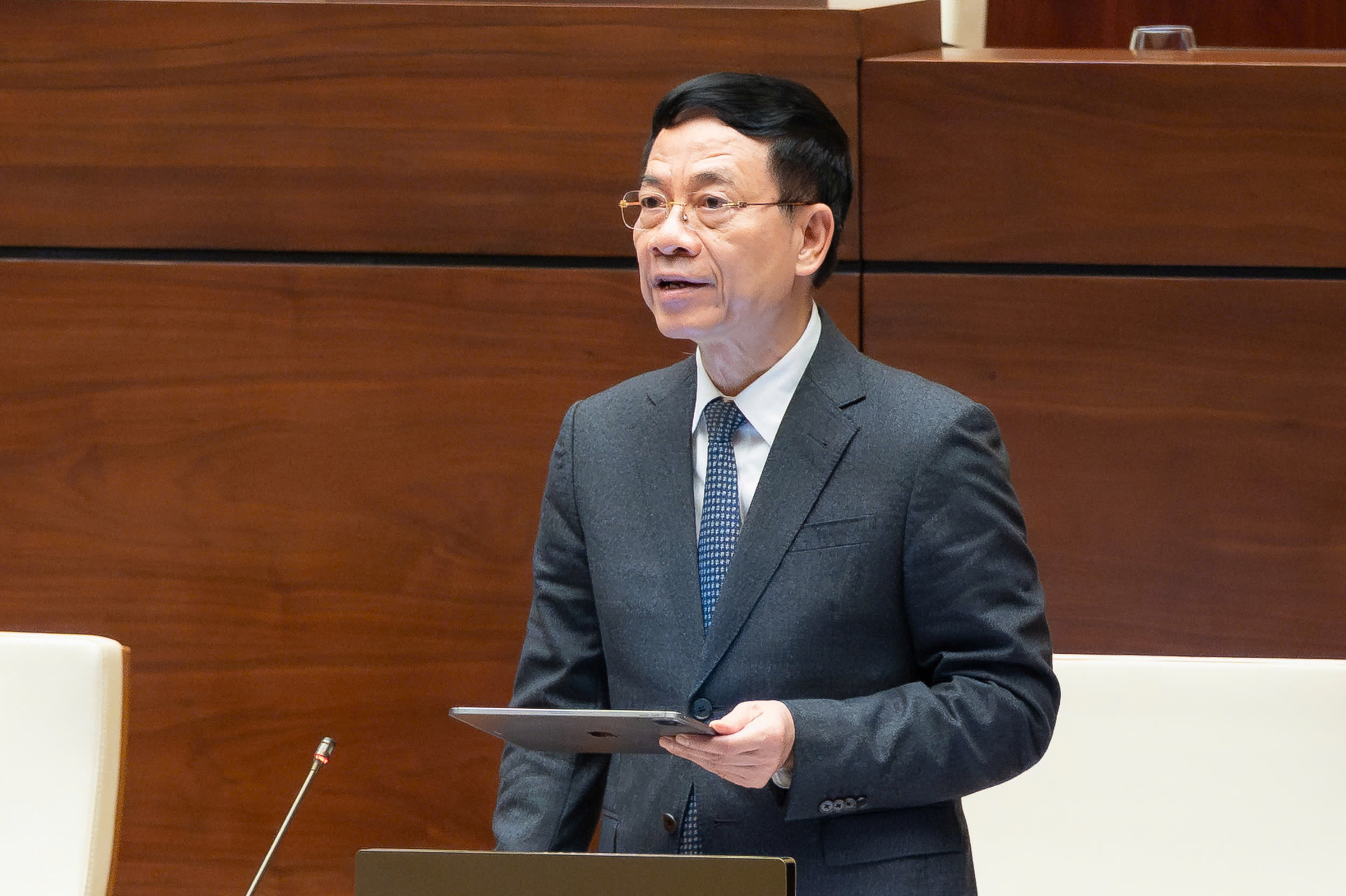 |
Minister of Science and Technology Nguyen Manh Hung speaking at the National Assembly. Photo: Hoang Phong |
The draft High-Tech Law aims to differentiate between high technology, strategic technology, and core technology. It proposes four breakthrough directions: incorporating the concept of strategic technology into law, increasing incentives to boost domestic localization rates and Vietnamese technological content, focusing on national objectives like double-digit growth and technological self-reliance, and fostering high-tech urban development models.
The minister confirmed that existing policies will be maintained and enhanced with additional incentives for foreign direct investment (FDI) businesses that increase technology transfer, boost localization, and conduct domestic research and development (R&D) activities. For strategic technologies, the law anticipates introducing special mechanisms: direct task assignments, acquisition of technological know-how, establishment of dedicated testing facilities, and specific procurement procedures for strategic products.
The Technology Transfer Law aims to establish a robust technology market, shifting focus from control to fostering innovation. The draft legislation broadens the scope and forms of transfer, recognizing knowledge, data, algorithms, software, and artificial intelligence (AI) as transferable technologies. It also introduces derivative technology, co-development, temporary transfer, results-based transfer, and sandbox mechanisms.
He noted that decentralizing appraisal authority to local levels must be paired with a nationally unified set of criteria, transparent appraisal results, and a central monitoring and veto mechanism. The draft also expands the role of intermediary organizations like brokers, consultants, appraisers, and exchanges to further technological innovation.
According to the minister, both laws are being revised to enhance state management capabilities and accelerate digital transformation for effective monitoring, statistics, and evaluation. They will also retain post-inspection authority with strong sanctions to prevent the use of outdated technology and inflated valuations. The state will comprehensively support research, development, testing, and crucially, the commercialization of technology products—an area where Vietnam currently faces challenges. Concurrently, the drafting agency will fully incorporate feedback from National Assembly delegates to finalize both draft laws.
Son Ha