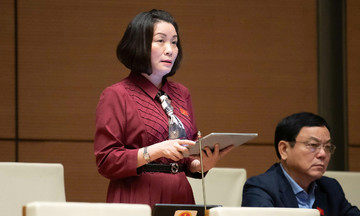
Vo Trong Hai will succeed Le Hong Vinh, who was elected chairman of Quang Tri Provincial People's Committee yesterday.
In his acceptance speech, Vo Trong Hai stated that as 2025 concludes, it marks the final phase of the 2021-2026 term, a pivotal period demanding determination, innovation, and decisive action to achieve targets and lay the groundwork for the province's next phase of development.
He emphasized that the biggest current distinctions lie in operating a two-tier government model, implementing comprehensive digital transformation, and shifting from a management mindset to one of governance, service, and fostering growth and development.
"In this context, I recognize that the provincial chairman is not merely an administrator but also an innovator, a leader, and an inspirer who creates momentum for rapid, sustainable development," Hai stated.
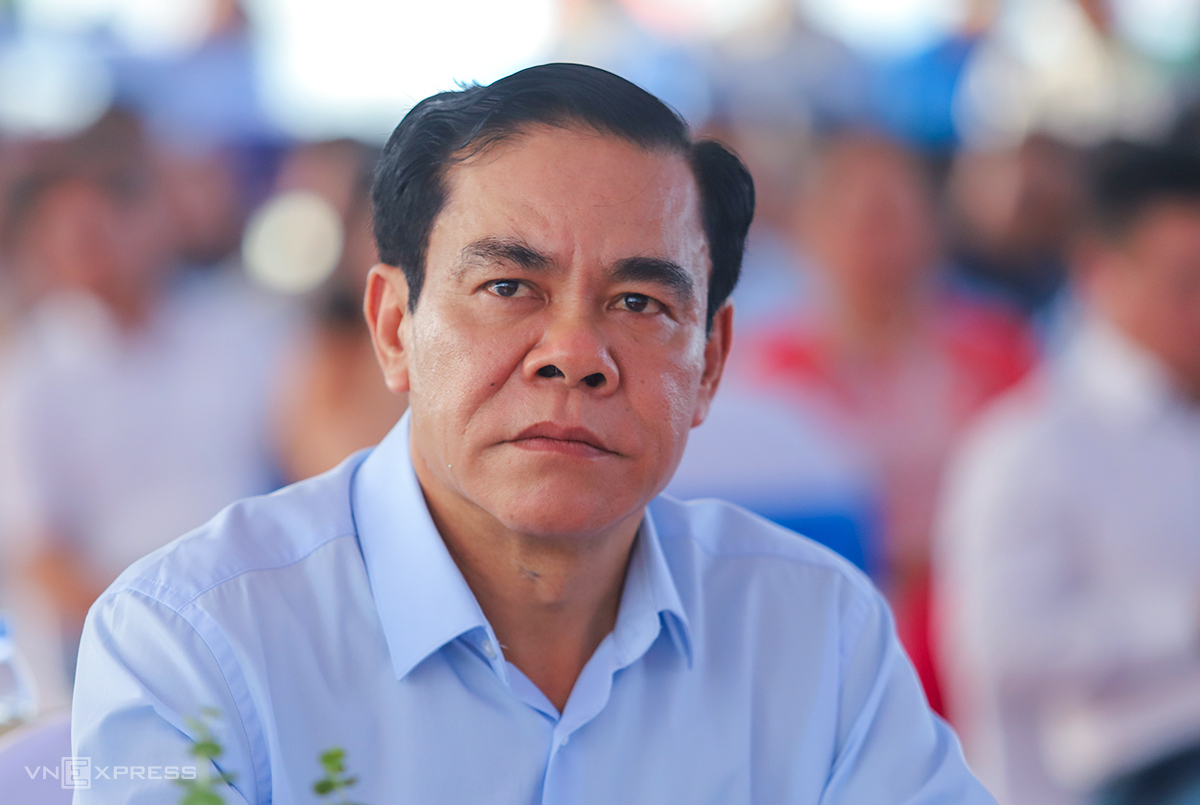 |
Vo Trong Hai, the new chairman of Nghe An Provincial People's Committee. *Photo: Duc Hung*
Vo Trong Hai, 57, hails from Duc Tho commune, Ha Tinh province. He rose through the ranks of the border guard force, having commanded the Ha Tinh Border Guard before transitioning to internal affairs and police work. After serving as head of the Ha Tinh Provincial Party Committee's Internal Affairs Department, he became director of Ha Tinh Provincial Police, then was transferred to become director of Nghe An Provincial Police, where he was promoted to major general. From 4/2021 until now, he has served as chairman of Ha Tinh Provincial People's Committee.
Yesterday, the Party Central Committee Secretariat appointed Hai as deputy secretary of Nghe An Provincial Party Committee for the 2025-2030 term.
Nghe An province spans 16,490 square kilometers and has a population exceeding 3.4 million. For the first 9 months of 2025, local budget revenue is estimated at 20,000 billion dong, reaching 113% of the target and increasing by nearly 30% compared to the same period in 2024.
For the 2025-2030 period, the province aims to become a moderately developed locality nationwide and a key center in the North Central region for industry, education-training, healthcare, and science-technology. Gross Regional Domestic Product (GRDP) growth is projected to reach 9-10% annually, with per capita income exceeding 160 million dong and an urbanization rate of 45%. Three strategic breakthroughs include: developing synchronous infrastructure, improving human resource quality, and enhancing the investment environment. These initiatives are coupled with a focus on digital transformation, a green economy, a circular economy, and improving residents' living standards.
Duc Hung