The Republic of Korea's Joint Chiefs of Staff (JCS) reported that seven Russian and two Chinese military aircraft entered and exited South Korea's air defense identification zone (ADIZ) in the eastern and southern areas this morning. The JCS emphasized that the aircraft did not violate the country's territorial airspace.
"The military detected the Russian and Chinese aircraft before they entered the ADIZ. We deployed fighter jets and implemented tactical measures to prepare for any unexpected situation", the JCS stated.
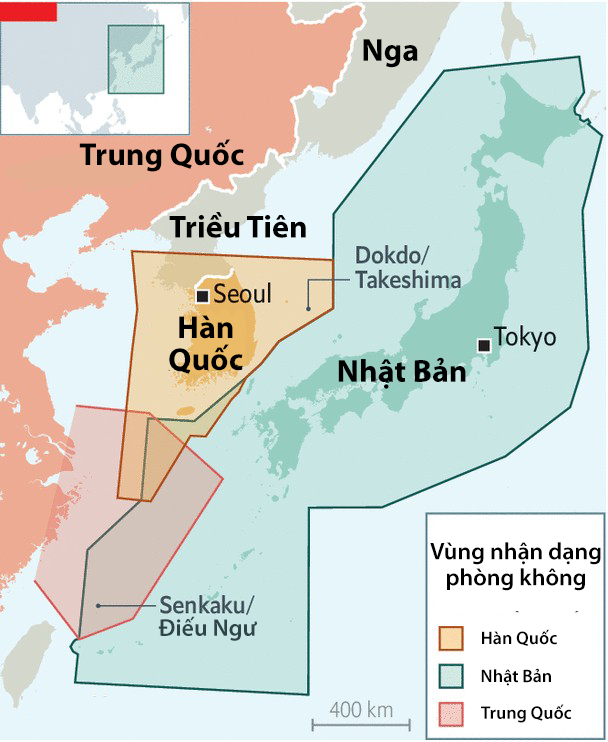 |
Air defense identification zones of South Korea, China, and Japan. *Graphic: Economist* |
A JCS official added that the group of aircraft, comprising fighter jets and bombers, repeatedly entered and exited South Korea's ADIZ for about one hour before departing.
The Russian and Chinese militaries have not yet commented on the information.
An ADIZ is an area of airspace unilaterally designated by a country or territory. Civil aircraft entering this zone must report, identify themselves, state their position, and be subject to the control of that nation or territory. An ADIZ is not territorial airspace, but international practice dictates that military aircraft typically provide prior notification before entering another country's ADIZ to avoid unexpected confrontations.
If foreign aircraft do not comply with regulations while operating within an ADIZ, the host nation may deploy fighter jets to intervene, request identification, or compel them to leave the area, but is not permitted to shoot them down.
South Korean media reports that since 2019, Russia and China have consistently deployed aircraft into the country's ADIZ annually without prior notification, as part of joint exercises.
The most recent incident occurred on 29/11/2024, when five Chinese and six Russian military aircraft entered South Korea's ADIZ.
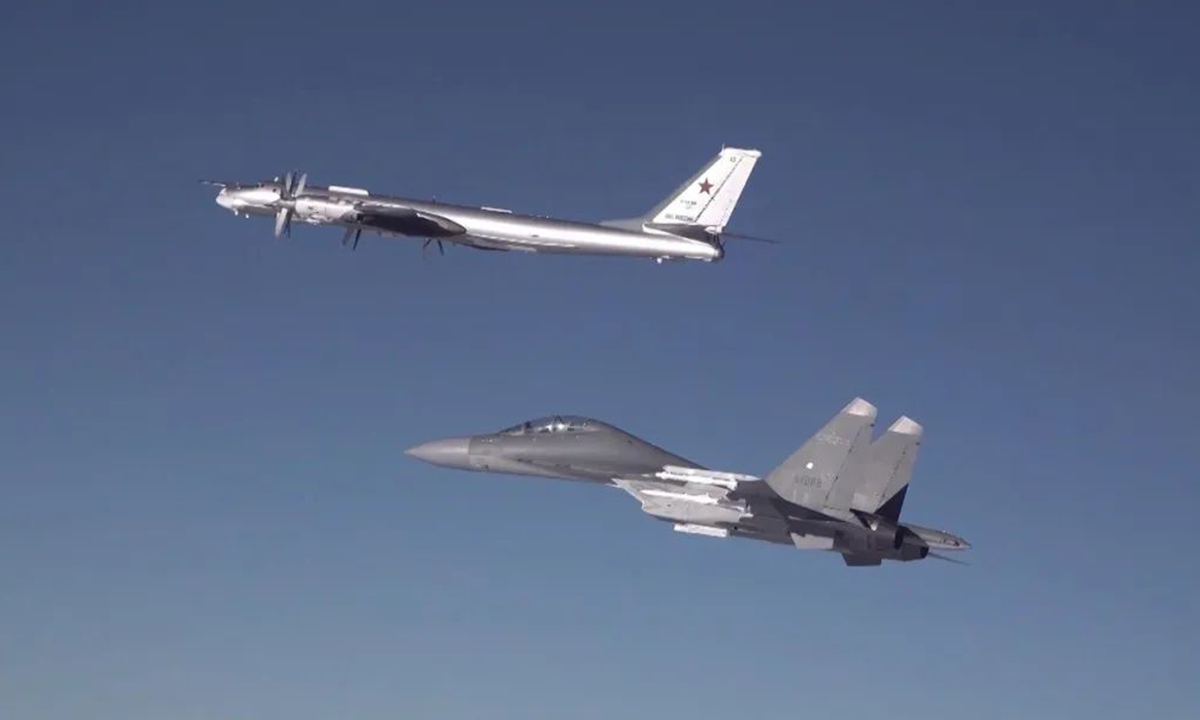 |
Russian Tu-95MS bomber (top) and Chinese J-16 fighter jet on a joint patrol in 2022. *Photo: China's Ministry of National Defense* |
China's Ministry of National Defense announced last week that Moscow and Beijing conducted a joint anti-missile drill in Russian territory in early December. The ministry affirmed that the activity was not aimed at any specific country and was unrelated to regional or international situations.
Russia and China declared an "unlimited" partnership before the conflict in Ukraine escalated in early 2022, committing to regular joint exercises to enhance interoperability between their militaries.
Pham Giang (According to Newsis, Yonhap, Reuters)