Trade negotiations between the United States and Switzerland last summer faced collapse, stemming from a tense phone call between President Donald Trump and his Swiss counterpart, Karin Keller-Sutter.
Keller-Sutter refuted Trump's complaint about Switzerland's trade deficit of approximately 38 billion USD with the United States last year. The following day, on Switzerland's national day, 1/8, Trump announced a 39% tariff on the country, the highest the United States had ever imposed on a developed nation.
For an export-dependent economy like Switzerland, high tariffs from the United States posed a significant risk. The United States is a key market for Swiss watches, chocolate, pharmaceuticals, and mechanical tools. Some Swiss businesses even considered moving production to neighboring countries to benefit from lower tariffs.
The tariff crisis also sparked a domestic debate about Switzerland's neutral status, with many calling for closer ties with the European Union (EU), which had already secured a 15% tariff rate with the United States.
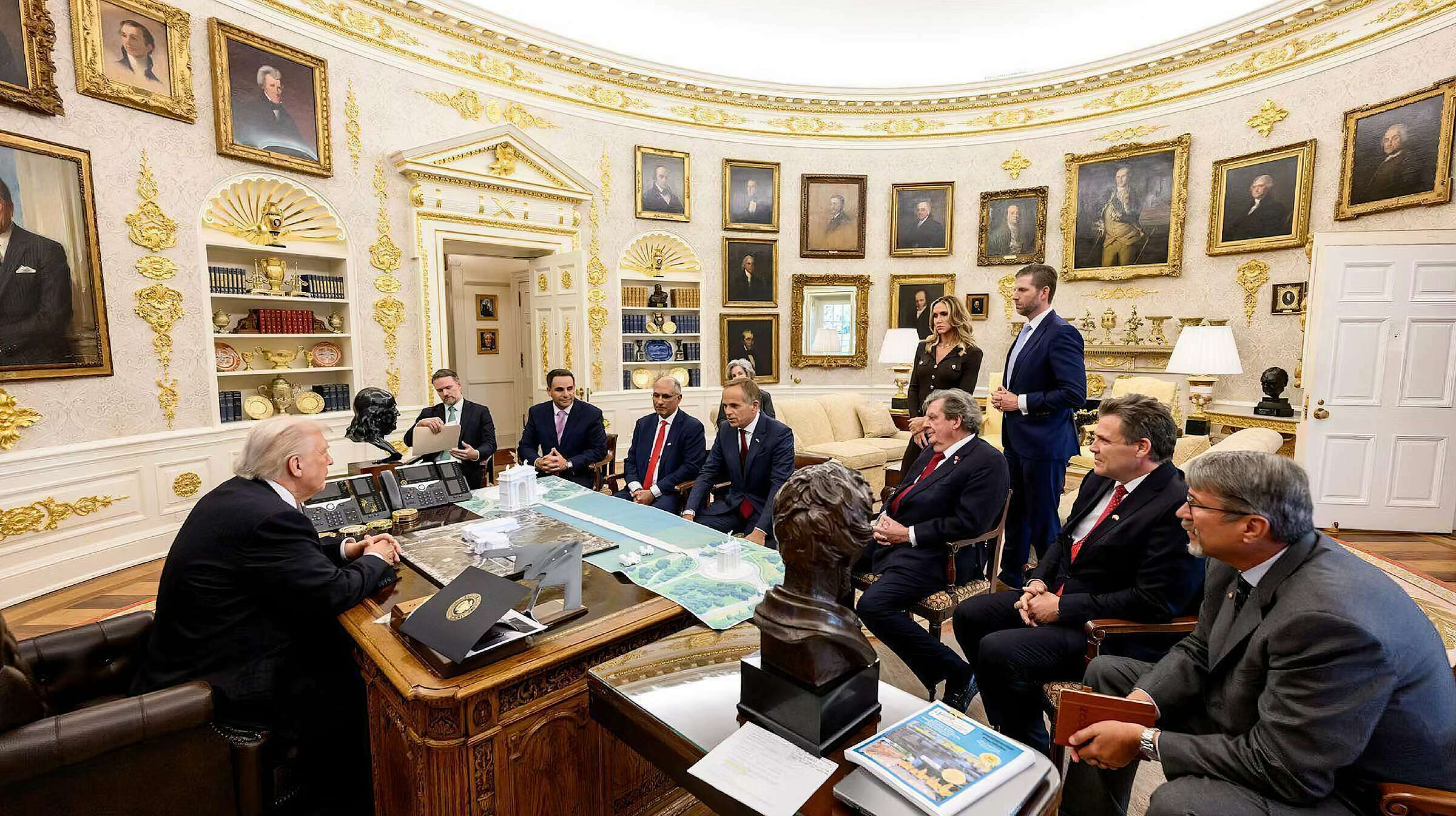 |
The meeting between Trump (left) and Swiss business leaders at the White House in early november. Photo: Rolex Magazine |
The meeting between Trump (left) and Swiss business leaders at the White House in early november. Photo: Rolex Magazine
President Keller-Sutter and Economy Minister Guy Parmelin immediately flew to Washington after Trump's 1/8 announcement, as the tariffs were expected to take effect within days. However, their efforts failed when they only met with Secretary of State Marco Rubio, who was not responsible for trade negotiations.
Meanwhile, the Swiss economy was under pressure. The central bank warned of a "marked deterioration" in outlook due to the high US tariffs. Exports, particularly watches, had already begun to decline, pulling next year's growth forecasts below 1%.
When diplomatic channels reached an impasse, Swiss businesspeople, many of whom are billionaires, immediately launched their own efforts to salvage the situation.
Rolex Chief Executive Officer Jean-Frederic Dufour invited Trump to watch the US Open tennis final from the company's VIP box. Besides the US President, Dufour watched the match with Trump's son-in-law, Jared Kushner, and Treasury Secretary Scott Bessent.
President Trump joked about whether he would have been invited without the tariff issue, according to a response letter Rolex sent to Democratic Senator Elizabeth Warren. Warren had previously asked the company to clarify whether it sought to lobby for tariff exemptions. Rolex denied this, stating that there was no discussion about tariffs at the event.
After the match, Trump received two gifts: a golf sweatshirt and a sports jacket. Some Secret Service agents accompanying Trump also received Rolex caps.
This was just the first step by Swiss business leaders in their effort to "win over" Trump. Simultaneously, Swiss negotiators actively pushed to reach an agreement to reduce tariffs to 15%, according to sources.
The turning point occurred earlier this month when a group of leading Swiss business executives visited the White House to meet Trump. They included Johann Rupert, Chairman of luxury goods group Richemont; Daniel Jaeggi, Chairman of commodity trading firm Mercuria; Dufour of Rolex; Alfred Gantner, founder of Partners Group; and Marwan Shakarchi, Chief Executive Officer of gold mining group MKS.
The gifts the Swiss business delegation brought to the White House included a gold bar engraved with the numbers 45 and 47, symbolizing two potential presidential terms for Trump, along with a Rolex desk clock.
According to Hodinkee, a leading global watch magazine, the Swiss businesspeople brought a letter describing the two gifts as "a symbolic gesture of appreciation, reflecting the spirit of friendship and the strong relationship between the two nations". The White House Office of Ethics approved the two gifts, which are expected to be preserved at the presidential library.
Their conversation with Trump was described as friendly, with business leaders presenting the negative impact of the tariffs and pledging to increase investment in the United States to reduce the trade deficit between the two countries, according to sources familiar with the matter. They emphasized that they were not negotiating on behalf of the government but merely "supporting the process between the two sides".
Trump later posted on social media, praising the "excellent" meeting and immediately directed the initiation of trade negotiations with the Swiss government. The following day, Minister Parmelin flew to Washington to finalize the procedures.
Just over one week later, on 14/11, the tariffs that once threatened to cripple Switzerland's export economy were reduced from 39% to 15%, matching those for EU countries.
"Business people easily grasp Trump's thinking, so their involvement was crucial. The goal was not just to take a photo in the Oval Office", said Rahul Sahgal, director of the Swiss-American Chamber of Commerce.
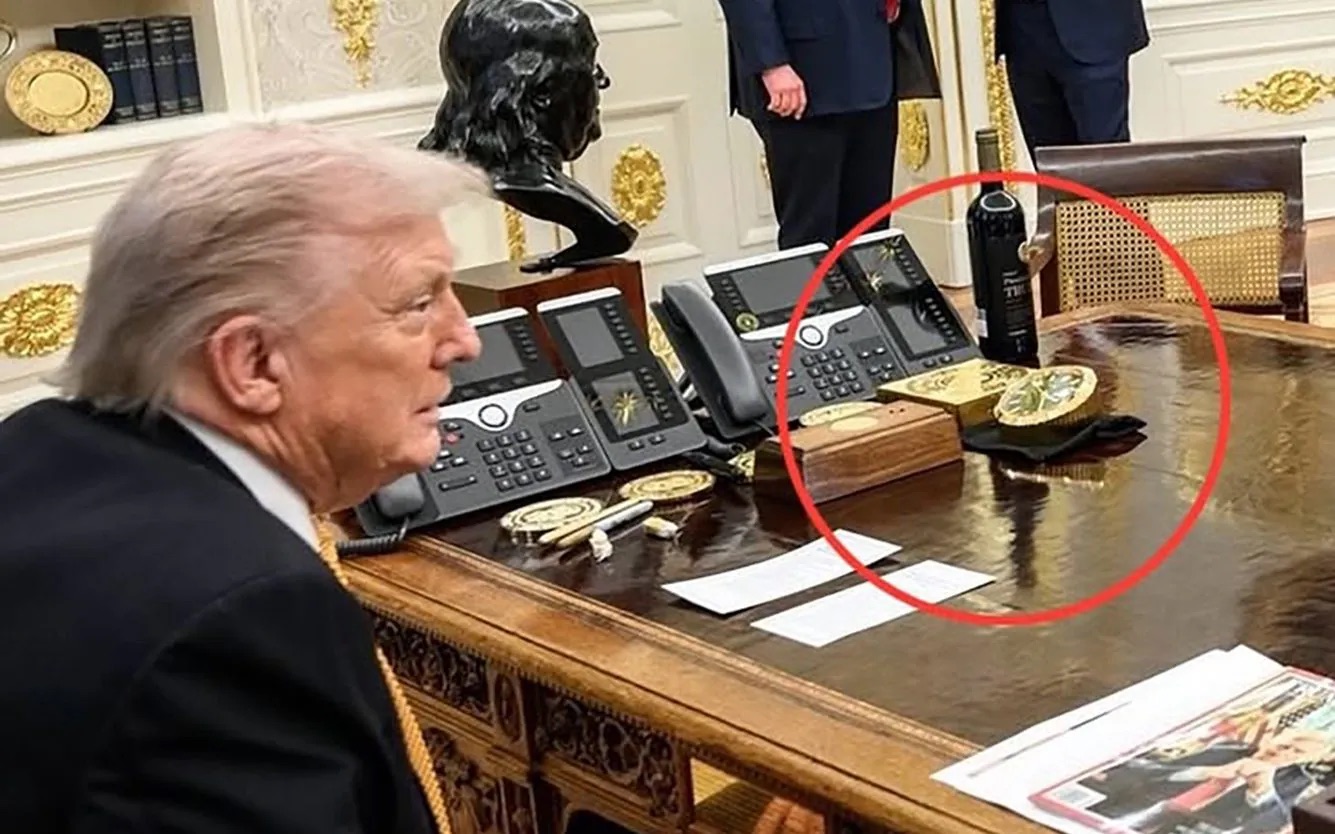 |
The circled items are believed to be the gold bar and clock that Swiss business leaders presented to Trump. Photo: Watches of Espionage |
The circled items are believed to be the gold bar and clock that Swiss business leaders presented to Trump. Photo: Watches of Espionage
The agreement resulted from Switzerland's dual efforts, combining continuous diplomatic visits by officials to the United States and lobbying by business leaders.
According to the Swiss government, many Swiss businesses will shift production lines to the United States, including the pharmaceutical and gold refining industries, with a total projected investment of approximately 200 billion USD by the end of 2028. Switzerland will also reduce import tariffs on many US goods, such as industrial products, fish, and some agricultural products. The agreement is expected to help balance the US-Switzerland trade balance by 2028.
"The trade agreement with Switzerland proves that President Trump's negotiation and tariff strategy continues to benefit the American people", White House spokesperson Kush Desai said, asserting that hundreds of billions of USD in investment commitments will help improve jobs and manufacturing in the United States.
The agreement also brought relief to many Swiss businesses, including coffee machine manufacturer Thermoplan, a supplier to Starbucks and McDonald's in the United States.
"From now on, Thermoplan and Swiss exports will again be strongly competitive in the global market", Chief Executive Officer Adrian Steiner said, adding that he is planning to visit the United States to seek new orders.
Thanh Tam (According to WSJ, Reuters)