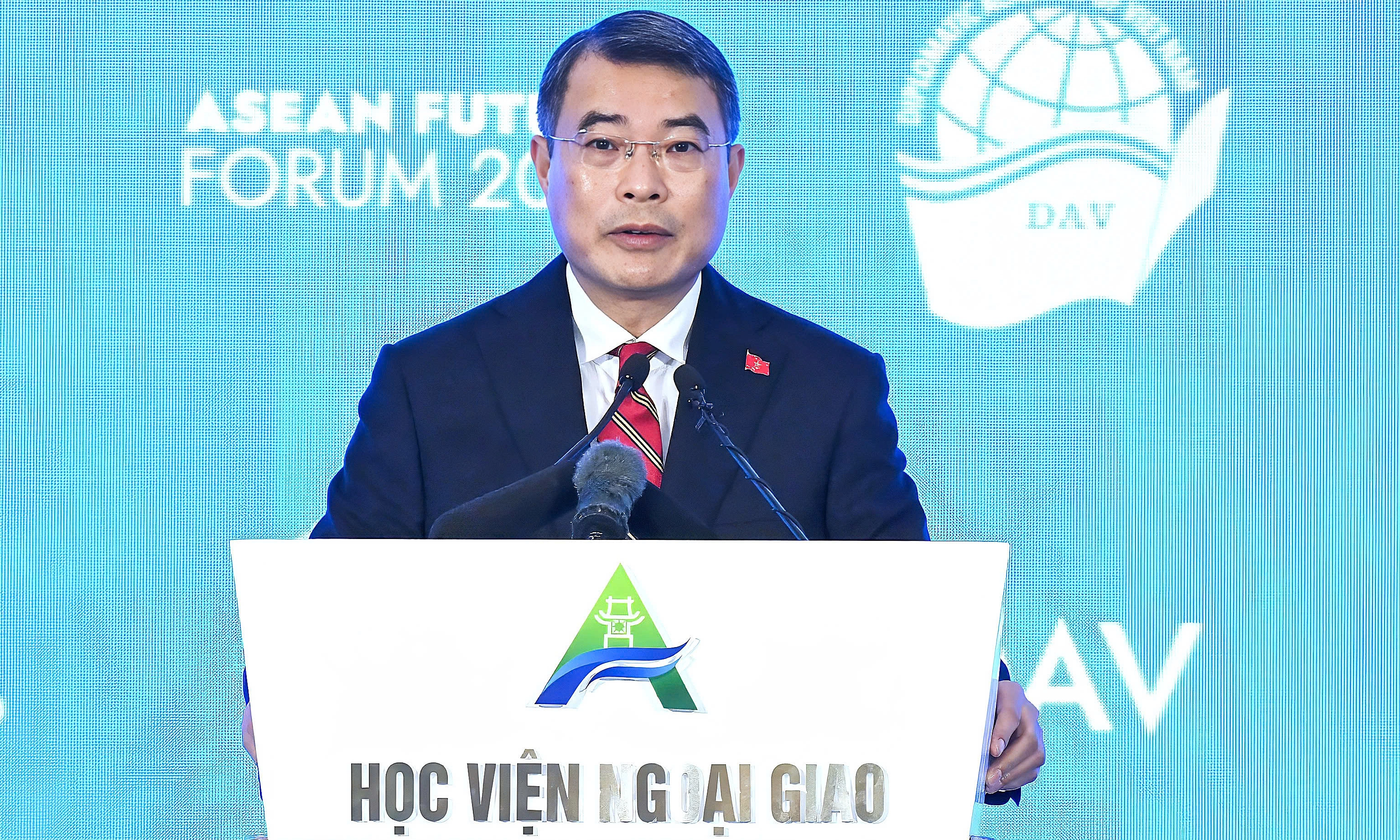
The ASEAN Future Forum (AFF) commenced on the morning of 9/6 in Hanoi. Over 600 delegates attended, including high-level leaders, representatives from ASEAN and partner countries, as well as regional and international organizations, research institutes, and businesses.
Seksan Anantasirikiat, a senior research fellow at the Center for International Studies in Thailand, noted that the AFF's theme, "Shaping the Future Together: Peaceful, Prosperous, People-Centred", underscored key priority areas relevant to ASEAN officials, business leaders, and youth.
Beyond providing a platform for speakers to discuss crucial issues like geopolitical competition, climate change, energy transition, and the role of youth, the forum "also demonstrates the leadership of a middle power like Vietnam", Seksan told VnExpress on the sidelines.
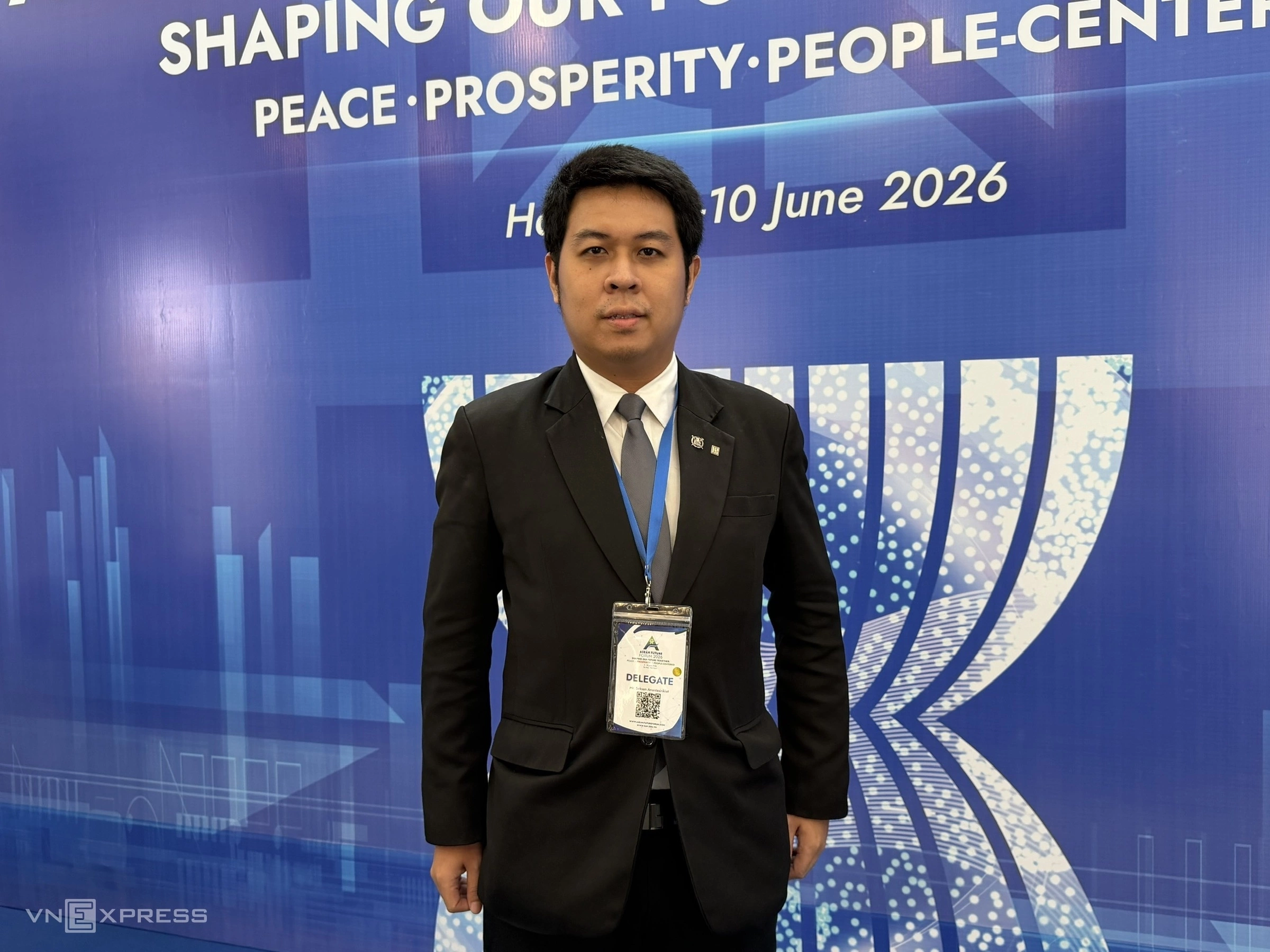 |
Seksan Anantasirikiat, a senior research fellow at the Center for International Studies in Thailand, at the ASEAN Future Forum, 9/6. *Ngoc Anh* |
Citing Vietnam's strong relationships with ASEAN and major international partners, the Thai scholar expressed confidence in Vietnam's crucial role in shaping ASEAN's future in the 21st century.
During his opening address at the AFF this morning, Prime Minister Le Minh Hung highlighted the challenges confronting ASEAN as global economic, technological, and power dynamics undergo fundamental shifts.
"Technology is redefining competitiveness, artificial intelligence is redefining productivity, data is redefining power, and green transition is redefining development models", the Prime Minister stated.
Analyst Jaideep Singh from the Institute of Strategic and International Studies (ISIS) Malaysia, who participated in the initial AFF discussion sessions, noted that these were key issues actively debated by all speakers.
"This forum serves as a vital channel, not just for highlighting ASEAN's challenges, but also for identifying solutions", Singh stated.
Prime Minister Le Minh Hung previously outlined three strategic solutions for ASEAN to pursue in achieving the ASEAN Community Vision 2045: ASEAN must contribute to shaping global trends, exert a stronger voice in establishing new norms and cooperation frameworks, and resolve differences based on international law.
Furthermore, ASEAN should evolve into a hub for dialogue and innovation, fostering the creation of value chains rather than merely serving as a transit point for supply chains.
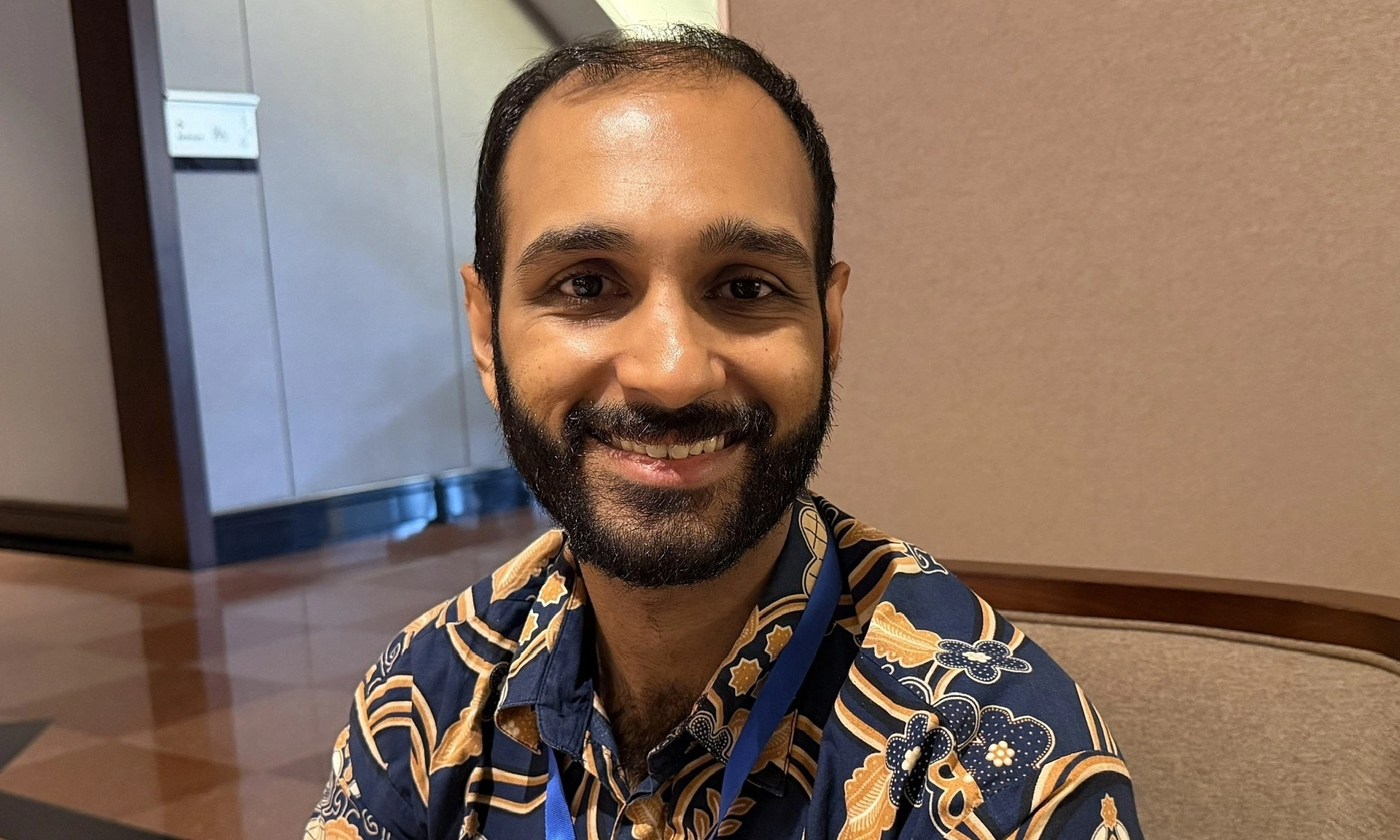 |
Analyst Jaideep Singh from the Institute of Strategic and International Studies (ISIS) Malaysia at the ASEAN Future Forum, 9/6. *Ngoc Anh* |
Rajpal Singh, Singapore's Ambassador to Vietnam, described the AFF as a crucial initiative, offering a platform for diverse regional leaders to share insights on geopolitical dynamics and the instabilities confronting ASEAN.
"The forum's most important message is that ASEAN must maintain a strong position, its centrality, and cohesion. Together, ASEAN can address these challenges and seize existing growth and development opportunities in the region", the Singaporean Ambassador stated.
The AFF 2026, held on 9-10/6, marked Vietnam's first major high-level multilateral foreign affairs event since the 14th Party Congress. This is the third consecutive year Vietnam has hosted the AFF, an initiative first announced by Vietnam at the 2023 ASEAN Summit.
 |
Delegates at the ASEAN Future Forum 2026, in Hanoi, 9/6. *Giang Huy* |
Deputy Foreign Minister Nguyen Manh Cuong emphasized that Vietnam's consistent organization of the AFF represents a practical contribution to the region. He added that the forum's theme, "Peaceful, Prosperous, and People-Centred Development", accurately reflects the core priorities of ASEAN and the wider region.
Ideas and initiatives from the two previous forums in 2024 and 2025 were incorporated into ASEAN Summit documents for those respective years. This demonstrates that the AFF offers practical support for ASEAN's official processes, extending beyond mere academic exchange, Cuong explained.
Ngoc Anh