Intelligence agencies across Europe are abandoning decades of mistrust to begin building a common intelligence operational structure to confront Russia. This move is further accelerated by the shift in the US's stance under the Donald Trump administration regarding support for traditional allies.
The bloc is considering the idea of establishing a stronger intelligence cooperation mechanism, similar to the US Central Intelligence Agency (CIA), which was once considered impossible.
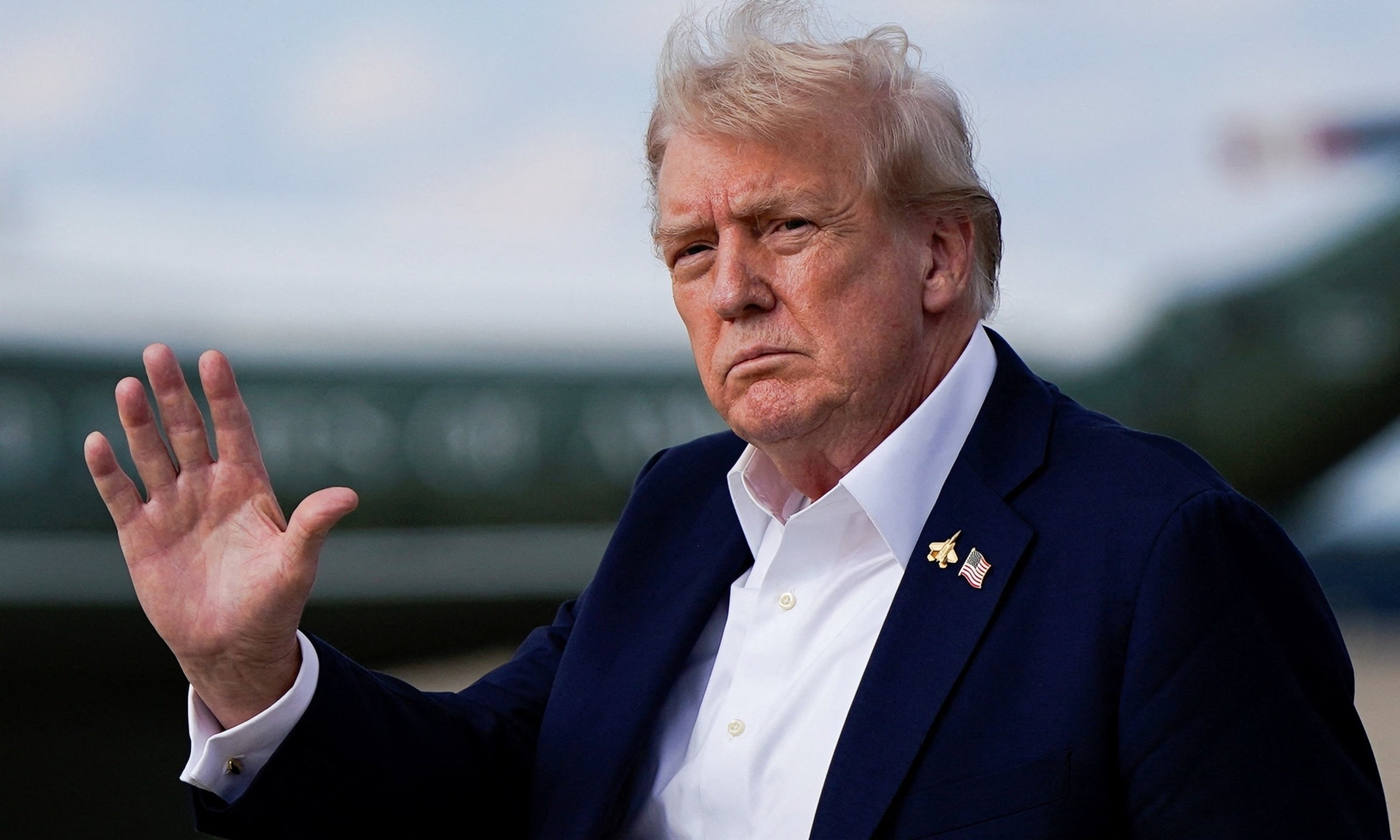 |
US President Donald Trump at Joint Base Andrews, Maryland, in september. Photo: *Reuters*.
The impetus for deeper EU intelligence cooperation significantly increased after the Trump administration abruptly ceased sharing battlefield intelligence with Ukraine in march.
An unnamed Western intelligence official noted that, unintentionally, President Trump "brought European intelligence agencies closer together".
Moreover, they have also begun a more thorough review of how they share information with their US counterparts. Dutch military and civilian intelligence agencies stated in october that the Netherlands had stopped sharing certain information with the US, citing concerns about political interference and human rights.
Regional officials are also concerned that transatlantic forums, including NATO, will become unreliable platforms for intelligence sharing. Antonio Missiroli, former assistant secretary general of NATO for emerging security challenges, remarked, "they fear the US will scale back its commitment to intelligence sharing in the coming months, both within NATO and more broadly."
The Berne Club
Unlike highly integrated intelligence alliances such as the Five Eyes, EU member states have long struggled to establish intelligence-sharing partnerships.
European intelligence agencies typically communicate through a secret network known as the Berne Club (Club de Berne), founded almost 50 years ago in Berne, Switzerland. This club has no headquarters, no secretariat, and meets only two times a year.
However, the Berne Club does not include all EU members. Malta has never joined, Bulgaria joined recently, and Austria was suspended for a period due to concerns about being too lenient with Russia before rejoining in 2022. Non-EU countries such as Switzerland, Norway, and the UK are also members.
Philip Davies, director of the Brunel Centre for Intelligence and Security Studies in London, stated, "the Berne Club is somewhat similar to Europol. It is designed to share certain types of information for specific functions. But it is quite limited, and the information shared is sometimes innocuous, as it does not directly connect to national security systems."
Major EU countries like France, the Netherlands, and Germany see little value in sharing sensitive information with all union member states, fearing it could fall into unwanted hands, such as Russian spies.
Changes
Recent geopolitical shifts have compelled the EU to re-evaluate its approach. Last year, former Finnish President Sauli Niinisto called for the bloc to establish an intelligence agency modeled after the CIA, coordinated from Brussels.
He proposed a "mechanism for intelligence cooperation at the EU level that can serve both strategic needs and practical operations," adding that "a network against sabotage" is necessary to protect infrastructure.
Intelligence liaison officers are currently present at most permanent representations of EU member states in Brussels. The Belgian State Security Service (VSSE), the unit tasked with monitoring espionage around EU institutions in Brussels, has warned members of the European Parliament about common tactics used to coerce parliamentarians into foreign espionage.
The Intelligence and Situation Centre (INTCEN) at the European External Action Service (EEAS) is the closest entity to a collective EU intelligence agency. This center conducts analysis based on voluntary contributions from EU members. Agents from national intelligence agencies in each member state are seconded to the center, helping them build close relationships with individual countries.
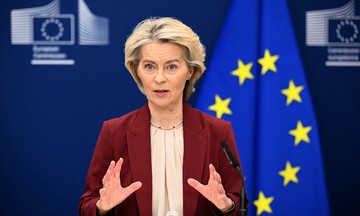
Croatian intelligence director Daniel Markic took over as head of INTCEN in september 2024 with a mission to enhance information sharing within the agency and provide direct intelligence to EU leaders such as European Commission (EC) President von der Leyen and Foreign Policy Director Kaja Kallas.
INTCEN, along with its military counterpart, the European Union Military Staff Intelligence Directorate, forms the Single Intelligence Analysis Capacity (SIAC), which provides joint intelligence assessments to EU leaders. SIAC held its annual meeting in Brussels in april, attracting top officials from European intelligence agencies.
At the meeting, leaders highlighted efforts to help Europe build its own independent intelligence capabilities. However, some also worried that too much focus on autonomy could further weaken relations with the US, creating the very void Europe is trying to avoid.
However, a European intelligence source stated that while cooperation among EU countries is currently "at its best in modern history," intelligence agencies still work primarily for their national governments.
This is a key obstacle. According to Robert Gorelick, former head of the US CIA mission in Italy, "the reason an EU-level intelligence agency cannot exist is because there are too many differences in how national intelligence agencies operate."
"Worse, having too many countries, 27 countries, makes information sharing difficult to trust," he added.
Some countries lean towards forming smaller specialized groups. After the US stopped sharing intelligence with Ukraine in march, a "coalition of the willing" led by France and the UK met in Paris and agreed to expand Kiev's access to European-operated intelligence, surveillance technology, and satellite data.
The Netherlands is also seeking to strengthen cooperation with other European intelligence agencies, such as the UK, Poland, France, Germany, and Nordic countries. Erik Akerboom, head of the Dutch civilian intelligence agency, noted, "this effort is expanding extraordinarily."
Nevertheless, there is still a long way to go to build sufficient trust among the 27 EU members, as each country has different priorities.
Former Finnish President Niinisto noted that establishing an EU-level intelligence agency remains "a question for the future." He emphasized, "the most important thing is trust, because without trust, we cannot cooperate."
By Vu Hoang (According to *Politico*, *AFP*, *Reuters*)